At daybreak on March 14, 1781, Major General Nathanael Greene’s army moved out of camp at Speedwell Iron Works in North Carolina and marched the road to Guilford Courthouse to meet his opponent British General Charles, Lord Cornwallis in a long awaited battle. Greene had studied this land well. The choice of position was wholly his decision. The grounds lay in the middle of irregular cultivated fields interspersed with small clearings. The courthouse stood on a hill in one of the clearings. A gentle declivity formed an undulating slope nearly half a mile in length. Greene’s army consisted of 4,243 foot and 160 horse. Fifteen hundred were Continentals, the rest militia. He put his order of battle in place. It was a model of Daniel Morgan’s at Cowpens. The enemy would have to march up New Garden Road where Greene deployed the first of three defensive lines. He positioned one thousand North Carolina militia on the edge of the woods behind a rail fence.
Major General Nathanael Greene instructing the North Carolina Militia in the first line, Battle of Guilford Courthouse.
They would have a good view of the British as they marched out of the woods, through fields and across a small stream. Twelve hundred Virginia militiamen formed the second line. Fourteen hundred experienced Continentals from Virginia, Maryland and Delaware drew up on a brow of the gently rising hill near the courthouse and formed the third line.
Battle of Guilford Court House, a portrait of the battle by H. Charles McBarron Jr.
They were in overall command of General Isaac Huger and Colonel Otho Holland Williams. The army had four 6-pound cannon and one hundred artillerymen. Greene posted two on the road between the militia regiments and the other two between the Virginia and Delaware fronts.
Colonel Otho Holland Williams
Colonel William Washington’s cavalry protected the right flank while Colonel Harry Lee’s horsemen positioned themselves on the left. To the rear, the Reedy Fork Road served as the line of retreat. Like at Cowpens, each line would deliver two or three well-executed volleys and then retire to the second line.
The battlefield at Guilford Courthouse was much larger and Greene was unable to see the entire field. On the morning of March 15, 1781, the wailing pipes of the Scottish Highlanders filtered through the woods. The first British and Hessian troops stepped out on the field and charged the Americans. British Colonel Banastre Tarleton’s cavalry arrived on the main road with instructions not to charge without positive orders. They were followed by a second wave of infantry with Cornwallis leading the 71st Regiment of Highlanders and the German Regiment of Bose under the command of General Alexander Leslie on the right.
Colonel Banastre Tarleton
An ineffective artillery volley ensued then the British moved forward. The North Carolina line fired too early and their center collapsed. Cornwallis pressed Colonel James Webster’s 33rd foot and Jaegers forward from the left. The Virginia militia fired and gave fight. A volley thundered that threw back Webster’s men dropping both British and Americans. A musket ball smashed Virginia militia General Edward Stevens’ thigh. Webster suffered a mortal wound. There was a brief pause as Webster’s men retreated to reform. General Charles O’Hara’s reserves of grenadiers and the 2nd Battalion of Guards united with Alexander Leslie’s troops. They crossed a ravine and emerged from the woods and attacked Greene’s third line, the Maryland and Delaware Continentals. The 1st Marylanders stood their ground. O’Hara was hit in the chest.
General Alexander Leslie
He turned his command over to Colonel James Stewart. Stewart headed for the fleeing 2nd Marylanders and captured two cannon. He turned on the 1st Maryland and they volleyed at the same time. Their colonel, John Gunby lost his mount and was pinned under it. His deputy commander, Colonel John Eager Howard, took over for him. A bugle sounded and William Washington and his dragoons thundered through the 2nd Guards and slaughtered them. John Eager Howard regrouped his Marylanders. The shattered British troops tried to reform.
Battle of Guilford Courthouse. Painting by Don Troiani depicting William Washington’s dragoons thundering through the 2nd Guards
Greene pressed forward into the midst of the battle. There was nothing between him and the enemy but woods. His aide saw the danger and warned, “You are riding into the enemy, General Greene!” Greene calmly nodded, turned his horse and rode back to his position. The enemy was gaining ground on his right. At 3:30 pm, two hours after the battle began, he saw that the enemy had turned his left flank. He ordered a retreat before his army could be encircled.
Major General Nathanael Greene
Cornwallis’ lost twenty-five percent of his army in the pyrrhic British victory. The days leading up to Guilford Courthouse overwhelmed Nathanael Greene and he fainted after the battle, but it was the turning point that forced Cornwallis out of the Carolinas and into Virginia where he met his final surrender to Franco/American forces led by George Washington on October 19, 1781.
Resources:
Beakes, John H. Jr. Otho Holland Williams in The American Revolution. Charleston, South Carolina: The Nautical and Aviation Publishing Co. of American, 2015.
Buchannan, John. The Road to Charleston. Charlottesville: University of Virginia Press, 2019.
Buchannan, John. The Road to Guilford Courthouse. Toronto: John Wiley & Sons, Inc., 1997.
Carbone, Gerald M. Nathanael Greene A Biography of the American Revolution, 2008.
Greene, George Washington. The Life of Nathanael Greene, Major General in the Army of the Revolution. 3 Volumes. New York: Hurd and Houghton. Cambridge: Riverside Press, 1871.
Piecusch, Jim, and John H. Beakes, Jr. Cool Deliberate Courage John Eager Howard in the American Revolution. Berwyn Heights, Maryland: Heritage Books, Inc., 2009.
Featured image. The equestrian statue of General Nathanael Greene at Guilford Courthouse Military Park, Greensboro, North Carolina
My biographical novel about General Nathanael Greene titled “The Line of Splendor, A Novel of Nathanael Greene and the American Revolution” is available on Amazon. Click on the cover to get your copy.
On August 16, 1780, American General Horatio Gates lost an army to British General Lord Charles Cornwallis just north of Camden, South Carolina. Gates abandoned his vanquished army and rode 180 miles to Hillsboro, North Carolina. Gates was the third major general the civilian governing body, the Continental Congress, sent to command the Continental Army’s Southern Department and the third to fail in the attempt. His predecessors, Robert Howe and Benjamin Lincoln surrendered Savannah, Georgia and Charleston, South Carolina respectively to the British. This time, Congress left the choice to the commander-in-chief of the Continental Army: General George Washington. He chose his most trusted and capable major general, Nathanael Greene, who had been by Washington’s side since 1775 at the Siege of Boston where Patriots were keeping the British locked in Boston after the first shots of the American Revolutionary War were fired in Massachusetts.
Major General Nathanael Greene
Greene took command of the ragged, starving remnants of the Southern Army from Horatio Gates in Charlotte, North Carolina on December 3, 1780. His army, including militia forces, totaled 2,300 but only 800 were properly armed and clothed. Greene, who was from Rhode Island and had spent his entire life in the north, had to adapt quickly to the new environment where the landscape, climate, and rivers were different. A place where the majority of the people were poor and the powerful Rice King’s of the south were cowed. Where civil authority had broken down and a civil war raged between Patriots and Loyalists. General Charles Cornwallis was 70 miles south at Winnsboro, South Carolina with a well-equipped principle force of 4,000 men. What was a Continental general with a new independent command to do? Ignore every military doctrine that warned of dividing an army in the face of a superior foe.
General Lord Charles Cornwallis
Greene executed a strategy that began with sending General Daniel Morgan and a flying detachment to northwest South Carolina to “spirit up the people.” Greene led his wing of the army from Charlotte to Cheraw, South Carolina where food for the army was more plentiful. Cornwallis sent his cavalry colonel Banastre Tarleton to “rid the countryside of Morgan.” On January 17, 1781, Morgan defeated Tarleton at a place called the Cowpens. Cornwallis lost 1,000 men at Cowpens. Furious, he went after Morgan.
General Daniel Morgan
With a small contingent of guard, Greene set out through 300 miles of perilous Loyalist country to support Morgan’s retreat toward Salisbury, North Carolina. Cornwallis burned his baggage train to lighten his army’s pursuit. Greene moved his army’s junction to Guilford Courthouse, North Carolina where he decided that a retreat to the Dan River on the border of North Carolina and Virginia was the only way to preserve his army. On February 15, Cornwallis’s troops marched up to the banks of the Dan River. They saw the American campfires burning on the other side. Greene had taken every boat in the Roanoke Valley and there was nothing Cornwallis could do but stare. Greene moved his army back to Guildford Courthouse where he and Cornwallis clashed on the afternoon of March 15, 1781. It was a pyrrhic British victory that cost Cornwallis more than 500 men. He retreated to Wilmington, North Carolina, a coastal port 200 miles away.
North and South Carolina during the American Revolutionary War
Undaunted by the loss at Guilford Courthouse, Greene turned his attention to the British outposts in the interior of South Carolina. The Southern Army marched through country that was extremely difficult to operate—cut by deep creeks and impassable morasses, heavy timber, and thick underbrush. On April 20, they pulled up to the stockade walls of Camden, South Carolina where Lord Francis Rawdon had 900 Loyalist and British troops garrisoned. Aware that it was too strong to attack, Greene pulled his army back to Hobkirk’s Hill, a sandy ridge two miles north of Camden over which ran the Salisbury Road.
Colonel Lord Francis Rawdon
In the early morning hours of April 25, 1781, a skittish drummer deserted from the Maryland line. He carried word to Rawdon that the American Army was weakened by detachments and lack of food. General Greene had no artillery with him. It was in the rear along with the baggage train and that militia General Thomas Sumter had not come up yet to support the Americans. Rawdon listened to the drummer. He armed the boy along with every man in the garrison, including musicians and drummers.
Nathanael Greene’s troops were camped on Hobkirk’s Hill in order of battle in a wide line across the hill. Colonel Otho Holland Williams had overall command of the Maryland troops to the left of the road, and General Isaac Huger ranked command over the Virginia Continentals to the right. Otho’s two regiments were the 1st Maryland, commanded by Colonel John Gunby and the 2nd Maryland commanded by Colonel Benjamin Ford. Gunby’s deputy was the brilliant Colonel John Eager Howard, who had led the regiment at Cowpens and taken up command at Guilford Courthouse when Gunby was pinned beneath his horse. The 2nd Virginians were under the direct command of Colonel Samuel Hawes with the 1st under Colonel Richard Campbell. Two hundred fifty North Carolina militia were in back of the Continentals. Colonel William Washington’s 3rd Continental Dragoons—only about fifty mounted due to the difficulty of procuring horses—were held in reserve.
Colonel Otho Holland Williams
To protect them from surprise, pickets were stationed 300 yards in front of their lines supported by Maryland, Virginia, and Delaware Continentals. Greene’s men were enjoying the quiet morning buoyed by his orders that every man would receive two days’ worth of food and a gill of spirits as soon as quartermaster Colonel Edward Carrington arrived with the stores. Their arms were stacked. Coats and shoes lay scattered. Washington’s dragoon horses grazed peacefully at their loose tethers. Men were relaxing by a rivulet, soaking their sore feet or cleaning their kettles when they heard the sound of sharp musketry at the base of the hill.
The American drums beat to arms as the pickets clashed with Lord Rawdon’s vanguard. The surprised Americans, many still barefoot and half-dressed, rushed to form their lines. Gun smoke curl up and through the towering pine trees. Otho Holland Williams tried to keep his surprise concealed when he mounted his horse and galloped from the front lines to Greene’s headquarters. When he arrived, General Greene, who had been enjoying the rare luxury of a cup of coffee, was on his feet. Satisfied, Otho returned to the lines before the fighting became widespread.
Greene abandoned his breakfast and jumped into the saddle, followed by his aides majors Lewis Morris and Ichabod Burnett. North Carolina militia officer Guilford Dudley was marching up the back side of the hill with the artillery. Otho ordered Dudley to “March to the right and support Colonel Campbell.”
Greene rode forward with a good view of the hill. Captain Robert Kirkwood’s Delaware pickets were slowly being pushed back by Rawdon’s vanguard. The British commander had arranged his men in a single line with his Corps of Observation in the rear, the right wing supported by 675 provincial regulars and the Volunteers of Ireland on the left. Rawdon’s line was narrow. Greene believed that they could strike their flanks, rear, and front. He quickly ordered Colonel Richard Campbell to wheel left upon the enemy’s right flank. He communicated that he wanted Colonel Benjamin Ford that he was to wheel his men to the right.
As Rawdon advanced, Greene sent orders to unmask the artillery. The American gunners shredded the tightly packed British columns with volleys of whistling grapeshot. Through the clearing blue smoke, General Greene saw the destruction and was beside himself with satisfaction. “Victory is in reach! Draw forth and send instructions to Colonels Gunby and Hawes to conduct a bayonet charge in the center. Then send Colonel Washington and his dragoons to turn the enemy’s right flank and charge them in the rear.”
Lord Rawdon raged as he saw his men fall and the Continentals charging with bayonets. He took his aggressive anger out on one of his aides, “I was told that Greene had no artillery!” He shouted orders to the Volunteers of Ireland who came up and added their fire against the Maryland ranks. Rawdon continued to disseminate orders to his aides, “Rally, my boys, and bring up all from the rear. Lengthen our lines and avoid the flanking maneuver the American general intends on executing.”
Aside from the 63rd foot, all of Rawdon’s troops were American Tories fighting against American Whigs, and they were quick to take advantage of the thick woods on the hill. The firing was so intense that musket barrels became too hot to hold in their hands.
As Nathanael Greene’s infantry rolled forward so too did William Washington and his dragoons. They swept down around the hill to avoid felled trees and heavy undergrowth, and then rode hard for Major John Coffin’s dragoons on the British right flank. They clashed and swung their short blades from the saddles of their wheeling horses. Coffin’s men scattered. Although deterred by the thick undergrowth, Washington gathered his dragoons under the direct command of captains William Parsons and Walker Baylor and fell upon the rear of the British infantry. They became bogged down in taking prisoners who were, in fact, Lord Rawdon’s desperate attempt to arm as many as he could. The musicians, surgeons, and teamsters had no stomach to stand up against a force of hard galloping dragoons, and they quickly surrendered.
Colonel William Washington
The American infantry continued to push forward. Many of the Marylanders under Colonel Benjamin Ford were new recruits, and some began firing without orders. Ford was shot off his horse and suffered a mortal wound. None of the skittish 2nd Marylanders came to their colonel’s aide. Gunby’s and Hawes’ men continued a steady advance. Some forgot to use their bayonets and fired instead. The trusted captain of the right company, William Beatty, was shot through the heart and dropped dead.
Colonel John Eager Howard
His company, the 1st Marylanders, became deranged and fell out of line. The other companies under Colonel John Eager Howard were still advancing, and instead of pushing them all forward Colonel John Gunby saw they were marching in the form of a bow and ordered them to fall back to the foot of the hill and reform. The consequences were fatal. General Greene had told them not to fire. Now, they were being told to halt in the face of a charging British force. They broke and ran. This left the 2nd Marylanders isolated, and they too fell back followed by the 1st Virginians.
Otho Holland Williams saw the panic and rode toward them, but neither he nor Colonels Howard or Gunby could stop it. Greene was up on the ridge where he had spent most of the battle with Samuel Hawes’ 2nd Virginians. He exposed himself like a captain of grenadiers and attempted to restore order. It became obvious that Lord Rawdon understood that Hawes’ men were alone, and, seeing his advantage, pressed the hill to flank them and silence the American artillery.
Swept up in the tide of retreating troops, the American gunners mishandled their frightened teams and snagged the limbers in heavy brush. The horses panicked and had to be cut from the limbers. Bitterly disappointed, Greene issued the order for his surviving regiments to withdraw, and they formed with the now-rallied Gunby’s men at the foot of the hill.
The troubles the gunners were encountering came to Greene’s attention as they tried to pull the cannon out of the reach of the enemy with drag ropes. He jumped from his saddle, and with the horse’s bridle in one hand and a drag rope in the other, he encouraged the dismayed gunners, “There is not a man here who does not have the courage to take the cannon off.” Seeing that their general was with the artillery, others came to help. Greene wasted no time, and he rode on to see what could be done about bringing the rout to a halt.
Major John Coffin’s British dragoons charged toward the cannon with swords aloft and began to put some of the men dragging the cannon to the sword. The assault gave the others time to get the guns hitched to horses and safely away backed up by Washington’s charging dragoons, each with prisoners in tow. It was a wasted effort. Bogged down by captives and the wooded lay of the land, Washington’s cavalry could not act with effect.
Greene called a retreat. Washington caught up with the main army and delivered the prisoners he probably should not have taken. Greene ordered the prisoners processed. He knew Rawdon was in pursuit. He did not know that Rawdon had left Major John Coffin with his cavalry on Hobkirk’s Hill to claim the ground as a British victory.
Greene ordered Washington to go back and screen their retreat and to take Captain Kirkwood’s Delaware unit with him. He also instructed Washington to take up their stragglers and wounded, and bring them back. If circumstances and time permitted, bury their dead.
Greene led his army three miles north of Hobkirk’s Hill and stopped to camp at Saunders’ Creek in the same sandy Pine Barrens where Horatio Gates had lost an army. Lord Rawdon broke off his pursuit and returned to the walls of Camden. Both commanders lost 200 men—dead, wounded, captured, and missing. Greene was in a vexatious mood after the loss he was certain could have been a victory. He changed his password and countersign to “Persevere” and “Fortitude.” The loss angered him and wounded his pride. He directed his anger at Maryland Colonel John Gunby saying his actions were the cause for the loss and had Gunby court-martialed.
On April 28, he issued orders in the camp at Rugeley’s Mill, “General Huger, Colonel Harrison, and Colonel Washington are to compose a court to inquire into the conduct of Colonel Gunby in the action of the 25th instant.” The testimony found that Gunby was exerting himself in rallying and forming his troops, only committing an error in judgment. Greene could not let it pass. He castigated Gunby publicly in written orders:
Col. Gunby’s Spirit and activity were unexceptional. But his order for the regiment to retire, which broke the line, was extremely improper and unmilitary; and in all probability the only cause why we did not obtain a complete victory.
Despite Greene’ loss, by April 24 Cornwallis had had enough of Nathanael Greene. He abandoned the Carolinas and marched to Virginia. Greene’s strategy began to strangle the British. He cut off Lord Rawdon’s supply line and forced him to evacuate Camden on May 9. Over that month under Greene’s orders, the British outposts fell at the hands of “Light-Horse” Harry Lee and militia generals Francis Marion and Andrew Pickens. Greene laid siege to the last remaining outpost at the fortified town of Ninety-Six on May 22. The siege ended in bloody, hand to hand combat. Nathanael retreated on June 18. Lord Rawdon marched into Ninety-Six two days later and eventually burned the outpost.
Greene moved his army to the High Hills of Santee near Camden where the air was cooler and the mosquitos were less relentless. Although it was a camp of repose, there was not a moment that allowed him to let his guard down or cease his endless letters of instruction, exhortation, and solicitation regarding the condition of his ragged, malaria-ridden army and their needs. Still, his sense of humor didn’t completely escape him. He wrote to General Henry Knox that no general had run as often or “more lustily” as he had and likened his flight to that of “a Crab, that could run either way.”
Hobkirk’s Hill and the collapse of the British outposts in South Carolina was not be the end of Greene’s strategy. His relentless perseverance to keep the British locked in Savannah and Charleston paid off. On October 19, 1781, Lord Cornwallis surrendered to Franco/American forces at Yorktown, Virginia. If it had not been for General Nathanael Greene, the surrender at Yorktown likely would not have happened.
My biographical novel about General Nathanael Greene title “The Line of Splendor: A Novel of Nathanael Greene and the American Revolution” is available on Amazon. Click the cover to get your copy!
Resources:
Beakes, John H. Jr. Otho Holland Williams in The American Revolution. Charleston, South Carolina: The Nautical and Aviation Publishing Co. of American, 2015
Beakes, John H. Jr. and Piecuch, Jim. Cool Deliberate Courage: John Eager Howard in the American Revolution. Heritage Books, 2009
Buchannan, John. The Road to Charleston. Charlottesville: University of Virginia Press, 2019
Carbone, Gerald M. Nathanael Greene A Biography of the American Revolution, 2008.
Golway, Terry. Washington’s General Nathanael Greene and the Triumph of the American Revolution. New York: Henry Holt and Company
Greene, George Washington. The Life of Nathanael Greene, Major General in the Army of the Revolution.3 Volumes. New York: Hurd and Houghton. Cambridge: Riverside Press, 1871
Thayer, Theodore. Nathanael Greene Strategist of the American Revolution. New York: Twayne Publishers, 1960
“My Father was a man of great Piety, had an excellent understanding; and was govern’d in his conduct by humanity and kind Benevolence.”~Nathanael Greene reflecting on his youth.
Nathanael was born in Potowomut, Rhode Island on August 7, 1742; the fourth son of a Quaker preacher and prosperous business man. The brothers’ education was limited to math, reading, and writing. Their father thought book learning beyond that would lead to temptation and sin. Nathanael challenged his father’s “prejudices against Literary Accomplishments.” He later broke with the doctrines of the formal Quaker religion which didn’t condone armed conflict.
He had physical challenges: a limp, asthma, and a small pox scar on his right eyeball that was often infected a result of his 1770 inoculation.
Nathanael was sent to manage and operate the family iron forge in Coventry, Rhode Island. He worked with the men who pounded smelt into anchors sold in Newport. In the house he dubbed Spell Hall he collected and studied works about human theory, civil society, military law and strategy, and poems.
He spent time in East Greenwich with his distant relative, William Greene. Discussions were held about the state of rebellion in America over Parliamentary taxes and control of colonial autonomy. William’s wife was raising her niece, Catharine Littlefield. Caty trapped Nathanael’s heart. They married on July 20, 1774. Caty was 19. Nathanael was nearly 32.
Catharine Littlefield Greene Miller in her mid-fifties circa 1809 attributed to James Frothingham. Image courtesy of General Nathanael Greene Homestead
Nathanael joined the East Greenwich militia company, the Kentish Guards, as a private. He was mortified when he applied for lieutenant and was denied because of his limp. When the first shots of the Revolutionary War were fired on April 19, 1775 in Massachusetts, the Rhode Island General Assembly formed an Army of Observation. Nathanael was plucked from the ranks and promoted to general. On May 8, 1775, he kissed his pregnant wife goodbye and led his new army toward Boston.
The Siege of Boston
“I am determined to defend my rights and maintain my freedom, or sell my life in the attempt.”~Nathanael to Caty, June 1775
Militia from all over New England responded. Nathanael laid out camp with his army of 1,000 recruits on a hill in Roxbury facing the British army under siege in Boston. He reported to General Artemas Ward. On June 17, while Nathanael was on a recruiting trip in Rhode Island, 1,000 provincial soldiers were defeated by 2,000 British soldiers on the Charlestown peninsula north of Boston on Breed’s Hill.
Two weeks later, the new commander in chief of the recently formed Continental Army arrived—General George Washington. The civilian governing body, the Continental Congress, appointed four major generals and eight brigadier generals. Nathanael was the last brigadier, who at age 32, was the army’s youngest general.
In January 1776, he contracted jaundice. During his illness, Henry Knox, a Boston bookseller, hauled 5o tons of artillery to Framingham, Massachusetts from Fort Ticonderoga in New York. The artillery was mounted on Dorchester Heights overlooking Boston on the night of March 4. General William Howe, the British commander in chief, ordered the city evacuated. Washington placed Boston under Nathanael’s command during which he enforced martial law.
The Battle for New York
“I am confident the force of America, if properly exerted, will prove superior to all her enemies.”~ Nathanael to John Adams, July 2, 1776
The Continental army moved to New York. Nathanael had command of a string of five strategic forts built on Brooklyn Heights across the East River on Long Island. A British armada began dropping anchor in New York Harbor on June 29, 1776. Over the next few weeks, some 32,000 troops arrived on board 270 ships. In August, with the enemy looming, he was one of four brigadiers promoted to major general.
That month, he succumbed to a critical fever, possibly typhoid. General Israel Putnam assumed his command. On August 22, William Howe invaded Long Island and defeated the Continental Army stationed there. John Adams wrote that Nathanael’s sickness was the cause of the enemy “stealing a march on us.”
The army began withdrawing northward from the city as the British invaded New York Island. On September 16, Nathanael experienced his first battle when it erupted at Harlem Heights. Two month later, Forts Lee and Washington perched on the Hudson River across from one another fell to the British under Nathanael’s command. He was devastated and wrote to his friend, Henry Knox, “I am mad, vexed, sick and sorry. Happy I should be to see you.” The ragged Continental Army retreated through New Jersey with British General Charles Cornwallis in pursuit. On December 8, they crossed the Delaware River into Pennsylvania.
During the crucial period when Washington was planning a 1776 Christmas night attack on the Hessian garrison at Trenton, New Jersey, Nathanael did many things of great importance. Two of those were:
On December 21, he wrote to Congress to report the state of the army and urged them to give Washington temporary full powers to avoid having to wait for Congressional committees to make decisions. Congress agreed and did so.
He was one of two major generals who led divisions to Trenton and Princeton where the Patriots were victorious.
The Philadelphia Campaign
“O my sweet angel how I wish—how I long to return to our soft embrace. The endearing prospect is my greatest comfort amidst all the fatigues of the campaign.”~Nathanael to Caty after the British defeated the American army at Brandywine, autumn 1777
In 1777, the Continental Army wintered in Morristown, New Jersey. Late in July, William Howe loaded the bulk of his army on his brother’s ships leaving the Continental Army and Congress baffled over his destination.
Howe’s armada sailed up the Chesapeake Bay and disembarked at Head of Elk, Maryland. His target was Philadelphia. In response, Washington positioned his army on Brandywine Creek. On the afternoon of September 11, General Cornwallis turned Washington’s right flank on Birmingham Hill. Nathanael and his 2,400 Virginians marched toward Sandy Hollow where they formed a line that surprised and stopped Cornwallis. The Americans fell back to Chester, Pennsylvania. Two weeks later, the British took Philadelphia.
*Birmingham Hill where the British turned the right flank of Washington’s army during the Battle of Brandywine. Photo circa 2022 by Salina B Baker
On October 17, British General John Burgoyne surrendered to General Horatio Gates in Saratoga, New York where Gates was sent to stop Burgoyne’s march to Albany. Spawned from this victory, a loose plot to overthrow Washington, as well as Nathanael, was executed. Some in Congress believed that Washington was failing and that the victorious Gates was the answer.
General Mifflin, who resigned as Quartermaster General of the Continental Army proclaimed, “The ear of the Commander-in-chief was exclusively possessed by Greene.” The cabal collapsed in early 1778.
Quartermaster General
“They have taken me from the line of splendor.”~Nathanael to Pennsylvania politician Joseph Reed after he accepted the position of Quartermaster General of the Continental Army, March 1778
The Continental Army wintered at Valley Forge, Pennsylvania in 1778. A committee from Congress arrived to discuss the state of the army and a new quartermaster general. The duties of the quartermaster general encompassed obtaining and transporting supplies, and scouting for new camp sites.
*General Nathanael Greene by Charles Willson Peale 1778. Metropolitan Museum of Art
Washington and the committee pressed Nathanael to take the job that he feared it would confine him “to a series of drudgery” and would remove him from field command. Congress admitted that the next quartermaster general would “face Confusion of the Department.” With a sense of duty he accepted the position, but complained, “No one has ever heard of a quarter Master in History.”
During the summer of 1778, he played a dual role maintaining his excellent quartermaster planning that provided the Continental Army with adequate supplies. He also was given field command during the battles of Monmouth Courthouse and Rhode Island.
The war ground to a stalemate in the north. The value of the Continental dollar plunged. Nathanael made several trips to Philadelphia during the spring of 1779. Congress was questioning the large receipts he and his deputies were receiving from commissions. Compounded by their refusal to provide more money and support, he tendered his resignation in a less than a diplomatic tone to match the insulting letters he received from the Board of Treasury. Congress ignored it.
The Continental Army returned to Morristown, New Jersey in the winter of 1780. Nathanael lamented, “Provisions are scarce indeed…from the want of money to purchase it.” A snowstorm blocked the roads and cut supply lines. When the storm passed, Nathanael relieved the starving soldiers by ordering the roads cleared and pressing farmers to load wagons with provisions.
Caty arrived in camp eight months pregnant. On January 30, she gave birth to their fourth child a son they named Nathanael Ray. Baby Nathanael joined the Greene’s growing family: George 4, Martha 3, and Cornelia 16 months. He and the two youngest were conceived during Caty’s visits to camp.
That spring, the American garrison in Charleston, South Carolina under General Benjamin Lincoln surrendered to Henry Clinton in the worst loss of the Revolutionary War.
Congress adopted its new system for the Quartermaster Department. With the states now responsible for supplies, a decrease in salaries, and the principal men on whom he depended removed, Nathanael believed it was impossible to conduct business. He wrote to Washington outlining his grievances and seeking approval of his intention to quit. But the wording and tone of his resignation letter to Congress dated July 26, 1780 so infuriated members that they threatened to remove him from the army. Washington supported him and put a stop to the threats.
While Nathanael resigned, General Horatio Gates rode into camp in North Carolina and took command of the remnants of the Southern army. On August 16, General Charles Cornwallis, now in command of the British army in the south, defeated Gates near Camden, South Carolina. Gates abandoned his vanquished army and rode 180 miles to Hillsboro, North Carolina. What Washington needed was a good general in the South. Congress’ previous choices had failed. This time they left the choice to him. He chose Nathanael Greene.
The Southern Army
“My Dear Angel, What I have been dreading has come to pass. His Excellency General George Washington by order of Congress has appointed me to command of the Southern Army. God bless you my love and support your spirits. I am yours.” ~Nathanael to Caty, October 1780
Nathanael and his second in command General Baron von Steuben rode to Virginia and stopped along the way to gather troops and supplies from various states. Their efforts were largely futile. Leaving Steuben in Virginia to continue recruiting efforts with Governor Thomas Jefferson, Nathanael went in search of his army and on December 2, 1780 in Charlotte, North Carolina, he found the starving, ragged survivors of the Southern Army under Horatio Gates. His army numbered 2,300, but less than 800 of his whole force was properly equipped and clothed.
North and South Carolina during the American Revolutionary War and Nathanael Greene’s movements
This was what Nathanael was faced with. His command encompassed, Virginia, North Carolina, South Carolina and Georgia. As a Rhode Islander who had spent his whole life in the north, everything was different. He had to adjust quickly.
There was a breakdown in civil authority.
A civil war raged between Loyalists and Patriots.
A large part of the population was poor. They talked differently.
The trees, rivers, landscape, and climate were different.
Before taking command from Gates, he studied maps and ordered a survey of the nearby rivers so he could understand the geography.
The circumstances forced him to embrace partisan strategy. He reached out to militia generals Francis Marion, Thomas Sumter and Andrew Pickens operating in South Carolina.
What was a Continental general with a new independent command, to do? Ignore every military doctrine that warned of the dangers of dividing an army in the face of a superior foe.
He detached General Daniel Morgan to march to northwest South Carolina. Nathanael led the remainder of his little army to Cheraw. Cornwallis ordered cavalry Colonel Banastre Tarleton to rid the countryside of Morgan. Morgan prepared for the inevitable battle at a place called the Cowpens. On the pastures, he formed his men into three lines. On the morning of January 17, 1781, Morgan shouted “Boys get up, Benny is coming.” They deployed, fired one shot, and then retired so the next line could step up. The British infantry and cavalry broke. Tarleton fled.
Cornwallis lost 1,000 men at Cowpens. Furious, he went after Morgan. Nathanael ordered his wing to march to Salisbury, North Carolina. With a small contingent of guard, he set out through 300 miles of perilous loyalist country to support Morgan where they began a retreat toward Salisbury.
Cornwallis burned his baggage train to lighten his army’s pursuit. The further Cornwallis marched, the more his army succumbed to exhaustion and starvation. Nathanael, also exhausted, shifted his army’s junction to Guilford Courthouse, North Carolina. When the army linked up, he held a rare war council.
Nathanael laid it out. They had 2,400 men, many of whom were badly armed and clothed. Cornwallis was less than twenty miles away. It was agreed that a retreat to the Dan River on the border of North Carolina and Virginia was the only option to avoid annihilation.
Nathanael detached 700 men and formed a light corps, to screen his main army from the British and detract them from the lower fords of the Dan River where he intended to cross. The ailing Daniel Morgan went home to Virginia. Colonel Otho Holland Williams was selected to command and with Colonel “Light-Horse” Harry Lee’s cavalry legion, they kept Cornwallis at bay while Nathanael led the army toward the Dan River at a frantic pace.
On February 15, Cornwallis’ troops marched up to the banks of the Dan where the campfires of the American army burned on the other side. Nathanael had taken every boat in the Roanoke Valley across the river and there was nothing Cornwallis could do but stare.
With thousands of new militia and some Continentals, the Southern Army swelled to 4,500 men. Nathanael moved back to Guilford Courthouse. Cornwallis led his 1,900 men toward a long awaited battle with Nathanael Greene.
Nathanael’s order of battle was a model of Daniel Morgan’s at Cowpens, but the wooded terrain at Guilford Courthouse prevented his three lines from seeing or supporting one another. He rode among the troops to encourage them. Artillery opened up. His lines began to fall apart under advancing British fire. The enemy turned his left flank. After two hours, he prudently called a retreat to preserve his army.
It was a pyrrhic British victory that cost Cornwallis more than 500 men. He retreated to Wilmington, North Carolina, a coastal port 200 miles away.
Nathanael turned his attention to the British outposts in the interior of South Carolina. He ordered Baron von Steuben and Thomas Jefferson to send militia. The Virginia Assembly blocked his request because Henry Clinton had sent British troops and reinforcements to that state.
Infuriated with Jefferson and frustrated with a lack of support from Washington in New York, he turned his army southward toward the primary outpost at Camden. They arrived at the stockade walls on April 20 where Lord Francis Rawdon had 900 loyalist and British troops garrisoned. Aware that it was too strong to attack, Nathanael pulled his army back to Hobkirk’s Hill, a ridge two miles north.
On the morning of April 25, Lord Rawdon approached. Nathanael’s infantry rolled forward but then the Maryland line bowed causing the Virginia regiments to fall back. Nathanael called a retreat. The loss angered him and wounded his pride. He directed his anger at Maryland Colonel John Gunby saying his actions were the cause for the loss and had Gunby court-martialed.
Despite Nathanael’s loss, by April 24 Cornwallis had had enough of Nathanael Greene. He abandoned the Carolinas and marched to Virginia.
At this time, he wrote to the exiled governor of South Carolina, John Rutledge, stressing the importance of reestablishing government. His concern extended to his command in Virginia where the Marquis de Lafayette arrived to stop the British path of destruction there.
Nathanael’s strategy began to strangle the British. He cut off Lord Rawdon’s supply line and forced him to evacuate Camden on May 9. Over that month under Nathanael’s orders, the British outposts fell at the hands of “Light-Horse” Harry Lee and militia generals Francis Marion and Andrew Pickens. Nathanael laid siege to the last remaining outpost at the fortified town of Ninety-Six on May 22. The siege ended in bloody, hand to hand combat. Nathanael called off the assault and retreated on June 18. Lord Rawdon marched into Ninety-Six two days later and burned the outpost.
Nathanael moved his army to the High Hills of Santee where the air was cooler and the mosquitos were less relentless. Although it was a camp of repose, there was not a moment that allowed him to let his guard down or cease his endless letters of instruction, exhortation, and solicitation regarding the condition of his ragged, malaria-ridden army and their needs. Still, Nathanael’s sense of humor didn’t completely escape him. He wrote to Henry Knox that no general had run as often or “more lustily” as he had and likened his flight to that of “a Crab, that could run either way.”
The Southern Army rested for six weeks in the High Hills of Santee. Lord Rawdon fell ill and Colonel Alexander Stewart replaced him. Stewart pressed his 1,500 men toward Orangeburg, South Carolina. Nathanael called in the militia under Francis Marion and Andrew Pickens. On August 23, his army marched out of the High Hills looking for a fight.
On September 8, at 4:00 a.m., after weeks of mucking through swamps and heavy rain, Nathanael’s army marched toward the enemy at a place called Eutaw Springs. Musket fire and artillery exploded from both sides of the line as they clashed on wooded grounds near a three-story mansion. Some of the British locked themselves in the mansion. Artillery fire proved useless in dislodging them. Nathanael’s cavalry tangled in the bushes near the creek and their commander, Colonel William Washington was bayonetted and captured. After 4 hours of fighting, Nathanael ordered a retreat. Losses that day totaled a staggering 1,400. Both sides claimed victory.
*Eutaw Springs Battlefield in Eutaw Springs, South Carolina. Most of the battlefield has been swallowed by man-made Lake Marion. Photo circa 2021 by Salina B Baker
The Battle of Eutaw Springs was the last significant land battle of the Revolutionary War. The months of sacrifice and perseverance led to the recognition and laurels Nathanael so desperately wanted. He was awarded a Congressional Medal of Honor bearing his likeness.
A few days after the battle, he learned that Cornwallis was entrenched in the village of Yorktown, Virginia. There on October 19, 1781, Lord Charles Cornwallis surrendered following a three-week Franco/American siege under Washington. If Nathanael hadn’t relentlessly persevered and chased British Genera Charles Cornwallis out of the Carolinas, the surrender at Yorktown likely would not have happened. That’s how important his achievements were in the South.
In early April 1782, after nearly two years of separation, Nathanael and Caty were enveloped in each other’s arms when Caty arrived from Rhode Island. He was sunburned and thin. He told her about the tracts of land South Carolina and Georgia gifted him for his service in the south. In addition, he invested in 7,000 acres on Cumberland Island off the coast of Georgia. With the military and government coffers empty, he was forced to buy uniforms for his troops on credit through a Charleston speculator named John Banks.
The British evacuated Charleston on December 14, 1782. There was a peaceful transfer of power between Nathanael and British General Alexander Leslie. The Greenes moved into the residence of former governor John Rutledge. The mansion became army headquarters. Nathanael was hailed as the conquering hero. Caty was referred to as “Lady Greene.”
Nathanael was still faced with clothing and providing for his army. His own financial affairs fell apart. A business he formed in 1779 came to its conclusion and Nathanael garnered only 10% of his original 10,000 pound investment. His clothing supplier, John Banks, entered a moneymaking scheme that went bad. Congress delayed paying Banks’ creditors. Banks in turn refused to deliver the provisions without a guarantee. Nathanael signed a guarantee for 30,000 pounds, money he did not have.
On April 16, 1783, preliminary articles of peace were signed between the United States and Great Britain. He dismissed his soldiers on June 21 saying “We have trod the paths of adversity together, and have felt the sunshine of better fortune.”
He left Charleston on August 11. On his journey he was greeted with fanfare. He briefly reunited with Washington. On October 7, he formally requested that Congress accept his resignation as major general and asked that he be allowed to go home to Rhode Island. He didn’t attend Washington’s farewell address delivered on December 4. Nathanael was already home.
Elusive Peace
“My family is in distress and I am overwhelmed with difficulties and God knows when or where they will end. I work hard and live poor but I fear all this will not extricate me.” ~ Nathanael to Henry Knox, March 12, 1786
Pressures and Perplexities
He arrived at the docks of war torn Newport, Rhode Island in late November 1783. He had written to Caty that he trembled to think of the enormous sums of money he owed and that he was doomed to a life of hardship. The Greenes had no home of their own. In the coming year, they decided that Mulberry Grove on the Savannah River in Georgia held fruitful possibilities.
He reunited with his four children, George 7, Martha 6, Cornelia 5, and Nat 3 who looked upon him at first as a stranger, but he was soon their “companion and playfellow.” On April 17, 1784, the Greenes welcomed the arrival of their seventh family member, a baby girl they named Louisa.
He made business plans with his brother, Jacob. On December 17, he was elected the president of the Rhode Island Society of the Cincinnati. But his despondency grew. He received a letter from a firm demanding money for the army clothes they had sold John Banks. On August 1, he sailed to Charleston to look for Banks. He found him dead and buried. He asked his lawyer to file a claim against Bank’s estate.
He returned to Newport, but was soon back on his way south to tend to legal matters and prepare to move his family to Mulberry Grove. His business kept him away until mid-August 1785. When he returned home, Caty had just given birth to their sixth child, a girl named Catharine. The children came down with whooping cough. The older children recovered, but baby Catharine died. The despondent Greenes boarded a ship bound for Savannah, Georgia on October 14, 1785. Nathanael would never see Rhode Island again.
In April 1786, he described his new life at Mulberry Grove as “a busy time” surrounded by gardens and fruit trees. His library was well-stocked with his beloved books. General Anthony Wayne was also awarded land by the State of Georgia and was a close neighbor. Years later Nathanael’s son, Nat, recalled his father holding him on his knee and teaching him “funny songs.” Little George often walked the fields with his father.
In late April, a very pregnant Caty fell. The accident brought on premature labor and the baby died soon after. One day, seeking the comfort of Nathanael’s arms, she found him by the river weeping. When he looked up at her, she saw the haggard face of a man who had sworn to give everything including his life and his future to the cause of freedom, and had done just that. She, too, had sacrificed. Only as one, could they survive and thrive.
I Have Seen a Great and Good Man Die
“Pardon this scrawl, my feelings are but too much affected, because I have seen a great and good man die.” ~ General Anthony Wayne to Colonel James Jackson, June 19, 1786
Caty and Nathanael drove to Savannah on Monday June 11, 1786 and spent the night with a friend. The next day they stopped at a neighbor’s home. Under the hot sun and without a hat, Nathanael walked the fields with his neighbor. On the way home, he complained of a headache. By Thursday, the pain had intensified over his eyes and his forehead swelled. He became unresponsive. He was suffering from sunstroke and the standard treatments of the day, bleeding and blistering, were useless. The children were sent to a neighbor. Anthony Wayne arrived and for two days he and Caty held vigil. At six o’clock in the morning on June 19, 1786, Nathanael Greene stopped breathing. He was 43.
His body was dressed in the uniform he had worn on formal occasions as a major general of the Continental Army. White silk gloves, a gift from the Marquis de Lafayette, were slipped on his hands. His body was floated down the river to Savannah and carried ashore where Caty and the children waited among silent citizens. A military corps escorted his coffin to Colonial Cemetery. A service was read and then Nathanael’s body was placed in a vault and a 13 gun salute was fired. No one thought to erect a marker.
Alexander Hamilton
On July 4, 1789, Alexander Hamilton delivered a eulogy for Nathanael Greene at the national meeting for the Society of the Cincinnati in New York City. Part of that eulogy reads:
But where alas is now this consummate General, this brave soldier, this discerning statesman, this steady patriot, this virtuous citizen, this amiable man? Why was he not longer spared to a country which he so dearly loved, which he was so well able to serve, which still seems so much to stand in need of his services? Why was he only allowed to assist in laying the foundation and not permitted to aid in rearing the superstructure of American greatness?
Congress passed a resolution to erect a monument to General Nathanael Greene. The statue by Henry Kirke Brown and a gift from Rhode Island was erected in 1877 in Stanton Park, Washington D.C.
Sacred To The Memory of Nathanael Greene, Esquire
A Native Of The State Of Rhode Island
Who Died On The 19th Of June 1786
Late Major General In The Service Of The U.S.
And Commander Of Their Army In The Southern Department
“I found the South in confusion and distress and restored it to freedom and tranquility.” ~Major General Nathanael Greene
My biographical novel about General Nathanael Greene titled “The Line of Splendor, A Novel of Nathanael Greene and the American Revolution” is available on Amazon. Click on the cover to get your copy.
Resources
Barnwell, Joseph W. “The Evacuation of Charleston by the British in 1782.” The South Carolina Historical and Genealogical Magazine 11, no. 1 (1910): 1–26. http://www.jstor.org/stable/27575255.
Beakes, John H. Jr. Otho Holland Williams in The American Revolution. Charleston, South Carolina: The Nautical and Aviation Publishing Co. of American, 2015
Buchannan, John. The Road to Charleston. Charlottesville: University of Virginia Press, 2019
Carbone, Gerald M. Nathanael Greene A Biography of the American Revolution, 2008.
Gardiner, Asa Bird. The Discovery of the Remains of Major-General Nathanael Greene, First President of the Rhode Island Cincinnati. New York: The Blumberg Press, 1901
Golway, Terry. Washington’s General Nathanael Greene and the Triumph of the American Revolution. New York: Henry Holt and Company
Greene, George Washington. The Life of Nathanael Greene, Major General in the Army of the Revolution.3 Volumes. New York: Hurd and Houghton. Cambridge: Riverside Press, 1871
Greene, Nathanael. “Letter of General Nath’l. Greene to Gen’l. Washington, 1781.” The Pennsylvania Magazine of History and Biography 30, no. 3 (1906): 359–65. http://www.jstor.org/stable/20085346.
Johnson, William. Sketches of the Life and Correspondence of Nathanael Greene Volume 1 and II. Charleston, South Carolina 1822
Reed, William B. Life and Correspondence of Joseph Reed. Philadelphia: Lindsay and Blakiston, 1847
Schecter, Barnet. The Battle for New York. New York: Walker and Company, 2002
Showman, Richard K. Editor. The Papers of Nathanael Greene: Volume V and VII and pages 612-613. Chapel Hill and London: University of North Carolina Press. 1989.
Stegeman, John F. and Janet A. Caty A Biography of Catharine Littlefield Greene Athens, Georgia University of Georgia Press, 1977.
Thayer, Theodore. Nathanael Greene Strategist Of The American Revolution. New York: Twayne Publishers, 1960.
Upham, Charles Wentworth. The Life of General Washington: First President of the United States, Volume I. London: Officer of the National Illustrated Library, 1852
Waters, Andrew. To The End of World. Yardley, PA: Westholme Publishing, LLC, 2020
1776, the first full year of the American Revolutionary War, began with General George Washington and the Continental Army breaking the ten month Siege of Boston and driving the British out. In April, suspecting that General William Howe, commander-in-chief of all British forces in America was headed for New York, Washington marched his somewhat undisciplined, fledgling army from Cambridge, Massachusetts to New York City. They occupied the largely loyalist city. In anticipation of an attack, the army set up batteries on the waterfront and a string of fortresses across the harbor at Brooklyn Heights on Long Island.
General George Washington
In July, an armada commanded by Admiral Lord Richard Howe arrived with 13,000 British and Hessians on board and dropped anchor off Staten Island. Born as illegitimate relations to King George III, the powerful Howe brothers let their troops recover from their long sea voyage before attacking the Continental position on Long Island late in August. After being badly outflanked, Washington’s army was able to escape to Manhattan under cover of fog at the oars of Colonel John Glover and his Marblehead Massachusetts mariners.
General William Howe
With the British in control of the East and Hudson Rivers, New York harbor and Long Island, Washington abandoned the city leaving behind a small force under General Israel Putnam and a regiment of artillery corps commanded by Henry Knox. Howe landed 10,000 troops on the eastern shore of New York Island and divided his army—some marched south to take the city (Putnam and Knox managed to escape). The rest of Howe’s army pursued the retreating Continental Army and defeated them at White Plains, New York.
Washington’s ragged, sick, and hungry army crossed the Hudson into New Jersey. Their last hope lay in the American forts that faced each other across the Hudson. Garrisoned with 2,500 troops, Fort Washington stood on a summit on the New York shore. Fort Lee, manned with 3,500 soldiers, rose on the palisades on the New Jersey shore. The forts fell to the British in mid-November, after which, General Howe set up a line of seven garrisons to hold the southern half of New Jersey. The smallest of these was at Trenton manned by fourteen hundred Hessians under Colonel Johann Rall.
Pursued by one of Howe’s best generals, the aggressive Lord Charles Cornwallis, the Continental Army retreated south through New Jersey headed for Trenton. The dispirited Patriots, many whose enlistments were to expire on December 1 and December 31 and had refused to re-sign, deserted by the hundreds reducing Washington’s army to a force of about 2,400 men.
General Nathanael Greene of Rhode Island reported to Washington, “Two brigades left us at Brunswick. It made no difference that the enemy is within two hours march and coming on.”
General Nathanael Greene
On December 1, despite being slowed by trees blocking the roads, destroyed bridges, and enemy sniper fire, Cornwallis’s exhausted army almost caught up with the Continental Army on the banks of the Raritan River at New Brunswick. He stopped in obedience to orders from General Howe to go no further.
When the Continental Army arrived near Trenton, they were faced with crossing the icy Delaware River into Pennsylvania. Washington dispatched Colonel John Glover, to bring over every small boat he could find. The army safely gathered on the Pennsylvania shore.
Washington realized that the Patriots needed a victory to instill new hope after the failed effort to keep the British from occupying New York. He knew he must strike a military blow to the enemy before his army melted away and he was determined to hit the Hessian garrison at Trenton. He and his general officers also understood that the element of surprise was the only way that the army stood a chance of defeating the highly trained Hessian mercenaries. They would attack on Christmas night.
On Christmas Day, the weather turned ominous. Glover was in charge of the boats: big, flat-bottomed, high-sided Durham boats normally used to transport pig iron on the Delaware from the Durham Iron Works near Philadelphia. Colonel Henry Knox (who would later become the army’s artillery general) organized and directed the crossing. A demanding part of the task would be transporting the eighteen field cannon and fifty horses.
Colonel John Glover
General John Cadwalader and Washington’s adjutant, Colonel Joseph Reed, were to lead a force of Pennsylvania militia and Rhode Island troops and cross downriver at Bristol. General James Ewing was directed to take Pennsylvania militiamen, attack directly across the river at Trenton, and hold the wooden bridge over Assunpink Creek at the foot of Queen Street, which the enemy might use as an escape route.
Drums rolled in camp, and starting at two in the afternoon the army began moving out for the river, each man carrying sixty rounds of ammunition and food enough for three days. The password was “Victory.” The answer was “Or Death.” It was nearly dark and raining when the troops reached McConkey’s Ferry where the boats waited. Glover’s men used oars and poles to get the big boats across.
At 11:00 p.m., a full-blown northeaster struck, slowing the crossing as sheets of ice formed that grew thicker as they bounced on the windblown waves in the Delaware River. The ice was hindering the sweep oars and scraping against the sides of the boats.
It was 3:00 a.m., three hours behind schedule, when the last of the troops, horses, and cannon were across. The march south from McConkey’s Ferry turned into a march of misery. The storm worsened with cold, driving rain, sleet, snow, and violent hail. The troops trudged on in the most profound silence. Many wearing worn-out shoes or cloth tied around their feet left a trail of blood. Knox’s artillery led the way. There was little light to see by. A few men carried lanterns, and torches were mounted on some of the cannon so the army wouldn’t be seen moving through the forested terrain. Men and horses kept slipping and skidding in the dark.
Washington rode out into the lines and said, “For God’s sake, keep with your officers.”
Victory or Death, Advance on Trenton by Don Troiani
The entire twenty-four hundred on the march kept together for five miles until they reached the crossroads at Birmingham where the army divided. General John Sullivan’s column, which included Glover’s brigade, kept to the right on the River Road. Generals Lord Alexander Stirling and Hugh Mercer, commanded by Nathanael Greene, veered off to the left with Washington along the Pennington Road. The distance to Trenton was four miles either way.
Sullivan sent a courier to tell Washington that the weather was wetting his men’s gunpowder.
“Tell General Sullivan to use the bayonet,” Washington responded. “I am resolved to take Trenton.”
Yet some of the plan stalled. General Ewing called off his attack on Trenton because of ice in the river. General Cadwalader’s and Joseph Reed’s diversionary landing to the south had been aborted due to ice.
The Patriot columns reached their position outside Trenton at about the same time: an hour after daylight. Most of the residents had fled the village. The Hessians were quartered in the abandoned houses and the stone barracks. Harassed by rebel patrols that kept coming over the Delaware, Colonel Johann Rall established outposts on Pennington Road outside of town. The Patriots attacked the outposts just after eight o’clock in the morning.
Hessian Major Jacob von Braam heard the sudden sound of a musket volley. He and his disoriented company ran out into the blinding snow and tried to get into formation. The Americans surged forward in a confusion of musket fire and smoke.
Major von Braam saw his men were still unable to get into formation. “Retreat!” he ordered.
The Hessians fell back into town, as they had been trained to do when retreat was the only choice. They shouted in warning, “Der Fiend! Heraus! Heraus!” (“The enemy! Turn out! Turn out!”) In town, Hessians rushed out of their houses and barracks into the streets. Drums beat and officers shouted orders.
Henry Knox’s artillery was positioned at the head of King and Queen Streets. General Mercer and his troops moved down a hill on the west side of town and swept into the village through alleys and house lots. The Hessians retreated into the side streets as generals Sullivan’s, Stirling’s, and Greene’s men came at them with fixed bayonets.
General Henry Knox
When the Hessians rolled out a field gun midway on King Street, American artillery Lieutenant James Monroe rushed forward, seized it, and turned it on them. James lit the touchhole. The cannon belched a tongue of fire and black smoke when the ball exploded from the muzzle, killing two Hessians. Colonel Rall, who was rousted out of bed, was on horseback and in command in the midst of the battle. He ordered a charge, “All who are my grenadiers, forward!” A musket ball hit Rall in the chest and he fell from his horse.
Some of Rall’s confused men retreated to the cover of an orchard. The Patriots steadily advanced on the Hessians. Knox shouted orders to move the artillery units toward the orchards. Mortally wounded, Rall’s men picked him up and carried him to safety where he would die later that day. The Hessians in the orchard, finding themselves surrounded, lay down their arms and surrendered. Within forty-five minutes, twenty-one Hessians were killed, ninety were wounded, and nine hundred were taken prisoner. Five hundred managed to escape across Assunpink Creek at the foot of Queen Street.
The Capture of the Hessians at Trenton, December 26, 1776 by John Trumbull, showing George Washington and Johann Rall
Four Americans were wounded. Only two Americans died on the march. Washington exclaimed to his officers, “This is a glorious day for our country!”
The Continental Army was faced with the arduous journey from Trenton back to the Delaware River through snow and ice with the Hessian prisoners. The troops were uplifted, however, because they had done something glorious at last.
From Baltimore, addressing Washington on behalf of the Continental Congress, John Hancock wrote, “It is all the more extraordinary given it had been achieved by men broken by fatigue and ill fortune.”
The British naturally did not see it that way. William Howe cancelled Lord Cornwallis’s furlough request and ordered him to return to Trenton. To General James Grant, overall commander of the New Jersey outposts, Howe wrote:
Trenton was an unlucky cursed affair quite beyond comprehension. I have dispatched General Cornwallis to New Jersey with an army of 8,000 men to smash the remnants of the filthy rebel army and retake Trenton.
The Americans crossed the Delaware River back into Pennsylvania. On December 30, Washington took a force of five thousand men back to Trenton and encamped at Assunpink Creek Bridge. General John Cadwalader had finally crossed the Delaware River at Bristol leaving Washington’s army divided and vulnerable.
Washington rode among his ranks, who had not been paid in months and whose enlistments were up, and issued a plea for them to stay. “My brave fellows, you have done all that I have asked you to do and more than could be reasonably expected. But your country is at stake, your wives, your houses, and all that you hold dear.”
At Assunpink Creek Bridge, Knox’s artillery crews trundled cannon in place to defend the bridge as Cornwallis’s army attacked. The two sides exchanged heavy cannon fire. The Americans volleyed furiously at Cornwallis’s advancing troops. The bridge over Assunpink Creek was soon drenched in blood and the creek began to run thick with it as the bodies of the dead splashed into the water. Surrounded by the fog of smoke and confusion, Cornwallis called for his troops to fall back three times.
General Lord Charles Cornwallis
When night fell, Charles Cornwallis declared, “We’ve got the old fox safe now. We’ll go over and bag him in the morning.”
But in the morning, to Cornwallis’s mortification, Washington and his army had stolen away in the dark. Nathanael Greene’s army veered off to the left and John Sullivan’s army veered off to the right of Washington’s main army. On January 3, Greene’s vanguard clashed with Cornwallis’s army outside of Princeton. The British were taken totally unaware. Although General Hugh Mercer was unmercifully bayoneted and died nine days later, the Americans prevailed at Princeton, taking three hundred and fifty prisoners. Cornwallis’s rear guard retreated rather than risk anymore of their numbers.
The Death of General Mercer at the Battle of Princeton, January 3, 1777 by John Trumbull.
The British viewed Trenton and Princeton as minor American victories, but with these victories, now known as “The Ten Crucial Days”, the Americans believed that they could win the war. A century later, British historian Sir George Otto Trevelyan wrote in a study of the American Revolution, when talking about the impact of the victories at Trenton and Princeton, that “It may be doubted whether so small a number of men ever employed so short a space of time with greater and more lasting effects upon the history of the world.”
As General Nathanael Greene wrote to Thomas Paine, his aide and author of the popular Patriot pamphlet Common Sense, “The two late actions at Trenton and Princeton have put a very different face upon affairs.”
The Crossing of the Delaware is an event in my biographical novel about General Nathanael Greene titled “The Line of Splendor: A Novel of Nathanael Greene and the American Revolution” which is available on Amazon. Click the cover to get your copy!
Resources:
O’Shaughnessy, Andrew Jackson. The Men Who Lost American New Haven and London: Yale University Press, 2013. Print.
Puls, Mark. Henry Knox Visionary General of the American Revolution New York: Palgrave Macmillan, 2008. Print.
McCullough, David. 1776 New York: Simon & Schuster, 2005. Print.
Schecter, Barnet. The Battle For New York New York: Walker & Company, 2002. Print.
Thayer, Theodore. Nathanael Greene Strategist Of The American Revolution New York: Twayne Publishers, 1960. Print.
Featured Image: Washington Crossing the Delaware by Emanuel Leutze, The Metropolitan Museum of Art
Saratoga, New York, October 17, 1777. British General John Burgoyne capitulated to American General Horatio Gates after the armies clashed in two battles at Freeman’s Farm and Bemis Heights. The surrender was the tipping point of the American Revolutionary War, which led the French to sign an alliance with America in her fight for independence.
Three years later, the Comte de Rochambeau arrived in Newport, Rhode Island with a French army intent on supporting General George Washington’s Continental Army effort to defeat the British in a war that had endured many Patriot losses.
Comte de Rochambeau
When Rochambeau arrived on July 11, 1780, Washington’s sights were myopically focused on attacking New York in a move that might defeat General Sir Henry Clinton, commander of all British forces in America. Rochambeau and Washington met twice in the coming year. The last meeting was held in Wethersfield, Connecticut on May 20, 1781. Rochambeau argued that the Southern theater where British General Lord Charles Cornwallis was chasing American General Nathanael Greene through the Carolinas was a better choice; specifically Virginia and the Chesapeake Bay.
Lord Charles Cornwallis
On the same day as the conference, Cornwallis arrived at Petersburg, Virginia after suffering heavy casualties at the Battle of Guilford Court House at the hands of Nathanael Greene. Cornwallis had not received permission from Clinton to abandon the Carolinas, but he believed that Virginia would be easier to capture because General Lafayette, who Washington had sent to Virginia with 1200 light infantry to act against the corps of the enemy (specifically the traitor General Benedict Arnold which is another story) had moved north leaving the south and west of the state open.
Admiral de Grasse
Washington’s hope hinged on the arrival of French Admiral de Grasse’s fleet in New York harbor to block up any British fleet which might be in the harbor and as a sufficient means of conveyance transport for Continental and French troops. Although he agreed to rendezvous with Washington’s army in White Plains, New York to attack Clinton, Rochambeau had a secret agenda. He wrote to de Grasse:
I must not conceal from you, Monsieur that the Americans are at the end of their resources, that Washington will not have half of the troops he is reckoned to have. It is therefore of the greatest consequence that you will take on board as many troops as possible; that 4,000 or 5,000 men will not be too many, whether you aid us to destroy the works at Portsmouth, Virginia or to force Sandy Hook in seizing New York. There, Monsieur, are the actual and sad pictures of the affairs of this country.
By July 7, the allied forces were gathered at White Plains. Together they totaled some 5,000 troops. But on August 1, 1781, Washington received a letter from Lafayette that caused him to reconsider his desire to attack New York.
Cornwallis is taking up a strong position at Yorktown and Gloucester, sealing himself off if the British fleet should not be on hand to rescue him. Yorktown is surrounded by a river and a morass. Gloucester is a neck of land projecting into the river and opposite Yorktown.
That decision was made for him when Washington received a dispatch on Tuesday August 14 that de Grasse declined to sail to New York because he did not want to risk his ships navigating the difficult waters of the harbor and the Hudson River. Instead, he proposed to sail up the Chesapeake with twenty-nine ships and 3,000 troops. Admiral de Barras anchored in Newport, Rhode Island would rendezvous with de Grasse.
The allied armies marched south to Virginia. The logistical details of moving two armies plus hundreds of camp followers along with munitions and equipment was slow when speed was of the utmost importance before the French fleet decided to sail out of the Chesapeake.
When the news arrived at British headquarters in Manhattan that de Barras had left Newport, the British fleet embarked under the command of Admiral Thomas Graves. On September 5, the fleets encountered one another near the mouth of the Chesapeake Bay near Yorktown. A battle ensued, that wound down at sunset, with the British fleet drifting eastward and away from the bay. The next day, Admiral Graves determined that his fleet had suffered too much damage to engage the French again, and sailed back to New York.
Battle of the Chesapeake Bay
The snare had been sprung trapping Cornwallis’ army in Yorktown, Virginia, situated between the James and York Rivers and the Chesapeake Bay. The little town was on a high stony bluff that ran parallel to the York River. It occupied a strategic location controlling upstream portions of the river and its tributaries and their access to the Chesapeake Bay.
When the allied armies arrived in mid-September, they set up below the town, pinning Cornwallis against the river. Washington set up camp in forested land about a mile from the enemy’s left. Rochambeau’s tents were pitched five hundred yards to the north. Washington’s principle officers, including his second in command, General Benjamin Lincoln, as well as General Lafayette, General Baron von Steuben, and artillerist General Henry Knox were camped along the perimeter of the encampment.
Cornwallis and his staff were quartered in the governor of Virginia’s house: General Thomas Nelson. Cornwallis received a letter from Sir Clinton that assured him, “I shall endeavor to reinforce your command by all means within the compass of my power.”
Cornwallis had never contemplated the possibility of a siege. Yet here it was, the reality of it staring at him like so many horrible eyes from Hell. He declared to his officers, “Nothing but the hope of relief will induce me to attempt this defense.” Still the British quietly abandoned their advanced posts and sneaked back to the defensive lines around Yorktown.
“Their movement is not only unmilitary,” Pennsylvania General Anthony Wayne proclaimed, “but an indication of confused precipitation and I do not understand why Cornwallis has done it.”
By the night of October 5, the allies began laying out a trench called a parallel. A steady rain masked the sounds of the sappers and miners (the men digging and clearing the trench) making their way across a broad, undulant field plowed into deep furrows by the enemy’s cannonballs. Sharpshooters protected the men digging the trenches in case of an enemy sally as Cornwallis sent infantrymen to clear the trench, but the sharpshooters repulsed them.
With the British cleared from the trench, a tradition associated with a siege was the Opening of the Trenches, a ceremony in which the troops of the day marched to their appointed places with drums beating and banners flying before planting their flags in the rampart ahead of them. Colonel Alexander Hamilton, an aide to George Washington, had threatened earlier to resign from the army if he wasn’t given a field command. Washington pacified him and Hamilton led some of his new infantry unit in the ceremony. Washington had the honor of igniting the bore hole of one of General Knox’s heavy siege guns and ceremoniously discharging the first shot from the American battery.
Washington firing the first gun.
At daybreak, the Continentals commenced an uninterrupted stream of fire that produced a relentless, unnerving, and deafening roar. The French Grand Battery opened and their 18- and 24- pound siege cannon were pounding Yorktown. Residents fled to the waterfront and hid in hastily built shelters on the sand cliffs. Dozens were killed and wounded—many with arms or legs severed—while their houses were destroyed. Cannonballs plunged into the York River and sent up streams of cascading water. British boats went up in flames under the bombardment. The Nelson house where Cornwallis was quartered was partially destroyed forcing the general and his staff to find shelter in a grotto.
On the night of October 11, the allied armies’ sappers and miners began work on the second parallel, just three hundred yards from the British fortifications of redoubts 9 and 10 near the York River. Rochambeau came to inspect the trenches proclaiming “We shall see if the pear is ripe.”
Washington held a secret war council on the night of October 13. It was determined that the allied forces would take redoubts 9 and 10 the following night. General Lafayette would command the charge against redoubt 10 on the right with a second of his choosing— Colonel de Gimat. The French under General Baron De Viomenil would assault redoubt 9 on the left. Lafayette’s choice of second infuriated Alexander Hamilton. He went to Washington to complain that he had seniority over Gimat and that he should be second. Washington pacified Hamilton. Colonel John Laurens, another young aide to Washington, would also lead a battalion.
The bayonet assault would be conducted with the sappers and miners leading the way to cut through the abatis (sharpened tree trunks) arming the enemy redoubts. The sappers and miners were told:
You will advance beyond the trenches and lay down on the ground to await the signal to advance which will be three shells fired from the battery near your position. Your watch word is ‘Rochambeau’. This signal will also deploy the French waiting to assault redoubt 9.
They determined Rochambeau a good watch word because if it was said fast, it sounded like “rush on boys.” The sappers and miners crept into position. Then, three shells with their fiery trails mounted the air in quick succession and lit the sky over Yorktown. “Up! Up!” was reiterated through the detachment of waiting men. They sprinted across a quarter mile landscape pocked and rutted from exploding shells toward the redoubt with British musket fire raking them as they ran, but the men cried “the fort’s our own” and “rush on boys!” They reached the redoubt. Snapping off the edges of the abatis, they cleared a passage for the infantry. The miners, who were told not to enter the fort, surged past their officers declaring, “We will go!”
Behind the sappers, Lafayette, Alexander Hamilton, John Laurens and their infantry battalions leaped out of the trenches and ran toward redoubt 10. To their left, the French regiments under Comte Deux-Ponts were hacking at the abatis surrounding redoubt 9 while Hessian sentries shouted “Who’s there?” and opened fire. Hand to hand combat commenced, but in ten minutes it was over and the Americans and French took possession of the redoubts.
Storming of Redoubt 10
Cornwallis wrote to Clinton:
My situation now becomes very critical. We dare not show a gun to their old batteries, and I expect that their new ones will open tomorrow morning. Experience has shown that our fresh earthen works do not resist their powerful artillery, so that we shall soon be exposed to an assault in ruined works, in a bad position, and with weakened numbers. The safety of the place is, therefore, so precarious that I cannot recommend that the fleet and army should run the great risk in endeavoring to save us.
Then the British tried to retreat to Gloucester across the York River on the night of October 16 only to be deterred by a terrible thunderstorm. The following morning, a British drummer beating a parley appeared on the enemy’s parapet. A British officer stood beside him with a white handkerchief in his hand. Cornwallis had surrendered.
Colonel John Laurens
Now, the terms of the surrender were to be negotiated. Colonel John Laurens was one of the commissioners. He was by General Benjamin Lincoln’s side when the garrison at Charleston manned with 5000 troops fell on May 12, 1780. Lincoln surrendered to General Sir Henry Clinton and Clinton had denied Lincoln’s army the honors of war.
When an army fought bravely and well before surrendering, the vanquished soldiers were accorded the honors of war, which meant that they marched from their works with flags flying, drums beating, and their band playing a tune of the conqueror.
The humiliation was reciprocated as part of the terms. When the British commissioners protested that Cornwallis wasn’t present at Charleston, Laurens stated, “It is not the individual that is here considered. It is the nation. This remains an article, or I refuse to be a commissioner.” The terms of the surrender were accepted by both parties.
At noon on Friday, October 19, 1781, a glorious, warm autumn day, sunny and bright with the leaves on the trees just beginning to turn, a portion of the trenches and fortifications surrounding Yorktown were leveled so that the British and Hessians could march out of their works onto Hampton Roads where the allied armies were lined up two ranks deep in a line that stretched for more than a mile with the French on the left and the Americans on the right.
At two o’clock, the mournful distant sound of fifes and drums were heard coming from Yorktown. The waiting armies silenced. The British army which had been reduced from 8,000 to 5,000, with 550 killed or wounded, 2,000 sick and 200 deserters, marched out of Yorktown led not by Cornwallis but by his second in command, General Charles O’Hara, to the slow beat of the drum, their twenty-two regimental flags ignominiously furled and stored in their cases.
O’Hara gave apologies for Cornwallis’ absence and then tried to surrender his sword to Rochambeau. Rochambeau indicated Washington. Washington indicated his second in command, General Benjamin Lincoln. Lincoln accepted the sword and his humiliation had been repaid.
General Benjamin Lincoln
The American Revolutionary War lasted two more years until the Treaty of Paris was signed on September 3, 1783. The surrender also had an effect on Great Britain’s other global endeavors such as the Siege of Gibraltar. And now America would face her biggest challenge of all—how to govern herself.
The Siege of Yorktown is part of my four book historical fantasy series on the American Revolution—Angels and Patriots. I used a lot of references including biographies so I could see the siege from the different points of view from those who were there.
To name a few, some of Connecticut Private Joseph Plumb Martin’s points of view as a sapper were delightful. There was the amusing story of Colonel Alexander Hamilton and General Henry Knox working in their captured redoubt and arguing over whether or not it was manly to jump behind a blind when the British fired shells into the redoubt. I suppose a shout out should go to the French. Viva la France!
Chernow, Ron. Alexander Hamilton New York: Penguin Books, 2004. Print.
Ketchum, Richard. Victory At Yorktown New York: Henry Hold and Company, LLC, 2004. Print.
Lockhart, Paul. The Drillmaster of Valley Forge New York: Harper Collins, 2008. Print.
Martin, Joseph Plumb, Memoir of a Revolutionary Soldier, The Narrative of Joseph Plumb Martin New York, Dover Publications, 2006, Print. Originally published 1830.
Mattern, David B. Benjamin Lincoln and the American Revolution Columbia, South Carolina: University of South Carolina Press, 1998. Print.
Philbrick, Nathaniel. In The Hurricane’s Eye New York: Penguin Books, 2018. Print.
Puls, Mark. Henry Knox Visionary General of the American Revolution New York: Palgrave Macmillan, 2008. Print.
Featured Image: The painting Surrender of Lord Cornwallis by John Trumbull is on display in the Rotunda of the US Capitol. General Benjamin Lincoln is in the center on the horse.
British General William Howe and his brother, Admiral Richard Howe spent thirty-three days at sea from the day their armada embarked from Staten Island, New York on July 23, 1777. During that time, General George Washington, who had no reliable intelligence, desperately tried to anticipate where the Howes were going. The Hudson Highlands? To Albany to assist British General John Burgoyne’s army? To take the American’s supply depots in Pennsylvania?
George Washington
Finally, he received intelligence that the British armada was sailing up the Chesapeake Bay. Howe’s exhausted army disembarked at Head of Elk, Maryland on August 25, 1777. The army rested, foraged, and scouted. On September 9, they began their slow march north and to the west of the Brandywine River in Pennsylvania.
Washington gathered his army at Chadd’s Ford on the steep thickly wooded east bank of the Brandywine to defend what he perceived as an attempt to take Philadelphia. Howe’s objective was just that. There were numerous fords at one mile intervals northward along the Brandywine: Brinton’s Ford, Wistar’s Ford, Jone’s Ford and Buffington’s Ford. These names were not thoroughly familiar to Washington and his generals. They had not taken the precaution of having at hand someone who knew the countryside.
William Howe
By September 10, the British army was encamped at Kennett Square, six miles west of Chadd’s Ford and twenty-six miles from Philadelphia. Here Howe and his major generals Lord Charles Cornwallis and German Wilhelm von Knyphausen laid out their strategy and employed local scouts. Knyphausen would keep Washington’s army occupied in the center over Chadd’s Ford while Howe and Cornwallis marched north along the Great Valley Road to unguarded fords at the fork of the Brandywine and perform a right flanking maneuver on Washington’s army just as they had at the Battle of Long Island.
Washington formed his army into three wings. Nathanael Greene with his division and Anthony Wayne’s Pennsylvanians were in the center while John Sullivan’s division anchored the American right to guard Brinton’s Ford. Lord Alexander Stirling’s and Adam Stephen’s division formed a second line behind Sullivan’s men. Colonel Moses Hazen, guarding Jone’s Ford on Sullivan’s right, was ordered to scout to the north and west. Henry Knox set up an artillery park at Chadd’s Ford.
Lord Alexander Stirling
General John Sullivan
General Nathanael Greene
Washington and his staff settled in the Ring House and setup headquarters. Unless something completely unforeseen intervened, the stage was set for one of the largest battles of the American Revolution. Nearly 30,000 troops were within a few miles of one another and prepared for action.
September 11 dawned cool, gray, and dreary. In the pre-dawn hours William Howe’s army moved out. Knyphausen’s division left at the same time and marched directly eastward toward the Brandywine. British and Hessian brigades, Royal Artillery, dragoons, and two battalions of Highlanders rumbled toward Chadd’s Ford. About a mile beyond where Howe and Cornwallis filed off, Knyphausen’s van came upon Welch’s Tavern.
Washington sent General William Maxwell’s regiment across the Brandywine to harass the enemy’s vanguard. Maxwell opened fire on Major Patrick Ferguson’s rifles and Captain James Wemy’s Queen’s Rangers as they approached the tavern. The British van was brought to halt. British field guns began a cannonade. Knox’s gunners returned fire. For two hours the cannons kept up a deafening roar.
After having been ambushed three times, the troops marching at the head of Knyphausen’s column were more cautious. British General James Grant moved up with his Regiments of Foot. The Queen’s Rangers attacked the rebels with bayonets. Maxwell’s flank was turned by the Hessians. His left collapsed and retreated.
Captain Patrick Ferguson had only 10 casualties. He credit the small number to his new rifle, a rifle that could be loaded lying on the ground by way of a screw plug that passed vertically through the barrel instead of having to stand to muzzle load the weapon. A well-trained rifleman could fire up to six times a minute. Maxwell, on the other hand lost close to fifty men.
The Battle of Brandywine had begun.
Near Wayne’s division, Colonel Thomas Proctor’s Pennsylvania artillery unit slid into place and lobbed balls across the creek at the enemy. While the artillery exchanged rounds Knyphausen did his best to convince Washington that he was opposing Howe’s entire army. To accomplish this, Knyphausen marched his units one way and then back again, using the hills and swales to show them or hide them as he saw fit.
On the east side of the river, Washington sorted through verbal reports in an effort to determine who Maxwell had spent the morning fighting. Did his light infantry harass and fall back in the face of Howe’s entire army? If not, then a large portion of Howe’s command was no longer in his front. Exactly what was happening? Around 9:30 a.m., Sullivan’s aide, Major Lewis Morris arrived at the Ring House with a message from Sullivan.
Maj. Jamison came to me at nine o’clock and said that he had come from the right of the army, and I might depend there was no enemy there.
Washington sent scouts north of Colonel Hazen’s position to reconnoiter. However, the first warning arrived shortly afterward around 10:00 a.m. from Colonel Hazen near Buffington’s Ford.
The British are making a flanking movement. A strong British column is to the west headed toward the forks of the Brandywine near Trimble’s Ford.
By 11:00, the conflict had lulled and there was no movement from Knyphausen. Washington began to worry that they were facing a repeat of Long Island. Indeed, Howe and Cornwallis had reached Trimble’s Ford on the west branch of the Brandywine about five miles from where they began their march at Kennett Square. The British column picked up its pace and marched toward Jeffries’s Ford on the east branch of the Brandywine.
Washington ordered Stirling’s and Stephen’s divisions to shift north to protect the army’s right flank. Greene and Maxwell were to reinforce their position behind the morass near the river in preparation to assist Stephen and Stirling. At noon a report came in from Colonel James Ross.
A large body of the enemy from every account 5000, with 16 or 18 field pieces, marched along this road just now. This road leads to Trimble’s and Jeffrie’s ferries on the Brandywine. We are close on the enemy’s rear and skirmishing with some of their elements.
While Washington’s generals executed his orders, another message arrived from John Sullivan at 12:30.
Since I sent you the message by Major Lewis Morris, I saw Major Joseph Spears of the Militia who came this morning from a tavern called Martins in the Forks of the Brandywine—he came from thence to Welches Tavern and heard nothing of the enemy about the Forks of the Brandywine and is confident they are not in that Quarter. So Colonel Hazen’s information must be wrong. I have sent to that Quarter to know whether there is any foundation for the Report and shall give Yr. Excy the earliest information.
At 1:00 p.m., the vanguard of Cornwallis’ column arrived at Jeffries’s Ford. Just east of Jefferies’s Ford, the road to Birmingham intersected with the road coming from Jeffries’s Ford at right angles, cutting through a sharp defile. It was the perfect avenue to march troops behind. Hessian Captain Johann Ewald, leading Cornwallis’ van, filed his Hessians into the defile. Cornwallis followed. Ewald rode back to Cornwallis and said, “I do not understand why the pass has been left wide open for us where a hundred men could have held up either army the whole day. Washington should have defended this spot.”
At 2:00 p.m., a message arrived from Colonel Bland forwarded by Sullivan.
Colonel Bland has at this moment sent me word, that the enemy are in the rear of my right, about two miles, coming down. There, he says, about two brigades of them. He also saw a dust back in the country for above an hour.
While Washington was digesting Bland’s report, Cornwallis’ main flanking column was pressing through the defile and Sconneltown. The local Quakers watched as the British poured across the Brandywine. Young Quaker, Joseph Townsend wrote:
Our eyes were caught on a sudden by the appearance of the army coming out of the woods into the fields belonging to Emmor Jerfferis, on the west side of the creek above the fording placed. In a few minutes the fields were literally covered with them, and they were hastening towards us. Their arms and bayonets being raised shone as bright as silver, there being a clear sky and the day exceedingly warm.
Cornwallis divided his army into three columns before continuing the advance. Washington concluded that Stirling’s and Stephen’s division would not be sufficient to check the flanking column. He ordered Sullivan to pull his infantry out of line and shift his division north. After an hour of traversing difficult terrain consisting of hills, woods, thickets, marshy streams, and farm fields, Sullivan and his 1,400 men mostly from Maryland and Delaware were still trying to get into position. He finally rendezvoused with Stirling and Stephen on Birmingham Hill. Colonel Moses Hazen added his regiment to the forces.
Cornwallis fanned part of his force out on Osborn’s Hill two miles north of Birmingham Hill. Now halted, the solders dropped where they stood. “The troops were both sultry and dusty and rather fatigued, many remaining along the road on that account,” Captain John Montresor wrote in his journal. Generals Howe and Cornwallis had a commanding view from their position on Osborn’s Hill including the distant views of the Americans’ changing front to meet their advance.
Cornwallis ordered Ewald to form the advanced guard. It was 4:00 p.m. As Cornwallis’ front lines began to move, the Americans opened fire with solid cannon shot. Finally, the Americans switched to grapeshot and canister rounds. The Royal Artillery responded. Grapeshot ripped through the American ranks of both Stirling’s and Stephen’s divisions. Hot chunks of iron dismembered some, and crushed and killed others.
Sullivan was trying to get into a line of battle. He left his division under a French officer temporarily in charge of the Marylanders, to establish his overall command of Stirling’s and Stephen’s divisions and confer with them. The French officer, General Philippe de Borre, spoke no English and promptly led the Marylanders in circles. The sound of beating drums and fifes and boots thudding alerted them to the approach of the British Brigade of Guards. Instead of sliding to the right to align with Stirling’s left, de Borre attempted a complicated wheeling maneuver. A strong line of the enemy troops appeared directly in front of them and fired into their faces at pointblank range.
Twenty-six Marylanders were killed. The 1st Maryland Brigade was thrown into confusion. They poured down the southern slope of Birmingham Hill. With the 1st Maryland Brigade in full retreat, the 2nd Maryland Brigade assumed a retreat had been ordered. Colonel Samuel Smith’s Maryland men took to the cornfields. Except for Hazen, Sullivan’s division had been routed.
British grenadiers suddenly appeared within forty paces of Stirling’s line and a hot volley ensued. Confusion erupted in both armies when heavy black powder smoke billowed along the lines. The grenadiers fired another volley and then ran at the rebels with fixed bayonets. The momentum of the advancing Light Infantry Battalion, together with the Grenadier Battalion, carried them up the slope and into General Thomas Conway’s Pennsylvania brigade of Stirling’s division.
Stirling’s men fell down the southern slope. They were unable to survive the rout of Sullivan’s division on the left, withstand the heavy firing in front, and repulse the grenadier’s’ bayonet charge. All of them were retreating into Sandy Hollow. Despite Stirling’s retreat, Stephen and his men tried desperately to defend their position on Birmingham Hill, but their left flank was exposed. General Lafayette and his men were trying to mount bayonets on the muskets of Stirling’s men when Lafayette took a ball in his leg.
The Marquis de Lafayette Wounded
The thunder of cannon rolling to the north was the signal for Knyphausen to form his column to attack the sparsely manned American defense across the Brandywine which formed Washington’s center. Colonel Thomas Proctor’s gunners fired at the British as they waded across the river. From in front, Wayne’s divisional artillery fired at their right flank.
Wilhelm von Knyphausen
While Knyphausen’s men lead by General James Grant were crossing the river, Greene, under orders from Washington, with his brigade of Virginians and generals George Weedon and John Muhlenberg were marching north to stop the advancing British and Hessian troops and protect the fleeing survivors of the Birmingham Hill rout.
Night was falling over Pennsylvania when Washington and his staff arrived at the Brinton House north east of Birmingham Hill as the remnants of Sullivan’s three divisional commands were fleeing in disorder southeast. Henry Knox mounted his artillery on a small hill. When Greene came to the rescue, Sullivan was making an attempt to realign his disordered troops. Greene’s division moved to both sides of Wilmington Road a mile south of Dilworth
At Chadd’s Ford, the British succeeded in crossing the river under fire from Colonel Thomas Proctor’s artillery redoubt. They attacked the American artillery redoubt and poured in. British howitzers killed many American gunners. The surviving gunners fled abandoning their pieces and ammunition. The Queen’s Rangers and the 71st Highlanders marched northward to attack the American artillery park at Brinton’s Ford. The gunners fled toward a nearby buckwheat field, where they were pinned against a fence line and bayoneted.
Wayne’s division positioned on the Great Post Road on a rise with General William Maxwell’s regiment on their right flank offered some long distance enfilade. However, Knyphausen’s advancing lines opened fire. As the last remnants of light hung in the sky, most of Wayne’s men were running for their lives under heavy fire. With Cornwallis’ Brigade of Guards bearing down on him from the north and Knyphausen’s troops pushing the in front Wayne ordered a retreat.
To the north, Greene’s formed division draped across Wilmington Road on a hill outside of Dilworth to face British General James Agnew’s 4th Brigade, British Battalion of Grenadiers and Regiments of Foot, which included Ewald’s surviving Hessian jaegers who had attached themselves to the grenadiers.
Johann Ewald
Agnew and Ewald crossed Wilmington Road and marched up the slope in their front. The exhausted British and Hessians were surprised by Greene’s expansive front. On Greene’s right, Weedon’s men held their fire until Agnew’s flanking line was directly in front. They caught part of Agnew’s regiments in an open field. Agnew returned fire. Weedon’s men opened a sustained fire while Knox’s cannon crews did the same from the knoll near the Brinton House. The British officer corps was decimated in the firing. Both sides volleyed until dark. With ammunition almost spent, firing ceased on both sides. Greene and the others pulled back southeastward.
William Howe halted pursuit and the exhausted British and Hessian troops dropped where they stood. One of Howe’s Royal Engineers, Captain Archibald Robertson advised, “It being almost dark, unacquainted with the ground and the troops very much fatigued, it shall be impossible to pursue further the advantage we have gained.”
Washington’s army was in full retreat south toward Chester. The battle had scattered the army, flooding the roads and fields with exhausted troops from various commands whom stumbled on without the guidance of officers. The dead and wounded lay scattered across the countryside, British, German, and American alike, many of the survivors crying and begging for medical help, food and water.
The Battle of Brandywine had come to an end. Washington’s army was routed again because they could not hold the field.
Resources:
Pancake, John S. 1777 The University of Alabama Press, 1997. Print.
Auricchio, Laura. The Marquis Lafayette Reconsidered New York: Penguin Random House, 2014. Print.
O’Shaughnessy, Andrew Jackson. The Men Who Lost America New Haven & London Yale University Press, 2013. Print.
Puls, Mark. Henry Knox Visionary General of the American Revolution Palgrave McMillian New York, 2008. Print.
Harris, Michael C. Brandywine Savas Beatie LLC El Dorado Hills, California 2017. Print.
Philbrick, Nathaniel. Valiant Ambition Penguin Books New York, 2016. Print.
On the morning of August 22, 1776, the British frigates Phoenix, Rose, and Greyhound with their sails spread open in the hot sun weighed anchor off Staten Island in New York harbor and fell down The Narrows accompanied by two bomb ketches, the Carcass and the Thunder. British Generals Henry Clinton and Charles Cornwallis with an advance corps of 4,000 of the King’s elite troops pushed off in flatboats and proceeded across the three miles of water to the long beach at Gravesend Bay on the southwest tip of Long Island. The warships pointed their cannon at the beach. By eight in the morning, the whole coast swarmed with boats. Then, a signal gun fired from British Admiral Richard Howe’s flagship, the Eagle.
The English and Scottish artillerists disembarked first. A battalion of Hessian grenadiers with muskets in hand disembarked in order of battle ranks. The Scottish dressed in kilts and wielding muskets, pistols, bayonets, and broadswords arrived. More troops followed, including women and children whose husbands and fathers were with the army. By noon, a fully equipped army of 15,000 men and forty pieces of artillery had landed and assembled in formation.
The British landing at Long Island
At Kennedy House in Manhattan, General George Washington initially received erroneous information about the number of the enemy force. He was told there were 6,000. Washington was already anxious because his commander of the American forts on Brooklyn Heights, Major General Nathanael Greene, was critically ill and at a doctor’s house in Manhattan. General John Sullivan was assigned to take Greene’s place. In response, on August 25, he sent General Israel Putnam across the East River with six brigades to the American fortifications on Brooklyn Heights. Putnam was to assume command from General John Sullivan and reassign him to the center at Flatbush Road with 1,000 troops. General Alexander Stirling was responsible for the Gowanus Road on the right with the elite First Maryland Regiment, a Pennsylvania battalion, and Delaware regiments. Colonel Samuel Miles was to provide protection for the left flank of the Continental Army at Bedford Road with 800 men.
Israel Putnam
Lord Alexander Stirling
Samuel Miles
They had failed to cover a fourth pass known as the Jamaica Pass, that lay three miles north of the American left flank on the Bedford Road. It was a blind spot in the American defenses patrolled by only five young militiamen. The Continental Army had no cavalry and no spies, and the troops were unfamiliar of the lay of the land on Long Island. A force of fewer than 3,000 inexperienced American soldiers was expected to hold a ridge four miles long, while the rest, another 6,000 remained within the Brooklyn Heights forts: Greene, Putnam, Box, and Cobble Hill. The white tents of the British army, spread across the Flatlands, could be seen from the heights near Gowanus Road. The sight was alarming enough to cause some of the Americans to desert.
From his headquarters in the British encampment, General William Howe laid out plans to distract the rebels and keep them stationary while the main body of the British forces executed a sweeping flanking maneuver through Jamaica Pass. Howe assigned General James Grant two brigades which would cause a diversion close to The Narrows on the enemy’s right on the coast of the Upper Bay. Hessian General Leopold von Heister’s 4,000 Hessians would occupy the Americans’ center. General Charles Cornwallis was to back up Grant on the enemy’s right with grenadiers and the Scottish. General Henry Clinton was to command the advanced guard while Howe followed with the rest of the main force of 10,000 men.
William Howe
Henry Clinton
James Grant
Leopold Phillip von Heister
General Lord Charles Cornwallis
On August 26 at 9:00 p.m, the British generals moved out to their assigned positions. No one except the commanders knew of the plan. General James Grant led 5,000 redcoats toward the Red Lyon Inn on the coast of the Upper Bay near Gowanus Road where Pennsylvania riflemen were patrolling. The riflemen were relieved around two o’clock in the morning by green militiamen. Grant sent 300 men to attack the terrified men, who fled.
General Israel Putnam was alerted to this British movement. Alarm guns sounded and drums rolled as the men in the forts fell out in response to the alarm. Putnam believed it was the frontal assault and rushed to alert General Alexander Stirling whose troops were at Gowanus Road.
The men under Stirling’s overall command marched toward the enemy. A little before day light, they saw Grant’s regiments advancing along Gowanus Road with colors flying and field artillery out front. Before they could form lines, Grant’s artillery fired on Stirling’s vanguard in a thunderous profusion of smoke and shot. Stirling shouted for his men to deploy. “Stretch out and form a V so we may have a chance to face these rascals in their own formations!”
The rebels volleyed and then fired on the British with two cannons. Grant pulled his troops back and switched to a steady artillery barrage.
Mordecai Gist
Major Mordecai Gist, who was in command of the Marylanders, moved them to the right flank on top of a hill. The Marylanders successfully withstood the British cannonade which was what Grant hoped. His diversion was working. The Marylanders, believing that they were engaged with the enemy’s main assault, valiantly stood their ground without realizing that Grant sent a detachment eastward to link up with the Hessians and General von Heister in the center to surround them.
Colonel John Chester, of Connecticut, was entrenched with the Continentals at Bedford Pass with his adjutant Lieutenant Benjamin Tallmadge. Chester’s men could not maintain their ground at the pass and were forced to retreat to Brooklyn Heights.
William Howe and Henry Clinton’s flanking maneuver was unfolding as planned. They moved their 10,000 troops from the camp at Flatbush and advanced toward Jamaica Pass along the Jamaica Road. At 9:00 a.m., Howe fired two cannons, announcing his arrival in the village of Bedford north of Jamaica Pass.
General von Heister and three Hessian brigades, that formed a line nearly a mile long, approached the center of the American lines where General John Sullivan’s troops were positioned. Sullivan’s troops panicked when they saw the Hessians with colors flying and drums beating. Without firing a shot, the Hessians pressed forward until they could employ their bayonets. They broke through Sullivan’s line on the right and ruthlessly butchered the rebels.
Sullivan struggled to keep his men from panicking. He called for a retreat and led them from the center at Flatbush Pass in the direction of the Brooklyn Heights fortifications. The Hessians kept up their bayonet assault. Hundreds of rebel troops raced through the woods and fields to reach the forts. A detachment of British General Charles Cornwallis’ grenadiers chased them right up to the walls. Sullivan and some of his troops were taken prisoner.
Less than a mile west of Sullivan’s position and with the enemy converging on all sides, Gist and five companies of Marylanders pushed through their original bivouac area. Flanking fire pelted them from both sides until they came to a marsh and a stone farmhouse where Cornwallis’ forces were positioned at the Vechte farm.
To buy time for his troops to escape, Stirling took the Marylanders on a suicidal preemptive strike against Cornwallis’ position in and around the farmhouse and the orchards. Cornwallis’ men aimed their muskets and light cannon on the advancing Marylanders. The fusillade dropped many of the men in their tracks, severing limbs and heads, killing several instantly. The Marylanders formed into lines and charged into the hail of fire coming from the British soldiers in the Vechte house.
The Hessians attacked the Marylanders. They linked up with Cornwallis’s Scottish Highlanders and assaulted the Marylanders from the rear, while Grant’s forces pushed in the front. Major Mordecai Gist noticed a fateful pause. The Marylanders realized to their horror that they were flanked. They heard fire on their left, and in a short time discovered part of the enemy in their rear. Surrounded on all sides by at least 10,000 men, the Americans were driven with precipitation and confusion. Maryland’s finest lay dead and dying all around.
General Alexander Stirling found himself surrounded with no hope for escape. He surrendered his sword to the Hessian general von Heister. The Hessians and Highlanders gave no quarter and dispatched the rebels with their bayonets, pinning some to trees, after they had surrounded them. The Maryland officers were the first to be killed or captured. Sixty men were taken prisoner. The rebels were cut off from the retreat by Cornwallis, and Gowanus Creek remained the only avenue of escape for any not crushed between the British and Hessian forces.
The waters of the bay were at high tide, making Gowanus Creek and the adjoining marshes nearly impassable. The men had to wade and swim through waist-and often neck-deep water, while trying to evade the British fire. Many suffocated in the mud or drown.
The Delaware regiment scattered. They were unable to defend themselves against the ruthless men pursing them. They fled through the woods carrying their torn regimental colors.
Samuel Parsons
General Samuel Parsons’ men, who had been holding the hill on Stirling’s left flank before he retreated, turned to see that the line they were defending was gone. With Grant pressing them, they too tried to escape but found Cornwallis blocking the road. Unable to get to the creek, Parsons’ men dispersed into the woods under pursuit and most were killed.
All night, after the guns grew silent, the Americans inside the Brooklyn defenses, expecting the British to attack, waited tensely hour after hour as nothing happened. Stragglers who had escaped capture kept coming into the lines, bedraggled single soldiers, many badly wounded. The morning after, Mordecai Gist and nine others Marylanders returned to the fortifications. They were the only ones of the valiant Marylanders to have made it back.
General William Howe’s army had crushed Washington’s forward defense, but Howe ordered his men to halt instead of storming the American fortifications on Brooklyn Heights.
George Washington and his staff left Kennedy House in Manhattan for Brooklyn Heights after receiving a message that General John Sullivan and General Alexander Stirling were taken prisoner. General Thomas Mifflin’s brigade of Pennsylvanians, and two regiments of mariners from Marblehead, Salem, and Danvers, Massachusetts under the command of Colonels John Glover and Israel Hutchinson arrived.
Then, a storm blew in from the northeast, preventing the British ships from sailing into the East River from the harbor.
On the evening of August 28, General Howe’s engineers began digging a system of trenches called approach by advances that would shield the army as it approached and besieged the American position. They worked all night with picks and shovels, and by the morning of August 29, the British had dug a 300-yard trench parallel to the American lines and a mere 600 yards away. At the rate they were digging, the British would have been within musket shot of the rebels in less than twenty-four hours, and it would have been nearly impossible to dislodge them from their advancing trench.
Joseph Reed and Thomas Mifflin convinced Washington to make a full scale retreat from Long Island. Mifflin requisitioned every boat fit for transporting troops. With the mariners manning the boats and under cover of fog, the Americans evacuated 9,500 soldiers in a single night with all of their baggage, tents, equipment, and horses.
Resources:
O’Donnell, Patrick K. Washington’s Immortals New York: Grove Press, 2016. Print.
Schecter, Barnet. The Battle For New York New York: Walker & Company, 2002. Print.
McCullough, David. 1776 New York: Simon & Schuster, 2005. Print.
The Siege of Boston began on April 19, 1775 after British troops retreated to Boston following the Battles of Lexington and Concord. With American artillery retrieved from Ft. Ticonderoga staring down at the town from Dorchester Heights, British General William Howe evacuated his troops and several thousand loyalists from Boston on March 17, 1776.
British army forces in North America were primarily tied up with the siege; therefore, the British planned an expedition to the southern colonies seeking bases of operations where they had more control. British General Henry Clinton was to travel to Cape Fear, North Carolina, where he would join with largely Scottish Loyalists raised in the North Carolina backcountry, and a force of 2,000 men from Ireland under the command of General Charles Cornwallis.
General Henry Clinton
In January 1776, John Rutledge, a member of the Continental Congress, delivered information of the British plans to move into South Carolina. Rutledge organized defenses to be established on Sullivan’s Island to defend the city from an incursion by the British. Sullivan’s Island was a strategically suitable place to construct a fort, because it was a geographic shield to Charleston Harbor. Vessels sailing into Charleston had to cross Charleston Bar, which consisted of submerged sand banks south of the city.
Colonel William Moultrie
Colonel William Moultrie and his 2nd South Carolina Regiment began building the fort on Sullivan’s Island in March 1776. The fort, named Fort Sullivan at the time, was planned as a square redoubt, with bastions at each corner. The construction was of an inner and an outer wall, made with palmetto trunks up to a height of twenty feet, with the sixteen-foot space between the walls filled with sand.
Clinton left Boston on January 20 and arrived at Cape Fear, North Carolina on March 12, expecting to find the European convoy already there. He met with the royal governors of North and South Carolina and learned that the recruited Scottish Loyalists had been defeated at Moore’s Creek Bridge two weeks earlier.
British Admiral Peter Parker’s fleet, which sailed from England with the Irish and General Cornwallis on board, encountered extreme difficulties crossing the Atlantic. Battered by storms and high seas, the first ships of the fleet did not arrive at Cape Fear until April 18, and Cornwallis did not arrive until May 3. After several weeks there, Clinton, Cornwallis and Parker concluded that Cape Fear was not a suitable base for further operations.
Admiral Peter Parker
Parker sent some of his fleet on scouting expeditions up and down the coast, and reports on the partially finished condition of the Charleston defenses were sufficiently promising that the decision was made to go there. By the time the British flotilla arrived off Charleston at the end of May 1776, the fort on Sullivan’s Island was unfinished, but was sufficiently advanced to provide a substantial defense to the city.
Congress had appointed General Charles Lee to command the Continental Army troops in the southern colonies. Lee arrived in Charleston shortly after the British fleet anchored outside the harbor, and he took command of the city’s defense. On seeing the uncompleted fort, he recommended that it be abandoned, describing it as a ‘Slaughter Pen’. Acting on Colonel Moultrie’s advice, Rutledge refused to leave the fort.
General Charles Lee
Arriving there in early June, British troops were landed on Long Island (now called Isle of Palms), near Sullivan’s Island. The intent was that these troops would wade across the channel (now known as Breach Inlet) between Long and Sullivan’s, which the British believed to be sufficiently shallow to do so, while the fleet bombarded Fort Sullivan. General Lee responded to the British landing with several defensive actions.
General Clinton encountered the first major problem of the attack plan on June 17. An attempt to wade the channel between the two islands established that part of the channel was at least shoulder-deep, too deep for troops to cross even without the prospect of enemy opposition.
On June 26, the British repositioned at Five Fathom Hole, ready for the assault. On the morning of June 28, 1776 at around 9:00 am, a British ship fired a signal gun indicating all was ready for the attack. Less than an hour later, nine warships had sailed into positions facing the fort.
A plan of the fort was prepared by an officer of the Royal Artillery, Lieutenant Colonel Thomas James after the battle. The plan showed 28 pieces of artillery in Fort Sullivan. One is described as a mortar and the rest as being 32 and 26 pounders. If James was correct the British ships were heavily out-gunned by Fort Sullivan.
The largest British ship, HMS Bristol, carried twenty-two 24 pounder guns, twenty-two 12 pounder guns and other smaller cannon. HMS Experiment carried the same size and number of guns. The British frigates deployed nothing larger than 9 pounders.
Around noon the frigates Sphinx, Syren, and Actaeon were sent on a roundabout route, avoiding some shoals, to take a position from which they could enfilade the fort’s main firing platform and also cover one of the main escape routes from the fort. However, all three ships grounded on an uncharted sandbar, and the riggings of Actaeon and Sphinx became entangled in the process. The British managed to refloat Sphinx and Syren, but Acteon remained grounded.
At the fort, Moultrie ordered his men to concentrate their fire on the two large man-of-war ships, Bristol and Experiment, which took hit after hit from the fort’s guns. Chain shot fired at Bristol eventually destroyed much of her rigging and severely damaged both the main- and mizzenmasts.
Admiral Parker eventually sought to destroy the fort’s walls with persistent broadside cannonades. This strategy failed due to the spongy nature of the palmetto wood used in its constructions; the structure would quiver, and it absorbed the cannonballs rather than splintering. The exchange continued until around 9:00 pm, when darkness forced a cessation of hostilities, and the fleet finally withdrew out of range. The following morning, the British, unable to drag the grounded Acteon off the sandbar, set fire to the ship to prevent her from falling into enemy hands.
The flag that flew over the fort during the battle was created by Colonel Moultriewhen he was ordered to take over Fort Johnson on James Island in Charleston Harbor, South Carolina in 1775. It was the first United States flag flown in the south.Moultrie designed a blue flag with a white crescent moon in the canton with the word “Liberty” on the moon. Keeping with this theme, Moultrie’s South Carolina regiments wore blue uniforms with a silver crescent on their caps and the words “Liberty or Death.” Moultrie chose the design to honor his soldiers and continued the tradition of using the crescent as a symbol of resistance to tyrannical rule.
During the battle, the pole holding up the Fort Moultrie Flag was broken by a cannon shot and the flag fell down outside the fort. Sergeant William Jasper, risking death from the bullets and cannon balls flying all around him, allegedly cried, “We cannot fight without a flag!” He replanted the flag on the walls of the fort, earning him a place of renown in the American Revolution.
The Battle of Sullivan’s Island was a decisive American victory over the British. The outcome on Sullivan’s Island would prevent other British efforts in Charleston for over three more years, and it revived the American spirit. The pride of victory at Sullivan Island was initiative for more Americans to support the break from Great Britain, because the victory was achieved against all odds.
Fort Sullivan was renamed Fort Moultrie in honor of Colonel William Moultrie’s success in defending Charleston. Today, the flag of the State of South Carolina is based on the Fort Moultrie Flag. It is exactly the same as the original, except that the word “Liberty” is removed from the crescent and it has a Palmetto Tree added in the center of the blue field. The Palmetto Tree was added by the state during the Civil War. Several variations appeared during that time, but the version with the palmetto added, to represent the palmetto logs that were used at Fort Moultrie, is the one that survived as the official flag of South Carolina.
I visited Fort Moultrie recently. The following pictures are from my camera.
William Moultrie was promoted to Brigader General after the Battle of Sullivan’s Island. He died in 1805 at the age of 74 and was buried outside Charleston, in the family cemetery on his son’s property at Windsor Hill Plantation. The exact location of his body was unknown until 1977 when it was found by archeologists. On June 28, 1978, the remains of this Revolutionary War hero and early leader in South Carolina history were reinterred on Sullivan’s Island near the water at the Fort Moultrie Visitor Center. Today, William Moultrie’s grave is marked by a flagpole and a tombstone enclosed by iron fencing.
Grave of General William Moultrie
Grave of General William
The fort that stands today reveals no traces of the fort that defended Sullivan’s Island. The original fort fell into decay and was rebuilt in 1798. It too suffered from neglect and was destroyed by a hurricane in 1804. However, Fort Moultrie was rebuilt for the third time. By 1809, a new brick fort stood on Sullivan’s Island.
Fort Sumter is across the harbor from Fort Moultrie
After South Carolina seceded from the Union in 1860, Fort Moultrie was abandoned for the stronger Fort Sumter across the harbor. The fort was modernized several times and was used as a defense in WWI and WWII. It was maintained until 1947. The fort fell into decay once again. In 1960, South Carolina transferred Fort Moultrie to the National Park Service as a unit of Fort Sumter National Monument.
Fort Moultrie pamphlet available at the visitors’ center (Fort Sumter National Monument South Carolina) issued by the National Park Service, U.S. Department of the Interior
My award-winning historical fantasy book series:
Angels & Patriots Book One. Sons of Liberty, Lexington and Concord, Bunker Hill is available on Amazon in paperback, Kindle eBook, or read for free on Kindle Unlimited. Angels & Patriots Book One
Angels & Patriots Book Two. The Cause of 1776 is available on Amazon in paperback, Kindle eBook, or read for free on Kindle Unlimited. Angels & Patriots Book Two


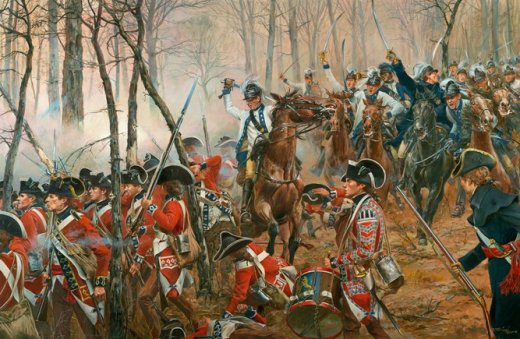



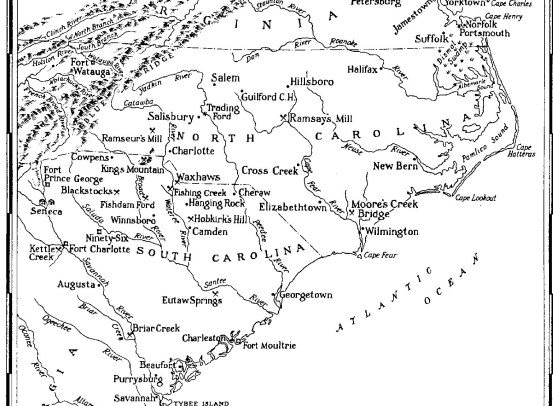
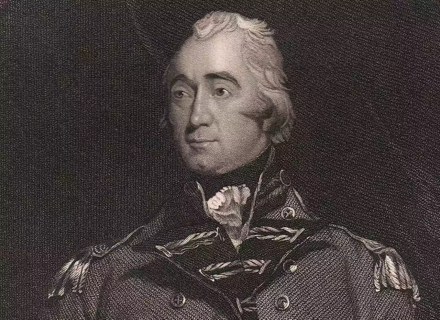

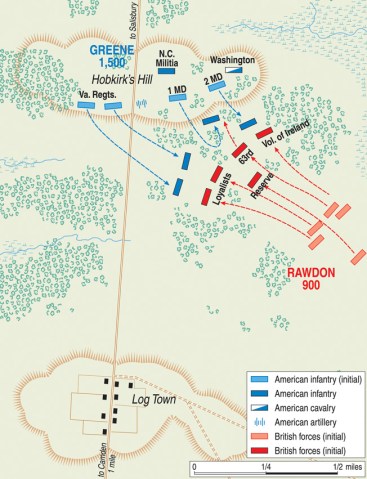


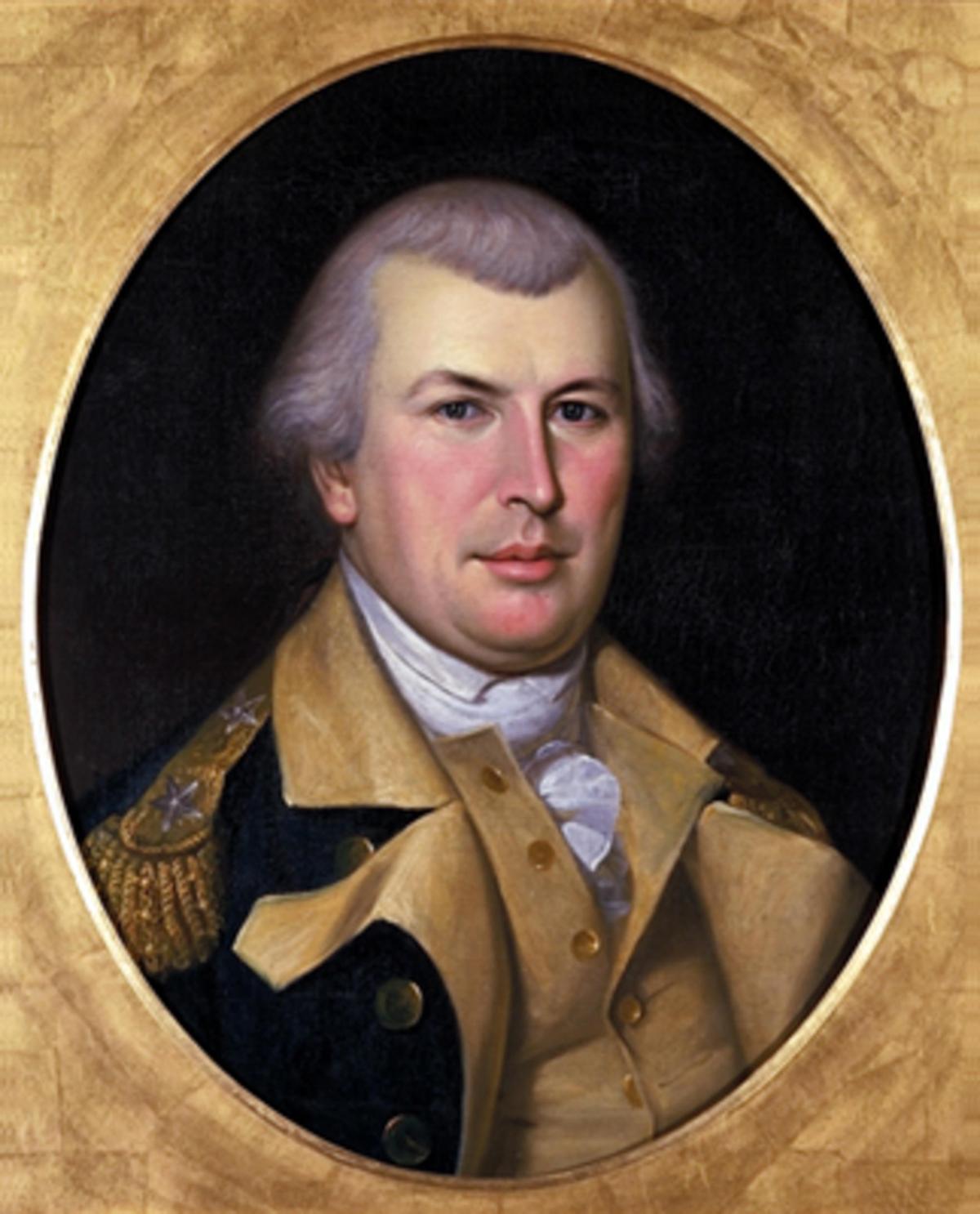

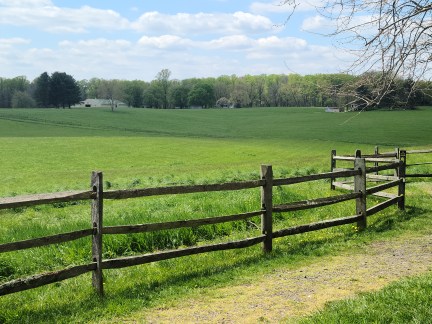


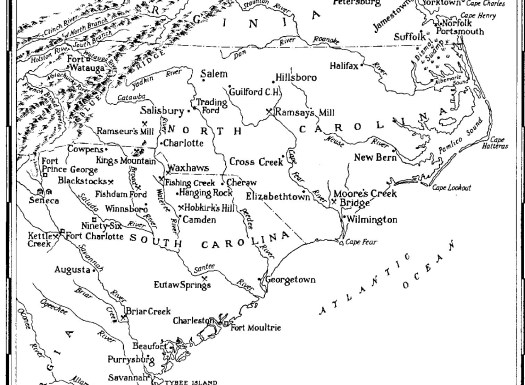

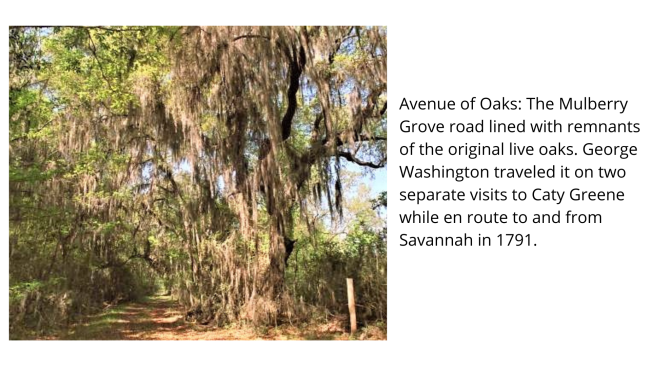


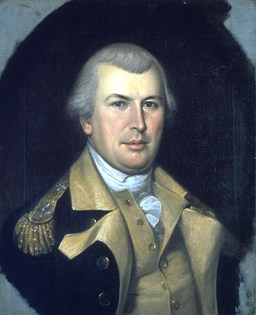
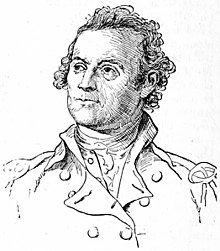

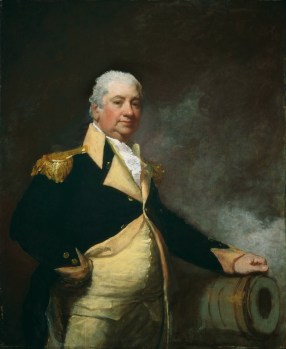


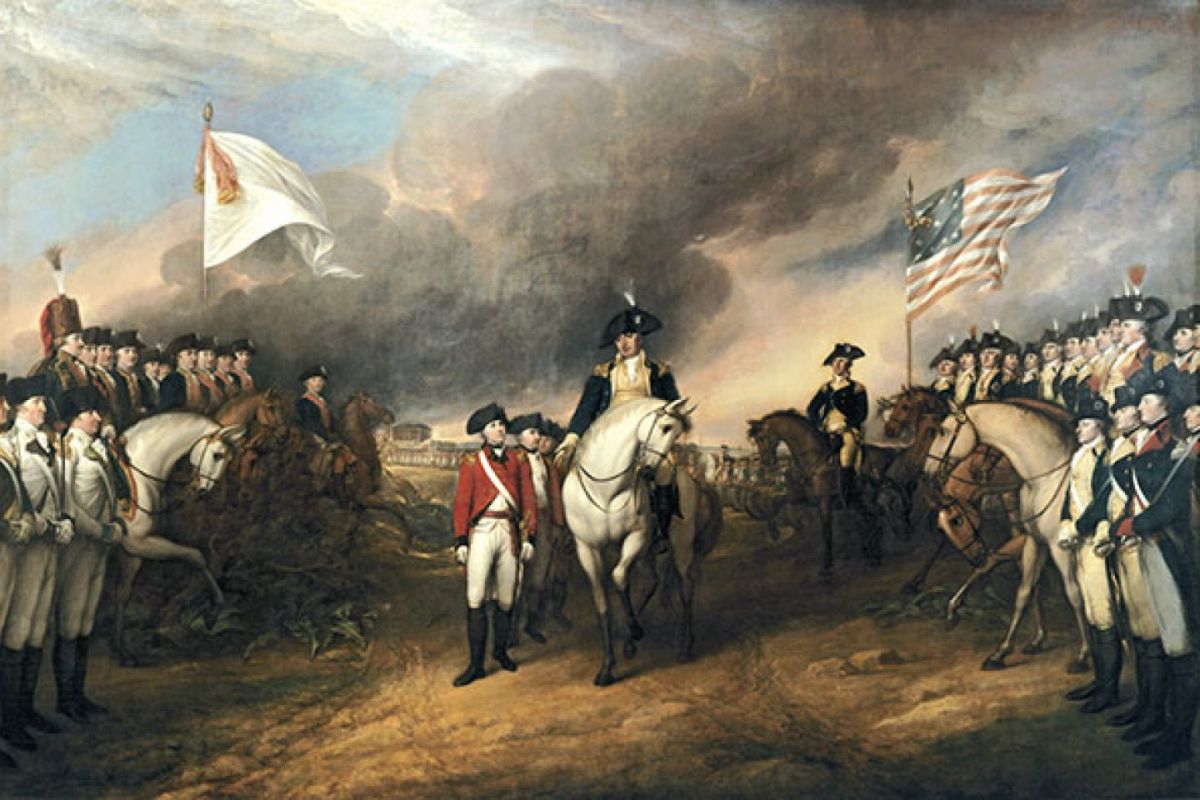
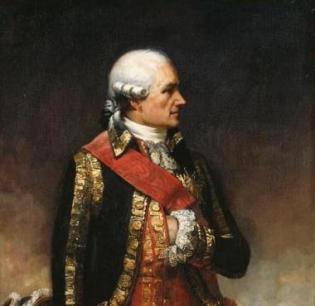
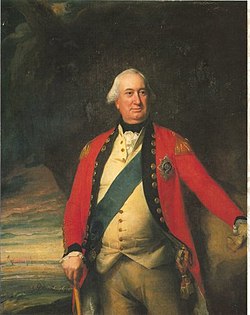


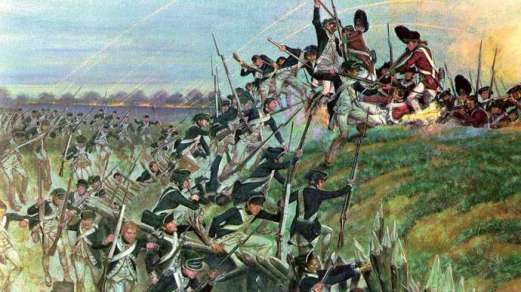

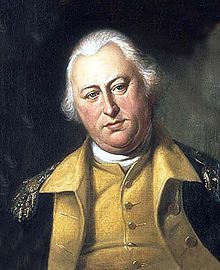


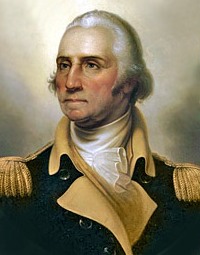


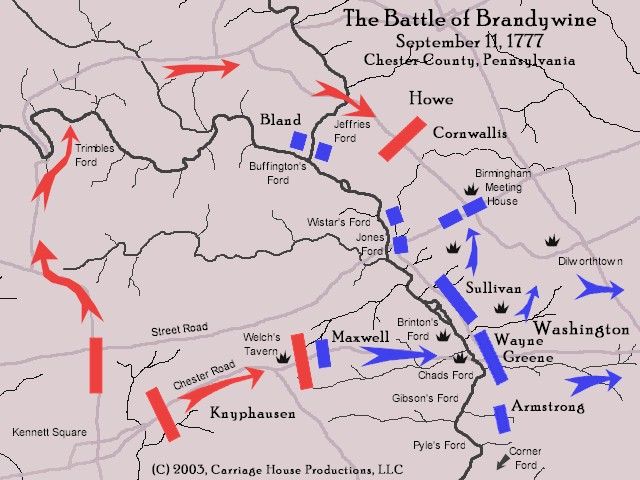
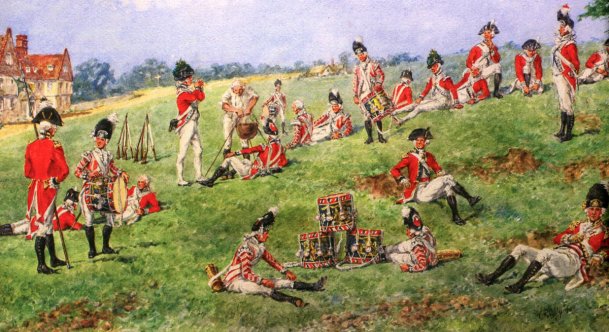
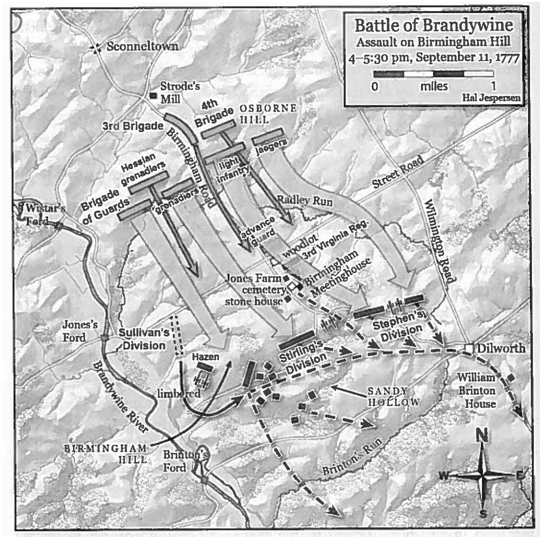


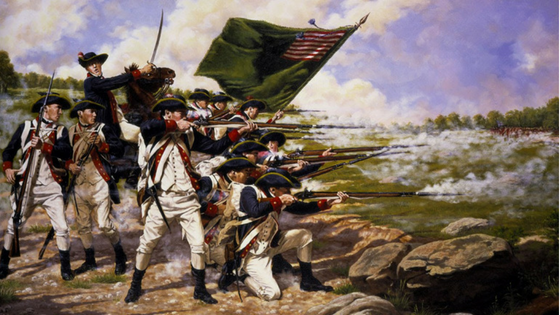
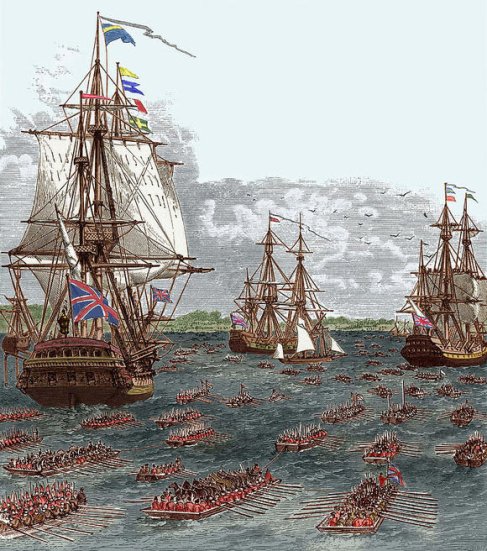


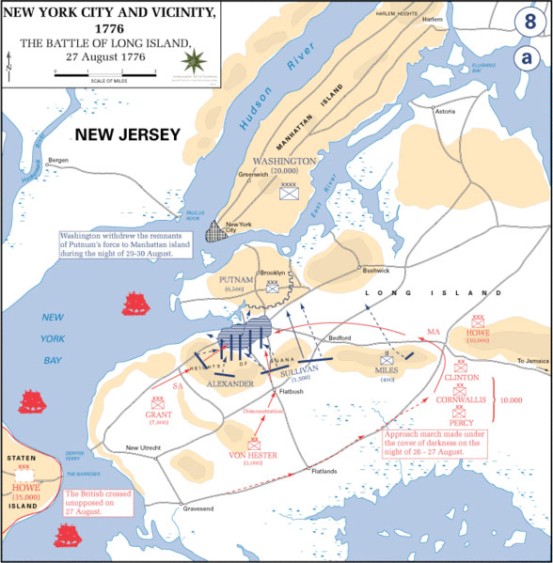


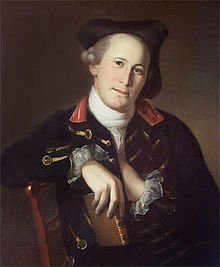
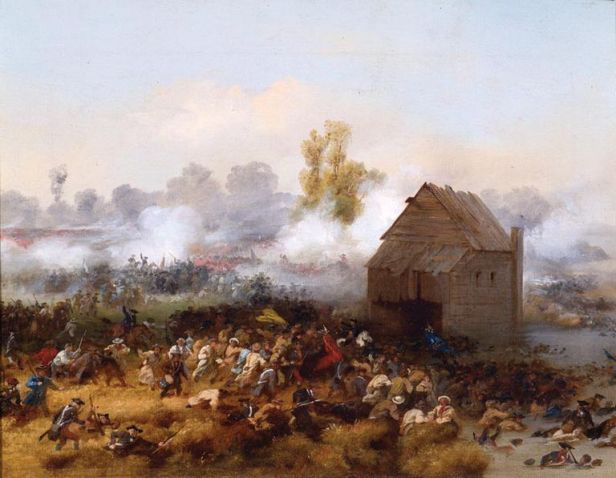
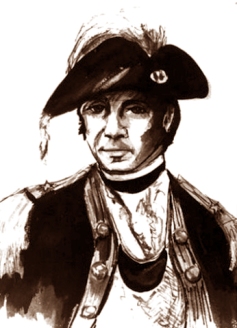
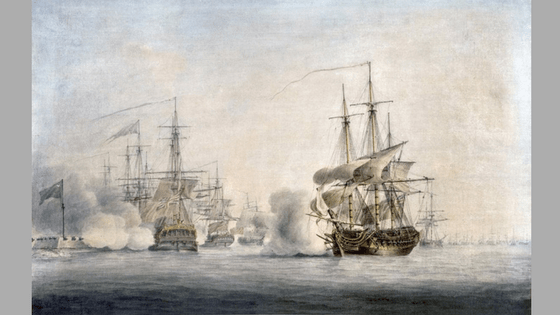

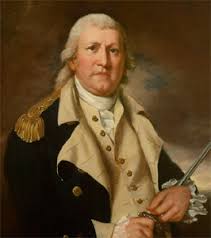


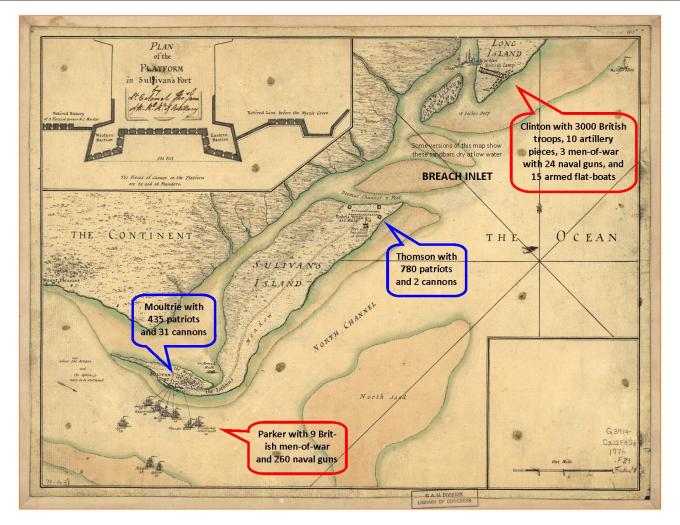

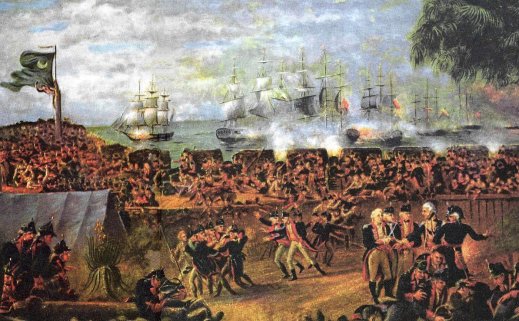
 Moultrie designed a blue flag with a white crescent moon in the canton with the word “Liberty” on the moon. Keeping with this theme, Moultrie’s South Carolina regiments wore blue uniforms with a silver crescent on their caps and the words “Liberty or Death.” Moultrie chose the design to honor his soldiers and continued the tradition of using the crescent as a symbol of resistance to tyrannical rule.
 It is exactly the same as the original, except that the word “Liberty” is removed from the crescent and it has a Palmetto Tree added in the center of the blue field. The Palmetto Tree was added by the state during the Civil War. Several variations appeared during that time, but the version with the palmetto added, to represent the palmetto logs that were used at Fort Moultrie, is the one that survived as the official flag of South Carolina.


 Salina B Baker