Evacuation Day: The End of the Siege of Boston

On March 5, 1776, as the sun rose over Boston, the British were shocked to see two American redoubts atop the hills of Dorchester—one facing east toward Castle Island and the other facing north toward Boston, with two smaller works on their flanks and heavy artillery staring down on the town.

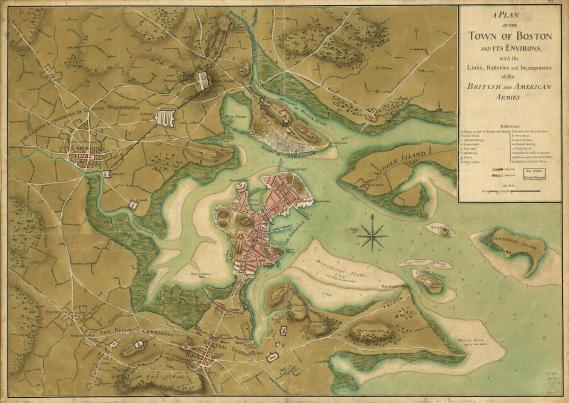
Siege_of_Boston_1776

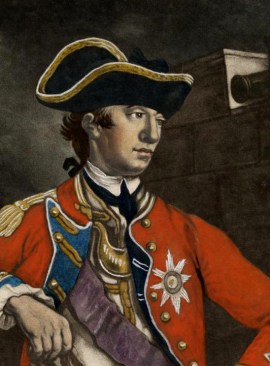
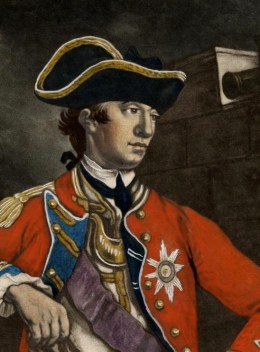
British General William Howe was said to have exclaimed, “My God, these fellows have done more work in one night than I could make my army do in three months!”

Howe had been confident that the rebels would never make a move on Boston, and had promised to sally forth if they did so. As a matter of pride, he would have to attack as he vowed. His council of war believed an attack would be a terrible mistake. Despite their objections, Howe ordered 3000 troops to embark down the harbor to Castle Island from where an assault on the Heights would be launched at nightfall.

Among General Howe’s council, Captain Archibald Robertson, Captain John Montresor, and Lord Hugh Percy contended that they “ought to immediately embark” Boston all together.  By nightfall, a storm that some judged to be a hurricane, raged. Howe was glad to accept this interruption as an excuse for not undertaking an attack that would have cost the lives of many of his regulars. The following morning, he called back the detachment and informed his war council of his intentions of evacuating Boston and going to Halifax, Nova Scotia.
WilliamHowe1777ColorMezzotint_(crop)
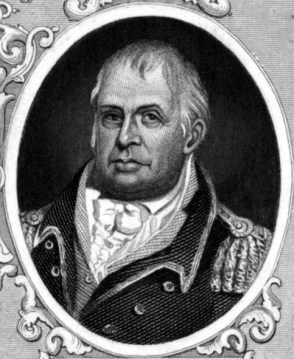
General William Howe

After Howe made his announcement ordering the army and fleet to prepare to evacuate, Boston became a scene of utmost frenzy. Howe had received no orders or word of any kind from the British Secretary of State for the Colonies, Lord Germain, since October. He had no long-standing plan for a withdrawal of such magnitude, or any comparable past experience to draw upon.

It was not just the thousands of troops and military stores to transport. Howe intended to take every loyalist who chose to go. The necessary care of women and children, and the sick and wounded required every assistance that could be given. There were a sufficient number of ships at hand, but these all needed sailors and had to be supplied with provisions and water; which were scarce.

High winds continued to blow and churn the waters of Boston Harbor. The rebel guns (Henry Knox captured from Fort Ticonderoga) remained silent while they strengthened their position on Dorchester Heights.

On March 8, American selectman Deacon Timothy Newell and other intermediaries crossed through the lines at Boston Neck carrying a white flag, and delivered a message informing Washington that the city would not be burned to the ground if the British were allowed to leave unmolested.

The alarm and anxiety among the loyalists was extreme. “The Tories…carried death in their faces…some run distracted.” They had no idea where they were heading, nor did they know if there was room for all who wanted to go. Most of them had never lived anywhere else. They were disillusioned and disoriented. They saw themselves as the true American patriots; loyal to their King and to the rule of law. Britain had failed to protect them from what, in their opinion, had become mob rule.

These fourth and fifth generation Americans began boarding ships on March 10. Accommodations on the overcrowded ships were wretched. There were no berths in which to sleep. Families, some as large as seventeen members, were forced to sleep on the crowded floor like “pigs“. There was little food and water. All wondered, what miseries lay at sea?

In the next days, the ships began falling down the harbor with the tide as far as the Nantasket Roads, below Castle Island, to anchor out of range of the rebel cannon and to provide space for other vessels to tie up at the wharves. There the exiles sat on the rocking waves, day after day. Not until Sunday, March 17, St. Patrick’s Day, did the wind turn fair and favorable.

British Captain Archibald Robertson exuberated in his journal: “It was the finest day in the world.”
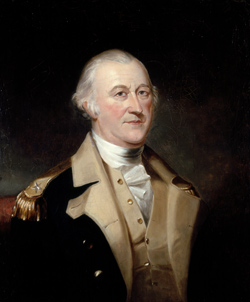
Image from the collections of the Massachusetts Historical Society.
General Artemas Ward

Led by General Artemas Ward, on horseback, the Americans entered the town with drums beating and flags flying. By all rights, it should have been Washington leading the troops, but in a gracious gesture he gave the honor to Ward, his predecessor as commander of the Provincial Army.

American General William Heath wrote in his memoirs:

“In the morning [of the 17th] the British evacuated Boston; their rear guard with some marks of precipitation. A number of cannon were left spiked, and two large marine mortars, which they in vain attempted to burst. The garrison at Bunker’s Hill practised some deception to cover their retreat. They fixed some images, representing men, in the places of their centinels, with muskets placed on their shoulders, &c. Their immovable position led to the discovery of the deception, and a detachment of the Americans marched in and took possession.

The troops on the Roxbury side, moved over the Neck and took possession of Boston; as did others from Cambridge, in boats. On the Americans entering the town, the inhabitants discovered joy inexpressible. The town had been much injured in its buildings, and some individuals had been plundered. Some British stores were left. The British army went on board their transports below the Castle. A number of American adherents to them, and the British cause, went away with the army.”

More than twenty-five British brigs, schooners, sloops, and ships had been abandoned, some loaded with stores and all of them scuttled. The dragoons had left horses in the stables along with tons of hay. Broken carriages and chaises littered Long Wharf.

After entering Boston, Dr. John Warren, General Joseph Warren’s youngest brother noted:

“The houses, I found to be considerably abused inside, where they had been inhabited by the common soldiery but the external parts of the houses made a tolerable appearance. the streets were clean. . .The inhabitants, in general, appeared to rejoice at our success, but a considerable number of Tories have tarried in the town to throw themselves on the mercy of the people.”

But William Howe had no intention of leaving Boston without a parting demonstration. His fleet came to anchor at King’s Road, and with the arrival of his flagship, Chatham, every warship fired a roaring 21-gun salute. The full guns of Chatham answered in kind—a reminder of King George III’s royal might.

On March 19, the last of the British might in Boston Harbor blew up Castle William and burnt some of the barracks. There was a lazy attempt to cannonade Dorchester Neck. Then, on March 27, they headed for open sea.
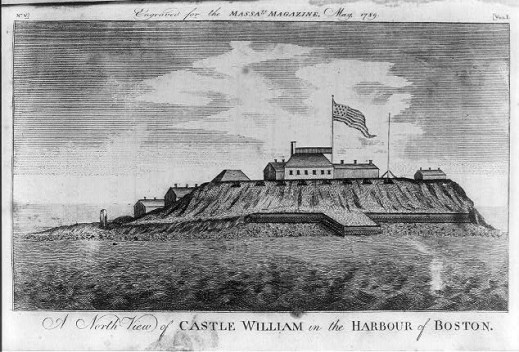
1789_CastleWilliam_BostonHarbor_MassachusettsMagazine

George Washington was convinced that their destination was New York. Howe’s fleet disappeared over the horizon, bound not for New York, but Halifax, Nova Scotia.

The siege, which had begun on April 19, 1775, had been a success, and George Washington’s performance had been exceptional. He had indeed bested Howe and his regulars, despite the Continental Army’s insufficient arms, ammunition, shelter, illness, inexperience, lack of discipline, clothing and funds.

By purging itself of loyalists, Boston had reaffirmed its origins and was, once again, its own “city on a hill.”

6055534625_65297500c9_z
Lithograph: Boston From Dorchester Heights

Resources:

Flexner, James Thomas. Washington The Indispensable Man. 1974: Back Bay Books/Little, Brown and Company, New York, NY.

Memoirs of Major-General Heath. Containing Anecdotes, Details of Skirmishes, Battles, and other Military Events, During The American War. Written Br Himself. publithtrt accorying to 3ft of Congrefa. Printed at Boston, Bt I. THOMAS and E. T. ANDREWS, Faust’s Statue, No. 45, Newburt-Street. Sold by them; by I. Thomas, Worcefter; by Thomas, Andrew! Is” Pen- himam, Albany j by Thomas, Andrews (9* Butler, Baltimore; and by the Bookfellers throughout the Continent. MUG. I798.

McCullough, David. 1776. 2005: Simon & Schuster, New York, NY.

Philbrick, Nathaniel. Bunker Hill A City, A Siege, A Revolution. 2013Penguin Books, New York, NY.

Warren, M.D., Edward. The Life of John Warren, M.D. Surgeon-General During The War Of The Revolution; First Professor Of Anatomy And Surgery In Harvard College; President of the Massachusetts Medical Society, Etc. 1874: Noyles, Holmes, and Company, Boston

Lithograph. Title: Boston from Dorchester Heights Creator/Contributor: Coke, E. T. (Edward Thomas), 1807-1888 (artist) Date created: 1830 – 1839 (approximate) Provenance: Statement of responsibility: Drawn on stone by Punser from a sketch by E. T. Coke Location: Boston Public Library, Print Department


Dr. Joseph Warren’s 1775 Boston Massacre Oration


On the night of March 5, 1770, a conflict occurred between eight British soldiers and their captain and a crowd of citizens angered that British regiments occupied their town. The crowd threw snowballs, oyster shells and wielded clubs to taunt the soldiers near the Custom House. The confrontation resulted in the soldiers firing into the crowd, killing five and wounding others. Dr. Joseph Warren was one of the doctors called to treat the wounded and perform autopsies on the dead. The Patriots vowed not to forget “the bloody massacre” that would later become known as The Boston Massacre. Each year after, on March 5, they held an oration to remind the town of the event.

Paul Revere’s engraving of the Boston Massacre copied from an earlier version by Henry Pelham. Gilder-Lehrman Institute of American History.

In 1775, March 5 fell on the Sabbath. Therefore, “at a Meeting of the Freeholders & other Inhabitants of the Town of Boston…The Comittee appointed by the Town…to apply to a proper Gentleman to deliver an Oration…had made Choice of Joseph Warren Esq. to deliver an Oration on the 6th. of March instant, who had accordingly accepted of said Service.” It was voted that the oration be delivered “at the Old South Meeting House half past 11 O’Clock A.M.”

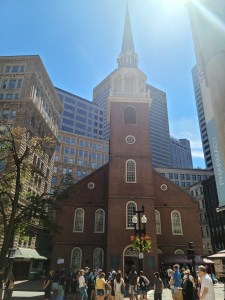
Old South Meeting House circa 2022

Boston buzzed with excitement. The oration was considered a town meeting—illegal under the Massachusetts Government Act. Unlike previous occasions of the commemoration, British troops were abundant in Boston (they had been removed to Castle William after the massacre). The British soldiers were going to resent an oration whose purpose was, in the words of Samuel Adams, “to commemorate a massacre perpetuated by soldiers and to show the danger of standing armies.” Dr. Joseph Warren had delivered the oration in 1772. Samuel Adams wanted Warren’s experience in the pulpit. He knew that Warren would not be intimidated.

In his diary for September 6, 1775, from England, former Massachusetts Governor Thomas Hutchinson mentioned a call from a Colonel James. “He tells an odd story of the intention of the Officers the 5 [six] March that 300 were in the Meeting to hear Dr Warrens oration— that if he had said anything against the King &c an Officer was prepared who stood near, with an Egg to have thrown in his face and that was to have been a signal to draw swords & they would have massacred Hancock Adams & hundreds more & he added he wished they had.” Hutchinson commented, “I am glad they did not for I think it would have been an everlasting disgrace to attack a body of people without arms to defend themselves.”

A crowd of 5,000 gathered at Old South Meeting House including those British officers. Samuel Adams “had long expected they would take that Occasion to beat up a Breeze” and invited them to sit in the pews directly in front of the pulpit so they “might have no pretence to behave ill.” This put the soldiers uncomfortably close to the many leading patriots in attendance. The officers were not only sitting in the pews, some were seated on the steps leading up to the pulpit, and some were sitting on the pulpit itself.

The pulpit today at Old South Meeting House circa 2017.

After spending the morning treating patients, Dr. Warren arrived around eleven o’clock. Rivington’s New York Gazette reported, “A single horse chair stopped at the apothecary’s opposite the meeting, from which descended the orator [Warren]…and entering the shop, was followed by a servant with a bundle, in which were the Ciceronian toga…Having robed himself, he proceeded across the street to the meeting.” A toga was worn by a citizen of Rome and distinguished him from a soldier or a slave. As a student at Harvard, Warren had performed the popular play Cato with his classmates. By wearing a toga, Warren was sending a strong message: citizens would not be intimidated by tyrannical threats.

Since the meetinghouse was jammed with people, he was taken around to the back of the building, where he climbed a ladder to access the pulpit through the rear window. The pulpit was covered in black cloth provided by John Hancock. A soldier grunted. One barked, “Scoundrel.” Warren ignored the British officers who meant to coerce him, looked out over the audience and began to speak. “My ever honored fellow citizens, it is not without the most humiliating conviction of my want of ability that I now appear before you: but the sense I have of the obligation I am under to obey the calls of my country at all times, together with an animating recollection of your indulgence exhibited upon so many occasions, has induced me once more, undeserving as I am, to throw myself upon that candor which looks with kindness on the feeblest efforts of an honest mind.”

He contended that personal freedom is the natural right of every man. “And no man or body of man, can without being guilty of flagrant injustice, claim a right to dispose of the person or acquisitions of any other man, or body of men, unless it can be proved that such a right has arisen from some compact between the parties in which it has been explicitly and freely granted.”

He spoke of their forefathers having nobly resolved never to wear the yoke of despotism, but tyranny, when once established, entailed its curses on a nation. Yet, there was a time when America and Great Britain became so united in affection both countries flourished due to mutual prosperity. He proclaimed, “The hearts of Britons and Americans, which lately felt the generous glow of mutual confidence and love, now burn with jealousy and rage. The many injuries offered to the town, I pass over in silence. I cannot now mark out the path which led to that unequaled scene of horror, the sad remembrance of which, takes the full possession of my soul. The sanguinary theatre again opens itself to view. The baleful images of terror crowd around me, and discontented ghosts, with hollow groans, appear to solemnize the anniversary of the fifth of March. Approach we then the melancholy walk of death.”

When Warren spoke of the events of March 5, 1770, he focused on the agony and despair of the families who had lost loved ones that night. “Come widowed mourner, here satiate thy grief; behold the murdered husband gasping on the ground, and to complete the pompous show of wretchedness, bring in each hand thy infant children to bewail their father’s fate. Take heed, ye orphan babes, lest, whilst your streaming eyes are fixed upon the ghastly corpse, your feet glide on the stones bespattered with your father’s brain.”

Warren’s voice rose to an emotional crescendo. “Our country is in danger, but not to be despaired of. Our enemies are numerous and powerful; but we have many friends, determine to be free, and heaven and earth will aid the resolution. On you depend the fortunes of America. You are to decide the important question, on which rest the happiness and liberty of millions yet unborn. Act worthy of yourselves. An independence from Great Britain is not our aim. No, our wish is that Britain and the colonies may, like the oak and the ivy, grow and increase in strength together. The interest and safety of Britain, as well as the colonies, require that the wise measures, recommended by the honourable Continental Congress, be steadily pursued. But if these pacific measures are ineffectual, and it appears that the only way to safety, is through fields of blood, I know you will not turn your faces from your foes, but will, undauntedly, press forward, until tyranny is trodden under foot, and you have fixed your adored goddess Liberty on the American throne.”

He finished by stating, “With having redeemed your country, and secured the blessing to future generations, who, fired by your example, shall emulate your virtues, and learn from you the heavenly art of making millions happy; with heart felt joy, which transports all your own, you cry, the glorious work is done. Then drop the mantle to some young Elisha, and take your seats with kindred spirits in your native skies.”

The audience stood to a thundering applause. What happened next was recorded in the diary of Lieutenant John Barker of the King’s Own Regiment. “…when after he [Warren] had finished a most seditious inflammatory harangue, John Hancock stood up and made a short speech in the same strain, at the end of which some of the Officers cried out, fie! fie! Which being mistaken for the cry of fire an alarm immediately ensued, which fill’d the people with consternation that they were getting out as fast as they cou’d by the doors and windows. It was imagined that there wou’d have been a riot, which if there had wou’d in all probability have proved fatal to Hancock, Adams, Warren, and the rest of those Villains as they were all up in the pulpit together, and the meeting was crowded with Officers and Seaman in such a manner that they cou’d not have escaped; however it luckily did not turn out so, it wou’d indeed have been a pity for them to have made their exit that way, as I hope we shall have the pleasure before long of seeing them do it by the hands of the Hangman.”

The British responded to Warren’s Boston Massacre Oration with ridicule. On March 15, 1775, British officers and Loyalists gathered on King Street and then proceeded to the nearby British Coffee House where they conducted a mock town meeting. Loyalist physician Thomas Bolton, read a satirical lampoon of Warren’s oration. In addition to his assault on Warren, Bolton reviled other prominent Patriots including John Adams, John Hancock, John Rowe, Charles Lee, William Molineux, Samuel Cooper, Josiah Quincy, and Dr. Thomas Young. Bolton accused that William Molineux, who died in 1774, “through the Strength of his own Villiany, and the Laudanum of Doctor Warren, he quitted this planet and went to a Secondary one, in search of Liberty.”

Despite the Loyalist reaction, “the Thanks of the Town [Boston] be & hereby are given to Joseph Warren Esq. for the Elegant & Spirited Oration delivered by him at their Request.”


References:

Photos of Old South Meeting House by Salina B Baker.

Barker, John. The British in Boston Being the Diary of Lieutenant John Barker of the King’s Own Regiment from November 15, 1774 to May 31, 1776.Cambridge: Harvard University Press, 1924. https://www.google.com/books/edition/The_British_in_Boston/fY0rAQAAIAA

City of Boston. A Report of the Record Commissioners of the City of Boston Containing the Boston Town Records, 1770-1777.  Boston: Rockwell and Churchill, City Printers, 1887. https://archive.org/details/recordsrelatingt18bost

Cushing, Harry Alonzo. The Writings of Samuel Adams, Volume III,1773-1777. The Project Gutenberg eBook of The Writings of Samuel Adams – Volume 3, 2015. https://www.gutenberg.org/cache/epub/2093/pg2093-images.html

Di Spigna, Christian. Founding Martyr: The Life and Times of Dr. Joseph Warren, the American Revolution’s Lost Hero. New York: Crown, 2018.

MHS Collections Online. An Oration delivered March 15th 1775 from the Coffee House by Doctor Thomas Bolton. https://www.masshist.org/database/viewer.php?item_id=3034&img_step=1&pid=34&mode=dual

UNIVERSITY OF MICHIGAN LIBRARY, M|LIBRARY Digital Collections. An oration; delivered March sixth, 1775. At the request of the inhabitants of the town of Boston; to commemorate the bloody tragedy of the fifth of March, 1770. / By Dr. Joseph Warren. ; [Two lines of quotations in Latin] https://quod.lib.umich.edu/cgi/t/text/text-idx?c=evans;cc=evans;rgn=div1;view=text;idno=N11558.0001.001;node=N11558.0001.001:4


The Taking of Dorchester Heights

General George Washington, the newly appointed commander-in-chief of the fledgling Continental Army, arrived at army headquarters in Cambridge, Massachusetts on July 2, 1775. The amateur general desired to prove himself with an assault on besieged Boston that would end the war in one fell swoop. The Continental Congress and Washington’s war council refused to allow it. Without consent, and a lack of gunpowder, heavy weaponry, and congressional funding, offensive operations were virtually impossible.

Henry_Knox_by_Gilbert_Stuart_1806
General Henry Knox

But he would have his artillery. By the end of January 1776, Henry Knox had returned to Cambridge with “a noble train of artillery.” The expedition to retrieve the guns from Fort Ticonderoga, at the southern tip of Lake Champlain, had been an astounding feat of fortitude.

In a meeting of his war council, on February 16, 1776, Washington argued for attacking Boston. “A stroke well aimed at this critical juncture might put a final end to the war.”

General Nathanael Greene was concerned that an assault on a town garrisoned with British regulars could have horrible consequences, “horrible if it succeeded, and still more horrible if it failed.”

“Our defeat may risk the entire loss of liberties of American forever,” General Horatio Gates stated.

General Artemas Ward, the commanding officer of the army prior to Washington’s arrival, maintained, “The attack must be made with a view of bringing on an engagement, or of driving the enemy out of Boston and either end will be answered much better by possessing Dorchester Heights.”

Image from the collections of the Massachusetts Historical Society.
General Artemas Ward

Washington’s previous plan had been to attack across the frozen waters of Back Bay. Holding on to part of that plan, he proposed a backdoor amphibious assault launched from Cambridge. The Americans would cross Back Bay to Boston’s western shores.

General William Heath pointed out that if the enemy did “make a sally” from Boston, British General William Howe would provide for defense of the town. Washington’s plan to expect his soldiers to cross a mile and a half of open water in the face of British artillery “was madness”.

William_E_Heath
General William Heath

It was finally agreed to build fortifications on Dorchester Heights on a single night before the British knew what was happening, just as had been done at Bunker (Breed’s) Hill. The operation would require the procurement, supply, and maintenance of equipment, as well as, movement of troops and hospitalization of the wounded. Those things would prove to be as challenging as the military engagement.

Freezing temperatures meant that building a redoubt atop the bare, rock-hard, wind-swept hills of Dorchester was going to be difficult. The solution came from an unexpected source—Lieutenant Colonel Rufus Putnam, a cousin of General Israel Putnam. Rufus had worked beside a few British engineers during the French and Indian War. Washington asked him to devise a way to quickly build a fortification on the Heights.

Rufus borrowed a book from General William Heath titled Attack and Defense of Fortified Places by the British engineer John Muller. On page 4, he discovered an engineering term he had never heard before: chandelier.

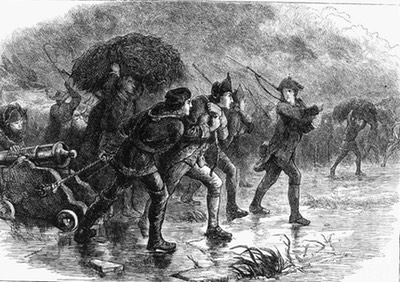
A chandelier was a double-ended wooden scaffold that sat on the ground: when it was placed beside another chandelier, the open space between the two frames was filled with fascines; bundles of tree branches that when covered with dirt formed the basis of a cannon-proof bulwark. With dozens of precut chandeliers and fascines, the Americans could create the beginnings of a redoubt atop Dorchester Heights.

Chandeliers-and-fascines
Two chandeliers, stacked with fascines.

Putnam took his plan to construct chandeliers to colonels Richard Gridley and Henry Knox. In turn, the three went to see George Washington. The solution was a scheme whereby the fortifications would be fabricated elsewhere out of sight, then, with massed manpower and oxen, hauled, along with the heavy cannon, to Dorchester Heights, where all would have to be in place and ready for action before daylight on March 5; the sixth anniversary of the Boston Massacre.

As a diversion, a cannonade and bombardment would begin against the British works on Boston Neck and Bunker Hill from the American works on Cobble Hill and Lechmere’s Point in Cambridge and from Lamb’s Dam on the Roxbury side. This required the placement of some of the heavy cannons from Ticonderoga. The causeway from Roxbury to Dorchester would be lined with a long barrier of hay bales to block the enemy’s view of the Americans moving to the Heights.

Men were dispatched to round up wagons, carts, and 800 oxen. The army’s hospital in Cambridge was readied. Notices in the Boston Gazette, published out of Watertown, called for volunteer nurses. 2000 Massachusetts militia were called out.

Work details, in Roxbury, cut down trees to make chandeliers, barrels, abatis, fascines, and gabions. The barrels would be set in rows in front of the parapets to present the appearance of strengthening the works; but the real design was, in case the British made an attack, to roll them down the hill toward the approaching enemy. Carpenters in Cambridge built 45 flat-bottomed bateaux, each capable of carrying 80 men, along with two floating batteries.

For miles around, everyone was expecting something. Bets were wagered on what would happen and when. Abigail Adams wrote to her husband, John, in Philadelphia:

“The preparations increase and something is daily expected, something terrible it will be. I have been in a continual state of anxiety and expectation . . . it has been said ‘tomorrow’ and ‘tomorrow’ for this past month, but when the dreadful tomorrow will be I know not.”

Washington’s fear that the American operation would be discovered was fueled when a Virginia rifleman deserted to the British. Generals William Heath and John Sullivan personally inspected the lines to ensure that the guards on duty were vigilant on the chance that British got wind of what was happening and moved first to occupy the Heights.

On the night of February 27, Colonel Henry Knox led a group of his artillerymen to install cannon and mortars on Lechmere Point. The cannonade began from there on the night of March 2. Cannons began lobbing shot and shells into Boston to divert the enemy and drown out the noise of the work parties. The British responded with a furious cannonade of their own.

Siege_of_Boston_1776

On the night of March 4, at 7:00 p.m. Henry Knox’s regiments began firing from Roxbury, Lechmere Point, and Cobble Hill at a ferocious rate. The roar of British guns answered.

British captain Charles Stuart described sheets of fire filling the sky, and that “the inhabitants [of Boston] were in a horrid situation, particularly the women…drove from their houses by shot, and, crying for protection.”

When the cannonading began, General John Thomas, with 2000 men, started across the Dorchester causeway, moving rapidly and silently, shielded from view by the long barrier of hay bales. An advanced guard of 800 men made up largely of riflemen, went first, to fan out along the Dorchester shores. A work party of 1,200 men followed the riflemen. Then came the hundreds of heavy wagons loaded with chandeliers, fascines, hay bales, barrels, and the guns from Ticonderoga. Progress up the steep smooth slopes was extremely difficult, yet some of the ox teams and wagons made several trips.

iu-11-2_med_hr(1)

At Cambridge, generals Nathanael Greene and John Sullivan readied 4000 troops for an amphibious assault in the event of a signal from the Roxbury meetinghouse.

The night proved to be perfect for the work operation to come. The weather was unseasonably mild. A low-lying haze prevented the British from seeing much of anything beyond Boston, and a full moon provided the Americans with the light they needed to see their way. On the Heights, the troops went to work with picks and shovels to arrange the chandeliers and fascines, and dig ditches and build breastworks. By 10:00 pm, the fortifications were sufficiently ready to defend against small arms and grapeshot.

A British lieutenant colonel, Sir John Campbell, reported to British General Francis Smith that the rebels were at work on Dorchester Heights. Smith chose to ignore it. From that point on, the work proceeded unnoticed.

General William Heath wrote, “Perhaps there never was so much work done in so short a space of time.”

At first light, the British were shocked to see two redoubts atop the hills of Dorchester—one facing east toward Castle Island and the other facing north toward Boston, with two smaller works on their flanks and heavy artillery staring down on the town.

WilliamHowe1777ColorMezzotint_(crop)
General William Howe

General William Howe was said to have exclaimed, “My God, these fellows have done more work in one night than I could make my army do in three months!”

Howe had been confident that the rebels would never make a move on Boston, and had promised to sally forth if they did so. As a matter of pride, he would have to attack as he vowed. His council of war believed an attack would be a terrible mistake however, despite their objections, Howe ordered 3000 troops to embark down the harbor to Castle Island from where an assault on the Heights would be launched at nightfall.

Among General Howe’s council, Captain Archibald Robertson, Captain John Montresor, and Lord Hugh Percy contended that they “ought to immediately embark” Boston altogether. By nightfall, a storm that some judged to be a hurricane, raged. Howe was glad to accept this interruption as an excuse for not undertaking an attack that would have cost the lives of many of his regulars. The following morning, he called back the detachment and informed his war council of his intentions of evacuating Boston and going to Halifax, Nova Scotia.

On March 17, 1776, General Howe and his army evacuated Boston ending the eleven month long siege. On March 19, the last of the British might in Boston harbor Blew up Castle William and burnt some of the barracks. There was a lazy attempt to cannonade Dorchester Neck. Then, on March 27, they headed for open sea.


Resources:

http://www.processhistory.org/gw-cambridge/

https://en.wiktionary.org/wiki/chandelier

Memoirs of Major-General Heath. Containing Anecdotes, Details of Skirmishes, Battles, and other Military Events, During The American War. Written Br Himself. publithtrt accorying to 3ft of Congrefa. Printed at Boston, Bt I. THOMAS and E. T. ANDREWS, Faust’s Statue, No. 45, Newburt-Street. Sold by them; by I. Thomas, Worcefter; by Thomas, Andrew! Is” Pen- himam, Albany j by Thomas, Andrews (9* Butler, Baltimore; and by the Bookfellers throughout the Continent. MUG. I798.

Philbrick, Nathaniel. Bunker Hill A City, A Siege, A Revolution. 2013Penguin Books, New York, NY.

McCullough, David. 1776. 2005: Simon & Schuster, New York, NY.