A Covenant of Blood: Portraying Major John Pitcairn in Historical Fiction: Guest Post by Avellina Balestri

Though I only recently published my first American Revolution novel, All Ye That Pass By: Gone for a Soldier, I have had the aspiration for some time, and have gone through variations of drafts since I was twelve. When I was fourteen, I even contacted the Dysart Trust and the Kirkcaldy Civic Society in the Lowlands of Scotland to learn more about their native son, Major John Pitcairn, the intrepid British marine officer who famously shouted “Disperse, ye rebels!” on Lexington Green where the American Revolution began. In the process, I befriended Carol McNeill, a stalwart historical society volunteer, who I carried on a regular correspondence with through phone and internet. I came to see her as my long-lost Scottish aunt and consider her to be one of the major influences of my formative years.

Together, we discussed many aspects of the town of Dysart’s history, as well as Major Pitcairn’s lineage. His mother was related to medieval royalty, and his father served as a chaplain under the Duke of Marlborough in the Cameronian Regiment. With a strong connection to the Covenanters, recruits to this regiment would be given Bibles upon entry and sometimes sign them in their own blood. This fierce and formidable nature passed on to John, who joined the Marines at a tender age and went on to serve with them for some 30 years, until his heroic death in action at the Battle of Bunker Hill. In his heroism that helped lay the groundwork for the marines eventually becoming a standing force and being named “royal,” as he had always hoped for throughout his career.

Pitcairn’s personal attitude towards colonial complaints on the eve of revolution was markedly unsympathetic, and he advocated taking a firm hand with the rabble-rousers. But in spite of being brusque in many instances, he came to command the liking of the Bostonian civilians among whom he was stationed. As representative of martial law on North Square, Pitcairn helped settle disputes between soldiers and civilians and organized comitees that prevented a break-down of civic order during the British occupation. One citizen of Boston called him “an amazingly gentle man”, and insisted that that “he was perhaps the only British officer in Boston who commanded the trust and liking of the inhabitants.” Even Patriot partisans and propagandists, who decided he was “a good man in a bad cause.” Ever the son of a preacher, he remained a regular church-goer, and although he had a salty tongue, he would abstain from swearing on the Lord’s Day.

In an official capacity, Pitcairn made an impression on his marines through his hands-on leadership style. He was a strict disciplinarian and demanded excellence, but led by example and maintained the same high standards in his own comportment. Ever active, he received daily reports from his battalion commanders, personally oversaw drilling, struggled to ascertain needed supplies from the high command, accompanied the marines on long marches into the hostile countryside, and at one point even lived with his men in the barracks Pitcairn was certainly not a person to cross, although he was generally humane in his treatment of those under his command, using the punishment of flogging only as a last resort, and even then with some distaste. He was also occasionally willing to spare the life of deserters. They earned respect for their tough, tenacious commander and came to view him as something of a surrogate father and embodiment of their fighting spirit. In time, he did turn them into an effective fighting force.

The Death of General Warren at the Battle of Bunker’s Hill, June 17, 1775 by John Trumbull. At right center, Pitcairn falls into the arms of his son.

Called “the best of husbands and fathers” by his intimates, Major Pitcairn tragically yet heroically fell into the arms of his marine son, William, when he was mortally wounded storming the rebel position at the Battle of Bunker Hill. Struck as many as four times in the chest (having already sustained two lesser wounds but refusing to retire), he died several hours later in Boston. His son William was seen wandering through a street after the battle, covered in blood. When someone approached to help him, he haltingly explained that it was not his blood but rather his father’s. “I have lost my father,” he murmured, close to tears. Some Marines nearby added, “We have all lost a father.” He truly had sealed his lifelong covenant as a gallant soldier and a faithful man in blood.

The following is an excerpt of Pitcairn’s first appearance in my novel Gone for a Soldier. He is attending a party in London where the protagonist, 18-year-old Edmund Southworth (alias Ned) has been taken by “Gentleman Johnny” Burgoyne. General Thomas Gage is also in attendance. I tried my best to stay as true to what we know of Pitcairn’s background and personality as I could, as well as representing Gage and the other historical characters in a believable manner, and I had a great deal of fun doing it! Major John Pitciarn, RIP.

(To purchase the Gone for a Soldier, from which this excerpt comes, in paperback or Kindle format, please go here: https://www.amazon.com/gp/aw/d/B0D9QMCS6N)

***

“Troubles?” came a gruff Scottish burr from behind them. “Send me to America, and by the faith of my body, these damned rebel bastards will disperse before I can get my sword out of the scabbard!”

Edmund turned to see a middle-aged man with wide brown eyes and a self-confident half-grin, dressed in an officer’s uniform with an anchor decorating his moon-shaped gorget.

“Ah, Major Pitcairn, allow me to introduce you to General Burgoyne’s traveling companion, who happens to probably be a distant relation of mine,” Gage said, gesturing to Ned. “Mister Edmund Southworth, this is Major John Pitcairn of His Majesty’s Marines.”

Pitcairn shook Ned’s hand so vigorously that Ned felt the need to check afterwards to make sure it was still attached to his wrist. “Come to join the service, lad?”

Ned cast a quick glance over his shoulder to see if Gage was likely to give away his recusancy. But the general kept his face suitably unexpressive. They were cousins indeed.

“I…have thought upon it, sir,” Ned answered.

“There’s a time for thinking and a time for action,” Pitcairn declared. “When I was younger than you, I was out about my duty, and all the better for it. The only real downside was the government’s unfortunate habit of disbanding the Marines, only to reassemble them, every other week. They seem to think we’re good for nothing but slicing off pirate’s heads and mopping the floor with Jacobite gore!”

“I think I might pay to see you personally confront pirates,” Gage declared. “Or one of those dreadful reptilian monsters lurking in Scottish lakes, for that matter…”

“What, pay me?” Pitcairn checked. “I just want to make sure the compensation is flowing in the right direction…”

Gage barely managed to suppress a laugh. “You may have to check with the admiralty about such matters…”

“Ohhhh don’t you get me started on that bloody ungrateful lot…”

“Now, now, my dear Major,” Gage chided him. “You know how quick they can be to interpret everything as mutinous. But you’ve survived worse at Louisbourg, alongside Brave Wolfe.”

“Yes, bottling up the frogs in their own damn pond, while they were shooting poisoned bullets at us, the Gallic curs!” Pitcairn snorted. “But we taught them a thing or two not to be forgotten, if they lived to remember, that is. Men of vision should have realized then and there the necessity of maintaining the Marines at all times. Someday we’ll be called royal, as God is my witness, and a man of my age and experience will be able to hold his head high as a general, as would be the case if I settled for an army commission. Mark my words, we will be made a standing force, ever on call to forward the national interest with fire and sword.…”

“Even if you remain the harshest critic of your own recruits,” Gage chuckled.

“It’s true that the damn animals passed onto me are never the easiest to train, but they always submit to me in the end, one way or t’other, and when we’re finally put into action, we’ll make any bloody revolutionary who dares to rear his ugly head submit to us.” He jutted out his chin.

“What if the next batch of recruits are short of stature like the last batch?” Gage inquired. “I know you were rather perturbed over the prospect.”

Pitcairn groaned. “I admit to having been hurt and mortified by their appearance. It can be a nightmare trying to clothe them in a manner not resembling clowns. If I have to blast out one more bloody Frenchman’s brains for daring to call us petits grenadiers, God spare me…”He paused his lament and stretched out his hand as if to measure Ned. “You, lad, you’re not too terribly short. Forsake the army, if they’re the ones after you, and cast your lot in with us.”

“I…umm…” Ned stammered.

“This young man and I were just having a religious conversation,” Gage remarked, as he poured Pitcairn a brandy. “So tell me, Major, as the son of the esteemed Reverend David Pitcairn, do you consider yourself a Presbyterian or an Anglican? Your father may have been a Presbyterian moderator, yet you’ve taken the Test Act affirming the King as governor of the Church of England and have a history of attending services of both persuasions. Indeed, on multiple occasions, we’ve witnessed each other receive the Sacrament of the Lord’s Supper under the auspices of the Church of England, yet when you are across the border in your native land, I hear that you still receive communion under the auspices of the Church of Scotland.”

“I’m a damned Protestant,” Pitcairn grunted, then raised his glass in a short salute. “If the King is the governor of the Church in England as well as a member of the Kirk in Scotland, according to the national settlement, my stance should be enough for any good Briton. Though I must say your King Henry was a damn greedy fellow…”

“No comment,” Gage sighed, and Ned couldn’t help but smirk.

“A bit of a loon too. Went through, what, six or seven wives? That’s a man just looking for trouble, if you ask me. One is quite enough…”

“You just nurse a grudge against King Henry because your relation Andrew Pitcairn and seven of his sons were slain at the Battle of Flodden,” Gage declared. “You blame us Englishmen for hammering the Scots again…”

“Perhaps I do,” Pitcairn admitted. “Family loyalty is precious to me. But there are other points of contention as well.”

“Such as?”

“The stuff that makes a real reformer,” the major replied. “Our man, John Knox, unlike King Henry, did not enrich himself by way of religious upheaval. He said, ‘None have I corrupted, none have I defrauded; merchandise have I not made.’ And he had no headless wives to haunt him either!”

“Well, no, but perhaps a monstrous regiment of women, and royal ones at that…”

“It was Mary Stuart that got under his skin,” Pitcairn specified. “She was Romish, through and through, and probably blew up one husband to move on to another…”

“But Knox even angered Queen Elizabeth in the south, a Protestant sovereign who might have been a source of succor for him, saying female rulers should be cast down,” Gage said.

“He didn’t mince words, I’ll give you that,” Pitcairn conceded. “But then again…”

“Neither do you.”

“Neither do I,” the major admitted. “That being said, Knox departed this veil of tears with his grieving wife by his bedside, reading Scripture to him as a good helpmate should. Also, like my father, I have managed to endure married life without any lethal explosions cutting short the experience. On top of that, my father was in the service of Good Queen Anne, so clearly, all’s well that ends well with the women.”

“So you people somehow charmed Queen Anne into forgetting your founder’s sentiments?”

“Oh, we can be the most charming folk alive when we want to be. Comes with being among the elect, you know!”

Edmund could see how much Pitcairn was enjoying himself, and found his daring sense of humor to be infectious. Ned giggled, and Pitcairn flashed a glance at him, resting his hand on his hip. “Who knows? We might even bother to pull the less fortunate folk of this island on board the ark on the day of the deluge, if you treat us right!”

“Well, if anyone could redeem us, your father was surely the man,” Gage said. “He will always be remembered not only for his piety but also for his gallantry as a chaplain in the Cameronian regiment.”

“Aye, alongside Marlborough on the continent,” Pitcairn confirmed. “He saw action at Blenheim.”

Gage turned to Ned. “The Cameronians are the inheritors of the Covenanters, you know. Altogether brazen folks, who refused to accept anything deemed too Papist from King Charles before the Civil War. When he tried to force them to accept his high liturgical tastes in the name of the Church of England, they signed their names to a covenant in Greyfriars Kirkyard…”

“And signed Bibles in blood,” Pitcairn finished, pouring some wine into his brandy.

“Good God, do the Cameronians still expect that sort of thing when it comes to the Bibles they give each new recruit?” Gage queried.

“Not expected,” Pitcairn said, stirring his brand and wine with his finger. “But not unexpected either.”

“Intense, that,” Gage chuckled.

“Nothing else will do for us, I’m afraid,” Pitcairn replied. “My father said it was our purpose to stand along the pathways of this world, crying, ‘Stay, passenger, read what we have written with our right hand!’”

“Your names,” Ned murmured. “That is what is written there, in your blood…”

Pitcairn smiled approvingly and nodded. “It’s just like in the Book of Life, on the Last Day. My father taught me that the devil is kept at bay by the man who puts the flow of his life upon the Word of God. That is the covenant, pure and simple, between God and man, sealed in blood. God’s blood. Our blood. That is everything in the end, aye, our last word upon any subject.”

Like a sacrament, Ned thought, though he dared not say it. An outward and visible sign of an inward and invisible grace.

“Once hunted by kings, then put into the service of kings,” Gage observed. “Quite an accomplishment for your people, Pitcairn.”

“Aye, when the rights of the Kirk were restored under William and Mary, we responded with the fiercest loyalty to the crown, and have done so ever since,” Pitcairn said. “But my father had greater hurdles to overcome than any past lack of royal patronage.”

“In what way?” Edmund asked.

Gage shot Ned a look as if cautioning him not to press the subject, but it was too late.

“He nearly killed himself trying to get our bloody roof fixed, because the damn committee in Dysart were too filthy cheap to cover the cost of either repairs or extensions for the manse next to Saint Serf’s church,” Pitcairn declared. “It was nigh uninhabitable, vermin-riddled, drafty, and leaking all over the damn place when it rained! I remember listening to mice gallivanting about all night and then having to ring out my soggy clothes in the morning! God’s bones! Five children and a maid in one room, that was how I grew up! No wonder I turned out like this! Pirates, Jacobites, and Frogs are nothing after being stuffed into a hole like bloody rabbits, and I was the youngest of the litter…”

“Oh…dear…” Ned managed awkwardly.

“Had to be christened the day I was born, and you know why?” Pitcairn pressed.

“Your father was a minister who could take care of the matter himself, and this auspicious birth occurred next door to the church to which he was assigned?” Gage offered.

“Besides that, though,” Pitcairn huffed. “It was December, along the Firth of Forth, in that miserable, medieval hovel! They thought I might not last the night!”

“Having experienced the chill of Scotland even in the spring, I sympathize with your plight coming into the world in an even more inhospitable northern season,” Gage commiserated.

“Indeed. The only thing that stood between me and an infant’s casket was…”

“Was being who you are,” Gage finished.

“Aye, was being who I am,” Pitcairn confirmed. “Perhaps it prepared me for my calling. A soldier must scorn the effects of heat or cold when going about his duty, and I was already trained to do just that from my infancy. What doesn’t kill you makes you strong and all that.”

“The reaper does seem rather intimidated by you,” Gage teased.

“Well, the reaper should have done us all a favor and paid a visit to the church committee,” Pitcairn decided. “No matter how cramped the manse was, my father always had to leave a room open for any guest who might stop by, because he was just the generous sort. Same with tea, you know. He wouldn’t keep more than a pound in the house without handing it out in charity to parishioners down on their luck, saying the house could not bear the excess.”

“Oh, well, he couldn’t have foreseen that a handful of Bostonian maniacs would cause a shortage,” Gage said. “Otherwise, he could have set up a nice little side business…”

“Should have too, but you know, he was a good man, God love him, for he loved God well. The damn committee may have given him hell, but surely he’s in heaven now, and I’ve made sure he’ll be remembered with all due reverence here on earth. His children will forever cherish him, even if he had too many of us to remain fully sane…”

“Then you had ten,” Gage remarked. “I am still trying to figure out how you managed it, being away from hearth and home so often.”

“I have an internal clock that sends me back to the nest for mating season,” Pitcairn declared, tapping his temple. “But your Lady Margaret has proven to be just as fertile as my dear Betty. And here you are today, with ten of your own. We play, we pay.”

“You’re right,” Gage conceded. “Someone should shoot us. I suppose I’ve just grown accustomed to bringing her along with me wherever I go. Then…things happen.”

“Is she still upset about the prospect of leaving the sickly young one behind when you go back to Boston?” Pitcairn asked sympathetically.

“Yes,” Gage admitted, “but it can’t be helped. He is…frail. A sea voyage might…” The general shook his head. “He is safer here.”

Pitcairn nodded. “You know, Betty and I are not unfamiliar with such things. Been through it ourselves, twice, and hope to God not to go through it again. I think…you are right to take precautions.”

“Several of the children who have stronger constitutions and are not enrolled in school here will be accompanying us back across the water,” Gage said. “That should assuage Margaret somewhat. The bulk of our offspring were born in the New World, so to their minds, it’s a matter of going home.”

“Ah, they’re bound to be little trouble-makers then, General,” Pitcairn twitted.

“Oh, they are, I assure you. In fact, they may need an exorcism to cast out some of that Yankee unruliness! Speaking of which…Pitcairn, you really must tell Youth Southworth here the story of Saint Serf and the devil. He’s just the sort to appreciate such a pious yarn.”

“I would, yes,” Ned confirmed.

“Well, legend has it that the holy hermit came to Dysart, on the steps of the salt sea, and vowed to be the salt of the earth,” Pitcairn began. “His intention was to commune with God and be the true salt of the earth. But Satan got wind of his presence and showed up in person to disrupt Serf’s devotions. Of course Serf would have none of it, so he wrestled the devil inside the cave that had served as his cell. He won, too. Then he went on to save Princess Theneva whose cousin had brought her full with child against her will. Her father had set her adrift in a boat out of shame, but a school of fish guided her to shore where Serf took her in and raised her child. The boy was Saint Mungo, the patron of Glasgow. But Serf remained the patron of Dysart, and for centuries, the townsmen thought praying to him would ward off English pirate raids.” Pitcairn squinted at Gage.

“I’m not apologizing,” Gage declared. “Your people did the same to us.”

“Well, we held our own in terms of defense as well as offense. The church still has a fine tower as a vantage point, with very neat slits for the arrows. You’re welcome to take a tour if you care to come back up our way again.” He made a gesture as if holding a crossbow.

“It’s not one of my personal aspirations,” Gage said.

“Not even as a pilgrim, General? I thought your family used to like that sort of thing,” Pitcairn joked. “All sorts of folk used to come out on pilgrimage back in the day. They would leave seashells in the walls of the church, paying tribute to some Papist statue or other, long gone, though the niche is still there, alongside a carving of lilies.”

Ned swallowed hard. “The niche…it must have been for…”

“The Lady,” Gage mumbled.

“Aye, most likely. But as I said, the building is properly reformed now. Most of the Romish bits and pieces were pulled down long before my time.” He smirked. “When we were children, my siblings and I used to throw stones at one of the broken ornaments left over on the arch outside. It was great fun.”

Gage clicked his tongue. “Little vandals!”

“Little Covenanters!” Pitcairn laughed. “We used to muck about in the caves where Saint Serf was supposed to have dwelt. Our nanny said we shouldn’t, that it was still haunted by Satan’s visit, but we were not the sort to be intimidated, even if we did sense a strange presence down there every so often. The caves were used for a wine cellar by then. We would pretend the bottles held the devil’s blood, and swish it around while chanting rhymes to ward off any lingering demons. Now I suppose I’ll have to content myself with stirring damn Yankee blood instead. The seditious kind, you understand. I have no quarrel with loyal sorts nor those in the households of fellow kingsmen!”

“Well, you are rather too colorful in your language to be a saint, even if you would happily wrestle Satan himself, so perhaps your decision to focus on subduing earthly rebels is for the best,” Gage remarked.

Pitcairn made a half-grin. “God’s blood, General, but this is any old damn Thursday! I don’t swear like this on the sabbath!”

“No, no, you don’t,” Gage admitted. “How, pray tell, do you manage it?”

“It’s a damn skill,” Pitcairn beamed. “I have impeccable self-control!”

“For one day a week only?”

“Yes, well, it’s the Lord’s Day,” Pitcairn replied, with a sincerity that Ned found endearing. “Besides, I’m not fool enough to present myself at the Lord’s Table to receive the Lord’s Supper with a dirty mouth. My father would roll over in his grave. So I go on a fast from language from the time the sun rises ‘til it sets.”

“And you never forget yourself?”

“My son makes that impossible. You see, if I swear before darkness falls on Sunday evening, I lose money to him. But I never lose. So he has to pay me instead.”

“A man of pure principle,” Gage chuckled. “Just not enough to win Colonel Gardiner’s approval, I’m afraid.”

Pitcairn nearly spit out a mouthful of brandy. “God’s wounds!”

“There you go again,” Gage sighed. “He’d have you standing on pointed logs for that!”

“Well, back then, my tongue was even saltier!” Pitcairn laughed. “I went straight from the manse into the Marines, and my mouth went straight from fair to foul! I just made the mistake of showing off my newfound skill around the wrong man! Ate me alive, he did!”

“Was this the same Colonel Gardiner who distinguished himself during the last Jacobite rebellion?” Ned queried.

“Aye, that he was, a fellow Lowland Scot,” Pitcairn confirmed. “He served as Sir John Cope’s second-in-command when the damn Highland rebels took Edinburgh for the Young Pretender. Didn’t think much of Cope’s handling of the situation, but was resolved to fight or die for the security of his country.”

“Cope, to my understanding, was a cautious but conscientious man who felt that he lacked support as a commander in Scotland because he was an Englishman,” Gage stated. “He had a particularly unsatisfactory experience with two Edinburgh volunteers he sent out as scouts, only for them to stop off at a tavern mid-mission for a meal of oysters and sherry. They proceeded to drink themselves into a state of unwarranted euphoria and get themselves captured by a young attorney’s clerk with Jacobite sympathies.”

“To be fair, they were hardly older than the clerk themselves, recruited directly out of the university to deal with the crisis,” Pitcairn recalled. “But I agree they deserved to be boxed about the ears. And Gardiner would have been the first man to do it. He was made of steel as surely as his sword and faced down the Highland Charge at Prestonpans without flinching. Even when Cope himself had fled the field, Gardiner stayed and rallied the survivors.”

“Cope did exhort his men to hold fast and behave like Britons, but they would not heed him,” Gage said. “They abandoned him rather than the other way around. There was little to be done for it…”

“Except to die fighting,” Pitcaurn declared. “The rebels took Gardiner down, but not before he received five bloody wounds in his body, the last one by a Lochaber ax! Still lived for many hours afterwards! Now that’s a damn proper way for a soldier to go…”

“No need to emulate it too closely,” Gage cautioned.

“Of course not! We should strive to do one better in the wound count!”

Gage rolled his eyes again. “Lest we falsely believe he had a death wish, it should be noted that Gardiner had complained about his horse being skittish before the battle. One cannot help but wonder whether his refusal to retreat was completely his own idea…”

“Seven hells! There’s no way that Gardiner would have willingly gone off with Cope to bring news of their own defeat,” Pitcairn countered. “He stayed because it suited his ferocity. Like my father, he took part in Marlborough’s campaigns. We Scots and Englishmen were just upon the brink of union by way of parliament. But I say that our unity was forged first and foremost amongst soldiers bleeding common blood. And Gardiner bled. Got shot in the mouth at Ramillies and was nearly bludgeoned to death by some scavenger knave. But a nun from a nearby convent intervened and nursed him back to health. He was only fifteen at the time, and to her credit, she treated him with maternal tenderness. She even tried to make a Papist out of him, but he had enough sense to refuse, though at the time, he hardly thought of God in any respect.”

“Until his vision,” Gage remarked, somewhat sarcastically.

“I spent little enough time with Gardiner, and I know some men called him mad,” Pitcairn said. “But my father knew him better and believed God had touched his lips with hot coals, granting him the gift of holy violence to pursue the goal of lasting glory. That’s enough for me.”

“And his burnt lips also caused him to see things?” Gage surmised.

“There has been precedent,” Pitcairn reminded him.

“What sorts of things did he see?” Ned asked, increasingly intrigued.

“Well, by the time the vision came to him, Gardiner was all grown up and leading a dissolute life,” Pitcairn related. “One night, as he waited in his chamber to rendezvous with a married woman, he started to flip through a book from his pious mother to pass the time. The Christian Soldier by the Puritan divine Thomas Watson, I believe it was. As he read, he saw a strange light fall upon the open page. He turned his head, thinking the candle upon the table had flared, but then saw another thing.” Pitcairn held out his hand, as if to indicate a mystery in their midst. “Yes, he claimed that he saw nothing less than Christ upon the cross, stretched out in His suffering, and he heard a voice, or what he thought was a voice, demanding, ‘O sinner, did I suffer all this for thee, and are these the returns?’ After that night, Gardiner abandoned his former way of life. He became devout, so much so, his friends questioned if a fall from his horse some time before had left him addled in the head.”

“Plausible,” Gage said.

“But not probable,” Pitcairn retorted. “Not to my mind. From the night of his visitation to the day of his death, he kept up the practice of praying and reading scripture in the wee hours of the morning, even during campaigns. And his fury over swearing…well, if one had seen God, it’s damn hard to lay the blame on him for that, even one such as myself. What he saw changed him, aye, in truth. And the manner in which the man fought testifies to something beyond himself. It’s as Thomas Watson said, ‘A Christian fights the Lord’s battles; he is Christ’s ensign-bearer. Now, what though he endures hard fate, and the bullets fly about? He fights for a crown!’”

“I have no desire to profane the sacred, believe me, but it seems strange in these latter days for God to simply show Himself in all His glory to one sinner, yet not others,” Gage remarked.

Pitcairn shrugged. “The Lord knows what He is about.”

“Yes, but I mean, you and I, we’re church-going men, and we’ve not seen anything like that. Or have you?”

“Hell, no,” Pitcairn chortled.

“There, that’s my point. It smacks of enthusiasm on Gardiner’s part, flights of fancy…”

“But He knows what He is about,” Pitcairn repeated, pointing upward. “If it were good for such a man as you, or even such a man as me, to see God before Judgment Day, well, we would. And if not, we won’t, and we’ll wait. It’s as simple as that.”

“Is it?”

“I think so,” Pitcairn said. “But whether you believe in Gardiner’s vision or not, none could fault the man’s guts nor his integrity. It’s what made his friendships last, even with those who thought him daft. Aye, the man even gained favor with the royal family. It made his cruel fate all the harder for so many to bear, especially how his servant found him, nearly stripped naked by those Highland barbarians, and crumpled in agony under a thorn tree.”

“Still alive, with five wounds?” Ned gasped.

Pitcairn nodded. “He was carted off to a nearby church manse where he was nursed by two young Jacobite ladies until he succumbed. His own home, a stone’s throw away, had also been converted into a hospital. Bloody tragic, those times, with him leaving behind a wife and five children. You know, he settled down right well with her after his past dalliances. They suffered through smallpox killing a number of their brood. Broke something inside him, I think. The illness, mixed with the grief, certainly broke his health. But his heart never lost its courage. His faith would not yield even when his breath did. When my father heard of his fall, he quoted Knox, ‘Live in Christ, die in Christ, and the flesh need not fear death.’ That’s the measure of a man, he said, that the spirit conquers flesh.”

“You don’t measure too badly yourself,” Gage said, with a slight smile.

Pitcairn smiled in return and made a roof shape with his hands. “Above the door of the manse where I was born, an inscription reads, ‘My hope is in the Lord.’ And so, for all my bloody sins, I am sworn to praise the Lord of Hosts who made souls like me to fill the ranks of fighting men, on land and sea.”

Pitcairn glanced across the room to where Burgoyne stood, leaning against a column, chatting it up with a young lady friend of the Duchess of Devonshire who looked positively enraptured with her wide doe eyes.

“Hell’s teeth, if that isn’t Gentleman Johnny, trying to get at it again. He’s giving that lass no space to breathe.”

“That noxious perfume he’s wearing is likely compromising her judgment,” Gage remarked. “She has only just made her coming out, you know, so this sort of experience is new to her.”

“Now, then, she can’t be much older than my youngest daughter Janet,” Pitcairn said in distaste. “Soon he’ll sweet-talk his way into slipping his hand down her bodice, or worse, her hand down his breeches!”

“That has been known to happen,” Gage sighed.

“This will never do. She bloody well needs rescuing.” With that, Pitcairn was off.

Gage gave Edmund a bemused look. “Every young lady should have a belligerent Scottish marine on hand, stuffed to the gills with paternal instinct, to save her from the wolves. He’s quite a decent sort, once you get used to him.”

“He seems like it,” Ned concurred.

“He’s akin to heavily salted oatmeal. Once you get used to the flavor, it’s actually hearty fare, and even good for you. Just make sure to have plenty of water on hand to wash it down.”

“Just not saltwater,” Ned laughed.

“Well, no,” Gage agreed. “Though that’s probably the kind his people would try to sell us if we ever found ourselves in his neck of the woods. His own tongue certainly seems to have been dipped in it, in more ways than one. As you may have noticed, his accent can at times compromise his diction.”

“I have not had any great difficulty understanding him thus far,” Ned replied.

“Yes, well, you’re not terribly far from the Scotch border, so perhaps you have an edge on us southerners. But then again, you’ve never heard him when he’s truly animated.”

“He seemed more than a bit animated to me…”

“Trust me, it can always get worse. At that point, his years stationed in England, which have moderated his burr somewhat, melt away like snow in the sun.”

“Thank you for the warning.”

“You should, you should thank me,” Gage said, wagging a finger. “I’ll even throw in a bit of advice for good measure. If you can’t understand what he’s saying, you have two options. The first is to ask him to repeat himself, which I would not recommend. It will only cause him to grow more animated. The second is to do what I do, which is to hang on every fifth word and pretend.”

“Quite a precise method.”

“Well, I’ve been at it for a while,” Gage chuckled.

They overheard Pitcairn talking loudly from across the room, asking the girl where her mother was as Burgoyne attempted to circumvent the situation by inviting the pretty young thing out for a stroll in the garden.

“So, would you like to lay a little bet on who will win out?” Gage asked.

“In a duel?” Ned inquired cheekily.

“They really do wave their respective pistols around too much when their blood starts to boil,” Gage exhaled. “But I am convinced they will remain mindful of their professional reputations…”

“You are?”

“No.”

“Oh…”

“And…Pitcairn’s won.”

“I think he’s proven his point about the marines being indispensable,” Ned remarked, observing Burgoyne throwing up his hands in despair as Pitcairn escorted the young lady back to her mother across the room.

“I am under the impression that even our dear Burgoyne understands why the Romans needed to build Hadrian’s Wall and does not wish to contradict their wisdom,” Gage said. “Pitcairn and his fellow North Britons only appear to have two moods: a friendly sort of angry, and…angry, pure and simple. The latter tends to shorten lifespans.”

ABOUT THE AUTHOR

Avellina Balestri is a Catholic author and editor based in the historic borderlands of Maryland and Pennsylvania. Her stories, poems, and essays have been featured in over thirty print and online publications. In addition to her American Revolution trilogy All Ye That Pass By, she published two books: Saplings of Sherwood, the first book in a Robin Hood retelling series, and Pendragon’s Shield, a collection of poetry. She is the Editor-in-Chief of Fellowship & Fairydust, a magazine inspiring faith & creativity and exploring the arts through a spiritual lens. Under its auspices, she has hosted two literary conferences, at Oxford University and Cambridge University respectively. She also had the honor of representing the state of Maryland at The Sons of the American Revolution National Orations Contest. Avellina believes that the Trinitarian divine dance and Incarnational indwelling mystery are reflected in all things good, true, and beautiful, and that the image of God is wondrously woven into every human heart. These themes are at the forefront of the stories she chooses to tell.

For more information about the author and her various projects, please visit the following websites:

www.fellowshipandfairydust.com

www.avellinabalestri.com


A Royal Meeting: Portraying King George III in Historical Fiction – Guest Post by Avellina Balestri

When planning my American Revolution novel trilogy, All Ye That Pass By, I was conflicted on whether or not to feature King George III as a character. Being one of my favorite British monarchs, George as depicted in most books and films, particularly those pertaining to the American Revolution, underwhelmed me. Ranging from “You’ll Be Back” George in Hamilton to “Not Now, Bill” George in Turn, to the fixation on his later physical and mental health issues found in The Madness of King George, he is almost always depicted as either fundamentally tyrannical or simply unhinged. Bridgerton has a few passing scenes which feel genuinely sympathetic towards him, but it’s such an ahistorical trainwreck, depicting him as mentally disturbed from a young age, that I find it difficult to get past go with the premise.

Practically the only decent and dignified cameo I can think of off the top of head was in the John Adams miniseries, depicting the titular character’s meeting with the King. But even then, George is simply being used as a historical marker to affirm American independence. It’s not really about George as much as about him represented the resignation of Britain to losing her colonies. The mother is forced to yield to the child. It’s an incredibly awkward moment, made only barely tolerable by the decorum of the two men involved. Is this really the crux of George as a man or a king? The best and brightest moment in his reign? No. He deserves better.

George III age 22 when he was the Prince of Wales, painting by Joshua Reynolds

Conservative, George definitely was. Stubborn, it’s fair to say. Tyrannical, no. A devout Anglican Christian, a faithful family man, and a truly conscientious king who sought to uphold the British constitution, he sincerely believed the Mother Country had the right to directly tax her colonies when it proved expedient to the common good of the empire. And there’s nothing inherently wrong with that. Indeed, it was the 18th century default position for almost all European powers, which only proved unexpected due to the benign neglect prevelent in Britain’s handling of her colonies. How we turned a fairly vanilla conservative political position into the litmus test for human decency in the popular imagination I know not. Origin mythology, I guess.

George had an endearing personal touch that derived from a spirit of humility. He took his role as king with utmost seriousness, but never allowed that to go to his head. In his Book of Common Prayer, he crossed out “George, Our Gracious King” and replaced it with “George, a miserable sinner.” He took off his crown at his coronation when the time came to receive communion, recalling that Christ wore a crown of thorns. He overcame youthful introversion by making a point of speaking to every guest at any function he attended, and in personal interactions, he presented himself as a dignified yet plain-spoken country gentlemen, balancing mild manners with wry wit. In addition to this, George was a royal geek. He was fascinated by the sciences and what made things tick, ranging from agriculture to astronomy to mechanics. He also was a lover and patron of the arts and music.

King George III, painting by Benjamin West 1779

All this having been said, when the time came for me to decide whether or not to feature him in my trilogy, I hesitated. Might it not be better to leave some mystique surrounding the character of the king, given how much the storyline focuses on the divided loyalties of a Catholic recusant between the institutions of the Church and the Crown, exacerbated by the civil war tearing apart the British Empire? Perhaps. But in the end, I realized, this story was a deeply personal one, emphasizing the characters and their bonds with one another. How could I leave King George out of that equation? How could I deprive him of a chance to show how he could inspire loyalty in his own right, through his own virtues?

So I did my best to make His Majesty come to life in the following scene, in which General John Burgoyne takes my fictional protagonist Edmund “Ned” Southworth to a garden party in London. I based it largely on accounts of real interactions King George had with his subjects. I hope I managed to do the Last King of the United Empire justice. He deserves it.

(To purchase the first book in the trilogy, Gone for a Soldier, from which this excerpt comes, in paperback or Kindle format, please go here: https://www.amazon.com/gp/aw/d/B0D9QMCS6N)

***

When the weekend arrived, Burgoyne whisked Edmund off to an elegant garden party, where the general mixed and mingled amiably with London’s elite as they admired some of the earliest spring blooms peeking their heads out from the warming earth. Ned, for his part, stayed out of the way as much as possible, awkwardly hovering over a punch bowl in the corner. For all his blue blood, the young man felt more at home at a harvest dance with honest country folk than lavish galas with glittering assemblies.

As Ned started to fill another glass of punch for himself, there was a sudden fanfare of horns, and then the garden grew hushed.

Burgoyne made his way over to Ned and whispered in his ear, “It’s the King. Stand up straight.”

Ned dropped the ladle of punch with a splash and clank. “You…you didn’t tell me that—”

“Didn’t I? Oh well. Surprise!”

Edmund had the sudden desire to hide under the table until the royal visitation was over. This was partly because he realized there was punch staining his white ruffled shirt, making it look as if he had been stabbed in an ill-fated fencing lesson and that his blood ran an insipid pink shade. The other part was the simple knee-jerk reaction of any recusant. Catholics might well sing about “Great George, our King” to ease the trepidation of their Protestant neighbors and dispense with accusations of lingering Jacobitism, but few would be entirely comfortable with said king showing up in the flesh to scrutinize them. They were, after all, marked by their refusal to acknowledge him as supreme governor of the Church in England, and the measures they took to keep the ancient faith alive made them dangerously akin to outlaws.

But it was too late for Ned to take refuge beneath the table now, much too late…

In the course of all that worrying, the King had already made his grand entrance, cut a path through the garden party attendees, making small talk with each one of them as he went, and planted himself in front of Burgoyne and Edmund. Ned imitated the general’s low bowing and kept his eyes down, becoming increasingly fixated upon his stained shirt. He felt sure his face was turning as pink as the punch.

He looked up slightly as the King and the general exchanged courtesies. Burgoyne, as usual, was gushing and grandstanding, but Ned was in no mindset to process his monologue, beyond something to do with His Majesty’s inestimable virtues, and Burgoyne’s inestimable talents, and the colonial troublemakers needing to be put in their place. He did happen to notice that the King’s clothes were formal but not showy, the kind any dignified country gentlemen would wear, as opposed to Burgoyne’s ostentatious fare. And on his jacket was pinned a very pretty button.

After that, Ned recalled the King asking him a direct question, which his panicked brain failed to properly process. He found himself replying, “Yes, sire,” followed by “pretty button,” and was absolutely horrified by his own voice sounding so childish. He felt Burgoyne nudge him in the ribs, adding to his mortification.

The King was looking at Edmund full in the face now, his large blue eyes slightly perplexed.

“Your button, sire… it’s very fine, very fine indeed…”

“Indeed,” concurred the King, in perfect monotone. “It pertains to our patronage of The Handel Society.”

“Oh…wonderful, I mean…well done,” Ned replied, desperately trying to find some conversational footing. “I-I have always admired him, s-s-sire.”

Joy to the world! He was stuttering now. But this did not appear to faze the King, who merely smiled kindly, warming Edmund inside.

“As you may know, our grandfather was the first to stand for the Hallelujah at the performance of Handel’s Messiah in London,” the King remarked.

“Yes, sire,” Ned acknowledged, “because he found the power of the piece to be so moving.”

The King leaned forward slightly. “It was not without precedent for our grandfather to slip into slumber during performances, however moving they might be. When he found himself roused, momentary confusion, accompanied by eagerness to suitably respond to what could have been the royal anthem, might follow…”

“Ahhh.”

“We are not, of course, saying that is how it happened,” the King stated tactfully.

“No, sire.”

“Either way, we honor the tradition the late king set by standing whenever the Hallelujah is performed, and we are wide awake each time.”

“Me too,” Ned blurted. “I mean…I stand, and we all stand, because Your Majesty stands, and I think it’s fitting that we should do so, for the King of Kings.”

“We believe that was Handel’s intention,” the King said. “He said that he had seen the face of God, and so he made us see it too.”

“And so we do,” Ned concurred.

The King’s expression grew wistful. “I recall meeting that great composer after a performance when we were still a young prince under ten years. He seemed flattered by our enthusiasm for his work and said, ‘While that boy lives, my music will never want a protector.’ We have not forgotten that moment, thirty years on, nor shall we whilst God preserve us. We have purchased his harpsichord. We play it, even.”

“That’s wonderful, sire,” Ned responded cheerfully, genuinely pleased to hear the instrument was still in use.

“We hope the original owner does not mind too terribly, wherever he is. His genius was matched by a temper. Nearly ran a man through for touching the instrument.”

“If there’s anyone he wouldn’t mind playing upon it, surely it would be Your Majesty,” Ned insisted.. “You…you wear his button, after all…”

The King chuckled. “Do you play anything, hmm?”

“My sister does, though I am no good. I do drop everything and listen, though, whenever music of quality is being played. It’s like…like a prayer, like everything we could feel…joy and sorrow and glory, and the brevity of here, and the eternity of there…” He caught himself rambling, and thought of some way to finish. “As you said, sire, it’s as if God gives us a glimpse of His face, and we are left to marvel.”

“Yes,” the King said softly. “Marvel. That is the gift Handel gave us.” He turned to Burgoyne, who appeared to have gone into a blank stare, finding himself no longer at the center of attention. “This young man…he’s not the same as the one who was with you the last time, is he?”

“No, Your Majesty,” Burgoyne answered, relocating himself. “I’m afraid not. He’s not nearly as accustomed to garden parties, though he is fresh from the farm…”

“Afraid?” The King’s eyes glimmered quizzically. “No need, sir, no need. We like things fresh from the farm.”

Ned chuckled. “That…that makes sense, Your Majesty. After all…your name, it means…”

“Farmer,” the King finished. “A tiller of soil, a tender of vines…”

“And what is England if not a farm with soil to be tilled and vines to tend?” Ned asked. “She needs a farmer to see to her needs, and nothing else will do. That’s why our patron saint shares the same name, because the blood of the martyrs is the seed of the faith. Thus he served his Master as a soldier and a farmer, both. And he proved the guardian of kings in time of travail.”

“And what does it signify to you that Handel shared the same Christian name as us?”

“That he sowed songs, Your Majesty,” Ned answered, beaming. “One of the finest crops.”

The King snort-laughed, then grew serious. “Heed our advice, young man. Do not abandon your own plot of land for the allure of the court. A simple, honest life spent close to the earth keeps a man’s face bronzed and his eyes bright. Besides, the Creator deigns to reveal Himself to us through the book of creation, second only to sacred scripture, if we are but willing to look upon it with an inquiring mind and open heart.”

“Agreed, sire,” Ned replied with a smile. “I often feel God’s presence most keenly when nature surrounds me, especially walking the hills of home.”

“Good. This tour of the city seems not to have ruined you yet, though it might be wise not to risk too many more, what?”

“Indeed, sire,” Ned chuckled. “I shall abide by your counsel and remain true to my roots.”

“We are pleased,” said the King. Then he unexpectedly took off his button, and extended it to Ned. “Become a member of the Society.”

Ned blinked. “Are you quite sure you want me to take that, sire? It’s a very fine button…”

“We have a box,” the King replied simply.

“Oh…well…in that case…” Edmund reached out and accepted the button from the royal hand. “I am much obliged, Your Majesty.”

The King gestured at the punch stain on Ned’s shirt. “If you affix it there, it might cover that.

Ned felt his face burning as he did as he was instructed.

The King nodded in satisfaction. “We wish you success in your military career and continued good health wherever duty takes you.”

“Umm…th-thank you, Your Maj‒”

“Oh, he’s not a recruit, sire,” Burgoyne chortled, laying a hand on Ned’s shoulder. “Faith, he cannot be, I fear! He is a Papist! Lancashire recusant family. Fine father. Lent me some coin when I was hard-pressed with the ponies and the ladies! Passed on, poor soul, and here is his lad, under my wing!” He pulled Ned a little close to him, and Ned tried hard not to appear unduly embarrassed, no matter how he felt inside. “We’re two peas in a pod, he and I!”

The King glared at Burgoyne as if the man was touched in the head, then glanced over to Ned as if to determine whether or not the boy was being held hostage by a madman and required a royal rescue. At last, he turned back to Burgoyne.

“When next you see Lady Charlotte, pray tell your wife that the King, along with his Queen who shares a name with her, extend their fondest felicitations and pray for her good health.”

Edmund blushed, recalling suddenly that Gentleman Johnny was a married man, and Burgoyne himself bore a chastened expression as he promised to relay the gracious royal greeting back home, whenever he got back home.

Then the King turned to Ned once more. “A recusant, are you?”

“Yes, Your Majesty,” Edmund confirmed, butterflies in his stomach.

“Have you made any renovations to your house of late?”

“No, sire,” Ned answered cautiously, guessing the query might well refer to priest holes and secret chapels. “Our space is sufficient.”

“We see.” The King squinted dubiously. “It is good to take care in such matters. Too many alterations risk unsettling the foundation, after all.”

“We are very keen to keep our foundation solid, sire.”

“And in terms of your daily bread,” the King continued, “what is your source of sustenance up there, hmm?”

Edmund found himself saying, perhaps unwisely, “Very little to speak of, Your Majesty, save for the sacrifice of Christ.”

Any recusant would have known the double meaning, would have known that he meant the sacrifice of the Holy Mass which they risked so much to attend.

But the King seemed unaware of it, or at least he chose to act as if he were. In fact, he seemed to approve of Ned’s answer, and interpreting it in a manner applicable to all Christians, he replied, “That too is my dependency.”

And in that moment, as the King departed from them, Edmund Southworth saw George the Third not only as his sovereign, but as a sinner, like himself, saved by grace. In that, at least, there was no separation between them.

ABOUT THE AUTHOR

Avellina Balestri is a Catholic author and editor based in the historic borderlands of Maryland and Pennsylvania. Her stories, poems, and essays have been featured in over thirty print and online publications. Prior to her American Revolution trilogy All Ye That Pass By, she published two books: Saplings of Sherwood, the first book in a Robin Hood retelling series, and Pendragon’s Shield, a collection of poetry. She is the Editor-in-Chief of Fellowship & Fairydust, a magazine inspiring faith & creativity and exploring the arts through a spiritual lens. Under its auspices, she has hosted two literary conferences, at Oxford University and Cambridge University respectively. She also had the honor of representing the state of Maryland at The Sons of the American Revolution National Orations Contest. Avellina believes that the Trinitarian divine dance and Incarnational indwelling mystery are reflected in all things good, true, and beautiful, and that the image of God is wondrously woven into every human heart. These themes are at the forefront of the stories she chooses to tell.

For more information about the author and her various projects, please visit the following websites:

www.fellowshipandfairydust.com

www.avellinabalestri.com


“Act Worthy of Yourselves” an Alternate Ending

I wrote the short story “Act Worthy of Yourselves” that asks the question “What if Dr. Joseph Warren had survived Bunker Hill?” as part of the Historical Writers Forum anthology “Alternate Endings” because frankly, Dr. Joseph Warren is the love of my American Revolution life.

This young and largely forgotten patriot is an important character in the first book of my historical fantasy series, Angels and Patriots Book One: Sons of Liberty, Lexington and Concord, Bunker Hill. I’ve also have published non-fiction works about Warren including a short piece titled America’s First Martyr in the Military Writers Society of America’s 2021 anthology Untold Stories, numerous blog posts, and three audio clips for a website called Hear About Hear that provides audio clips for historic places. The three audio clips can be heard at Old South Meeting House in Boston, Massachusetts, Bunker Hill Monument in Charlestown, Massachusetts, and King’s Chapel in Boston where Warren delivered two Boston Massacre Orations (1772 & 1775), was killed at age 34 at the Battle of Bunker Hill on June 17, 1775, and the chapel where his funeral was held, respectively.

Dr. Joseph Warren

Warren was a Boston physician, Son of Liberty, politician, orator, masonic Grand Master, president of the Massachusetts Provincial Congress and a major general. He was a member of the Sons of Liberty, a group of political dissidents formed in Boston to protest King George III and Parliament’s taxation and control of colonial authority. Their protests against the Mother country’s sudden subjugation after more than a century of autonomy, proliferated in the America colonies in the 1760s. Some of their famous members were Paul Revere, John Hancock, and Samuel Adams. John Adams, a Massachusetts lawyer and politician was not a Son of Liberty, but he was a sympathizer.

It was Joseph Warren who sent Paul Revere, along with William Dawes, on that ride to warn the countryside that the British regulars were out of Boston and on the march looking for rebel munitions on the night of April 18, 1775. He was holding the rebellion together in Massachusetts during the spring of 1775 while Samuel Adams and John Hancock were hiding in Lexington for fear of being hanged by the British for treason.

Through the committees of the Provincial Congress, he tirelessly wrote letters to leaders of other colonies, rallying for the cause, asking for help, and pressing them for their responsibilities in the rebellion against Britain. He gathered militia, supplies, and directed the provincial army who conducted the siege of Boston on the British in that town after the first shots of the war were fired in Lexington and Concord, Massachusetts on April 19, 1775.

His death at the Battle of Bunker Hill was widely lamented by his friends and patients such as Abigail Adams, John Adams, Samuel Adams, John Hancock, patriots who fought alongside Warren on that fateful day and as far reaching as Philadelphia and the southern colonies. His death, early in the war, served to leave him in obscurity. He deserves to be known for everything he did in the infancy of the American Revolution to promote freedom and liberty. So the questions is “what if Joseph Warren had survived Bunker Hill?” Where would he have stood among the American Founding Fathers, many of whom were his fellows long before the rest of the world had heard their names.

One last very important comment. 

My share of royalties will go to the Dr. Joseph Warren Foundation an organization dedicated to educating the public about his life & contributions to the American Revolution. 


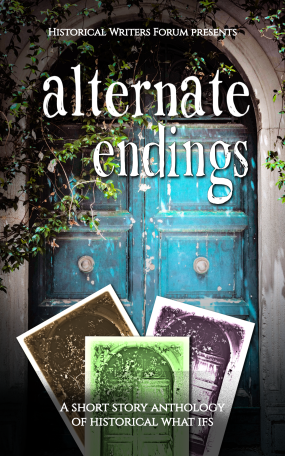
I hope you enjoy my short story “Act Worthy of Yourselves” in our anthology as much as I enjoyed writing it! Available on Amazon in paperback or Kindle. Click the cover to get your copy!

Authors:

Virginia Crow
Cathie Dunn
Sharon Bennett Connolly
Karen Heenan
Samantha Wilcoxson
Michael Ross
Salina B Baker
Elizabeth Corbett


Alternate Endings: The Lure of Dr. Joseph Warren

I was asked what inspired me to write the short story “Act Worthy of Yourselves” as part of the Historical Writers Forum anthology “alternate endings” a collection of short stories by a group of eight talented historical writers who each have their own story that asks the question, what if an historical event was altered and changed the course of history?

My story asks, “What if Dr. Joseph Warren had survived the Battle of Bunker Hill?” one of the bloodiest battles of the American Revolution fought on the Charlestown peninsula northeast of Boston on June 17,1775. The title “Act Worthy of Yourselves” is a line from Warren’s Boston Massacre Oration which he delivered at Old South Meeting House in Boston on March 6, 1775 to a crowd so large that he was forced to climb through the window behind the pulpit to avoid being crushed.

This post is part of our blog hop tour for “alternate endings.”

In 2015, I was searching for the topic of my next book. I had written two standalone novels set in Victorian America and I wanted to pursue something historically different. I asked myself how much I knew about the American Civil War as that was the first love of my historical life. But it was set in the same time period and I realized I needed to move to a different era. I did know quite a bit about the American Revolution and Colonial America and decided I was willing to put my effort into learning more.

Where to start? Ah, yes. Why not start with the obvious—the Sons of Liberty, a group of political dissidents formed in Boston to protest King George III and Parliament’s taxation and control of colonial authority. Their protests against the Mother country’s sudden subjugation after more than a century of autonomy, proliferated in the America colonies in the 1760s. Who did I know that belonged to the Sons of Liberty? Why Paul Revere, John Hancock, and Samuel Adams their ringleader, of course. John Adams, a Massachusetts lawyer and politician was not a Son of Liberty, but he was a sympathizer. Boston was already militarily occupied in response to acts of what the King considered disobedience.

My research immediately led me to a list of Massachusetts Sons of Liberty and among them was a handsome, young doctor named Joseph Warren. It was love at first sight. I could not get enough of who he was, what he did, his growth as a man, politician, orator, leader, and masonic Grand Master. He apprenticed under Loyalist Dr. James Lloyd and medically treated people from all walks of life. The rising Patriot admiration for him and his efforts for the Patriot cause could not be ignored nor the threat he posed to the British, who in the end, were pleased to see he and his sedition put to death on a battlefield.

Dr. Joseph Warren circa 1764 by John Singleton Copley

I had read the poem “The Midnight Ride of Paul Revere” by Henry Wadsworth Longfellow when I was in sixth grade and it always stuck with me. Imagine my delight when I found out that Joseph Warren was the guy who sent Paul Revere, along with William Dawes, on that ride to warn the countryside that the British regulars were out of Boston and on the march looking for rebel munitions on the night of April 18, 1775.  That it was Joseph Warren who was holding the rebellion together in Massachusetts during the spring of 1775 while Samuel Adams and John Hancock were hiding in Lexington for fear of being hanged by the British for treason. During the time many of his colleagues including Adams and Hancock attended the second Continental Congress in Philadelphia in late spring 1775, he became president of the Massachusetts Provincial Congress.

Warren tended to be dauntless, storming into a situation without thought for personal risk. John Adams once said, “Warren was a young man whom nature had adorned with grace and manly beauty, and a courage that would have been rash absurdity, had it not been tempered by self-control.” 

Then, there was the tragedy of Warren’s personal life. His wife died at age 26, leaving him a widower with four children under age eight. When he was killed at age 34 at the Battle of Bunker Hill his children were orphaned.

So Joseph Warren rose as a shining star in my novel “Angels and Patriots Book One: Sons of Liberty, Lexington and Concord, Bunker Hill.” Because the series is historical fantasy, my main character is an archangel with the human name Colm Bohannon. How much farther can you elevate someone than have a man and an archangel become friends and learn love and loyalty from one another? Not much. How much do you weep when you know how it historically ended?

As I wrote, I began to share facts about Joseph Warren and I found that he is adored and even worshipped among history and American Revolutionary War enthusiasts and authors. For years, the question that came up was and always has been, “What if Joseph Warren had survived Bunker Hill?” This ubiquitous and charismatic leader took the reins of the rebellion politically and militarily and accepted a provincial generalship on the day the American Continental Army was formed, June 14, 1775—three days before his death.

There were many questions on my mind and on the mind of others.

*If he had survived, how would General George Washington have received him? Or perhaps Washington would have relinquished his appointment as commander-in-chief of the Continental Army and recommended Warren in his stead?

*Would Warren have been one of the greatest tactical or strategic generals of the war?

*Would his concern for civilians taken him in a political direction?

*What about his medical practice and experience? Would he have benefited the Continental Army with his expertise?

*Would he have stayed behind to see to matters in Massachusetts? Or gone on to preside over the Continental Congress, the civilian governing body during the war?

*Would he have discovered great medical break throughs?

*How would his life and his children’s lives unfolded during and beyond the war?

*How far would he have reached for the stars while a new nation was rising?

As an author and person who came to adore Dr. Joseph Warren but not blind to his faults, I couldn’t let these burning questions pass me by when the opportunity arose to write an alternate ending to his life. If only for this moment, in this anthology, he is given another chance. Perhaps others who have asked the same question will agree with how I see it. Perhaps not. Nevertheless, I know people who know who Joseph Warren was will want to read it and share in their opinions. For those who don’t know who he was, the story I wrote is based in fact and I didn’t change the outcome of the Revolutionary War.

Dr. Joseph Warren’s name is not a household word like George Washington, Alexander Hamilton, John Adams or Thomas Jefferson. His premature death saw to that. Beyond my own novel, if I can raise awareness of his accomplishments through a historical alternate ending, I will be satisfied that I tried.

One other person who I should mention that is part of the story is Joseph’s youngest brother, Dr. John Warren. His name and extraordinary medical accomplishments are lesser known than those of his brother’s. John’s part in this story is based in fact. I assure you will be surprised and impressed.

Dr. John Warren circa 1806 by Rembrandt Peale


I hope you enjoy our anthology as much as we have enjoyed writing it! Available on Amazon in paperback or Kindle. Click the cover to get your copy!

Authors:

Virginia Crow
Cathie Dunn
Sharon Bennett Connolly
Karen Heenan
Samantha Wilcoxson
Michael Ross
Salina B Baker
Elizabeth Corbett


My share of royalties will go to the Dr. Joseph Warren Foundation an organization dedicated to educating the public about his life & contributions to the American Revolution. 


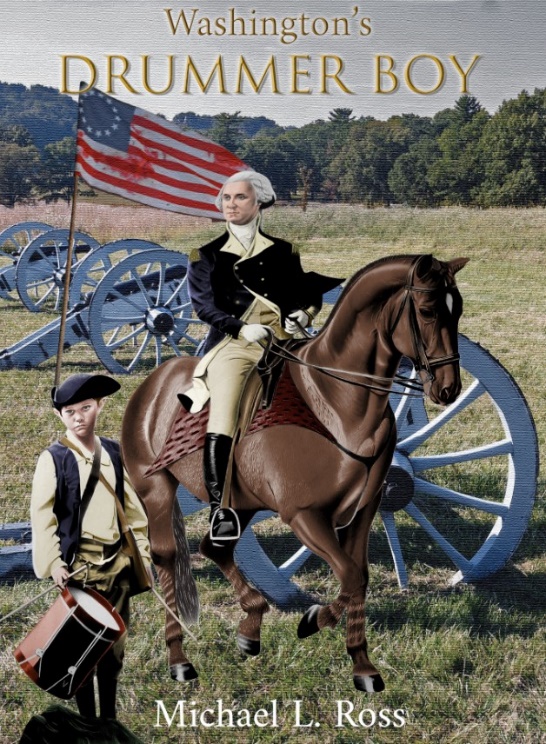
Washington’s Drummer Boy: Guest Post by Michael L. Ross

Sometimes freedom disappears one law at a time, like Virginia creeper covering a stone wall. This was often the case with Britain and its American colonies, where the mother country sought to control and sap resources from the citizens far away, often without regard to their welfare or benefit. Everyone has heard from school about the Stamp Act and the Townshend Acts, and how the Boston Tea Party and other incidents led to the war for independence – but what about the White Pine Act?

The British Crown first passed the White Pine Act in 1691 for Massachusetts, making it a crime to cut down and retain logs from a white pine tree more than one foot in diameter, without the King’s mark and permission. Such trees were designated solely for the use of the British Navy, used as masts for the King’s ships. In January 1770, the Crown extended this law to New Hampshire, and all of New England.
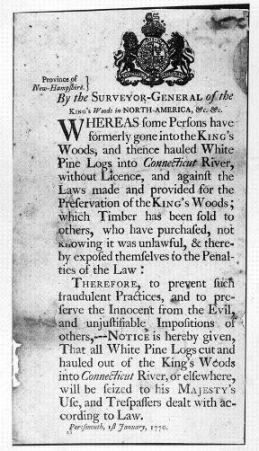
Courtesy Library of Congress

Since white pine is one of the most plentiful trees in New Hampshire, this law posed a severe hardship to the sawmills along the Merrimack River. The law was extended to all of New England. The sawyers could be arrested, fined, and the Crown could seize the fruit of their labors. Ebenezer Muggeridge was among those targeted, and he incited a rebellion.

Another little-known fact is that during the Revolutionary War, George Washington had a detachment known as Washington’s Honor Guard, whose job was to protect him on the battlefield. Though soldiers had to be sixteen or older to be selected for the guard, some drummer boys were as young as ten. They were in the thick of battle, without weapons, relaying the orders of Washington and other officers via their drums. One of these youngsters was Muggeridge’s ward, Billy Sims. What follows is an excerpt from my upcoming novel, Washington’s Drummer Boy, based in part on a newspaper account of the White Pine Rebellion, and Billy’s exploits.
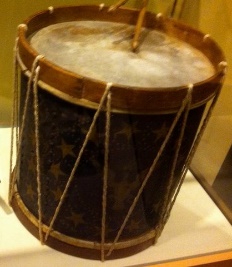
April 1772 Weare, New Hampshire

Bill Simpson looked up from the bench where he was pulling a drawknife on a piece of oak. Three approaching horsemen clattered into the dooryard, two of them red-coated soldiers. Being only eight years old, it wasn’t his job to meet them, but he was intensely curious – what would redcoats want with the master of the mill, Ebenezer Mudgett? He pretended to keep working while listening to hear all he could.

“Master Mudgett! I am John Sherburn, deputy surveyor for His Excellency Royal Governor Wentworth.”

“Good day, to you, sir. And what does the Crown need this time?”

“Masts for His Majesty’s ships.  You, sir, have white pine logs above one foot in diameter, the very kind needed for those masts. And,” paused Sherburn, “you do not have a license to possess them! Guards, scour the shop!”

Bill brushed back sweat into his curly black hair, despite the cold. He remembered the pine he’d placed behind the barn, right where Pa directed. Had he covered it well enough? He worked with Ebenezer in the woods – didn’t these lobsters realize that at least a third of the trees in the forest were white pine? If they found it, would Pa be angry?

The soldiers began ransacking the shop, opening closets, climbing up to the loft, looking behind the building, even searching under the horses’ straw.

“Surely, you must be mistaken, sir. Perhaps a record is mislaid? Of course, I could make the masts that the Crown requires if desired.”

“His Majesty’s shipwrights would be amused. But you will not be if my men find that white pine. You know well that all white pines of that size belong to the Crown, for the last fifty years.”

“Oh, I know well enough. The Crown takes the best trees and the bread from my family’s mouth, all without a by your leave.”

A woman entered from the side door. “What is it, Ebenezer? Are these guests? You didn’t tell me you had invited anyone.”

“Miriam, it’s no concern to you. These are the King’s men, not guests. They’ve come to inspect.”

“Inspect? Inspect what? Has the King a sudden interest in wood shavings and our stables?” She pushed an errant gray hair back under her coif and wiped a hand on her white apron.

“Sir!” One of the soldiers rushed forward. “We’ve found them – ten white pine logs, hidden out behind the barn. They do not have the King’s arrow mark. And some more pieces are sawn,” gesturing at the sash saw.

“Very good, corporal.” He made a slight bow in Miriam’s direction and followed the soldiers.

Ebenezer tensed. “What’s wrong, sir?” asked Bill. The horses and I put those logs just where you said. Covered them well to keep the rain and snow off.”

“The problem, my young apprentice, is that the King thinks he owns everything.”

The soldiers and Sherburn returned. “Arrest this man! Take him to Sheriff Whiting. And make sure to mark those logs with the King’s symbol.”

Miriam rushed forward. “Please don’t take my husband!”

Bill dropped his work. Sir, my Pa has done nothing but try to make a living. I put the logs there – take me! Please don’t hurt him. You can’t take him. You can’t!”

“I’m afraid I must – the King’s law is clear.”

“Never mind, my dear. I’m sure it won’t be for long. Send Bill for my brother, and we’ll see about these laws.”

✽✽✽

Bill rushed through the snow, down the path leading to the home of John Mudgett, brother to his master. His mind whirled -if the British took Pa, how would the mill survive?  Tall for his age at five feet, his strides lengthened in a hurry. Ebenezer was officially his master but had been a father to him after his own died. His mother in Rockingham parceled out her children, having no means to support them. Bill felt lucky to have a kind and God-fearing master. What would they do to him? The freezing air bit his lungs as he ran, falling once on the ice, and picking himself up again. Clouds poured out from his mouth and hung in the air as he breathed hard, rounded the corner of the barn, and pounded on the door of the whitewashed frame house.

“Uncle John! Uncle John!” he yelled.

The door opened, and Rose, the Mudgett’s slave housekeeper, caught his hand in mid-knock.

“What’s all the fuss and feathers, Marse Bill? Marse John is out doin’ the milkin’.”

“The British have taken my master!”

“Oh, Lawd! I’ll fetch Marse John.”

She darted to the barn and came back with a portly red-haired man, wiping his hands on a milking apron.

“What’s all this? Why would the lobsters take my brother?”

“He got some white pine. The governor says it’s the King’s. That’s all I know. Miz Miriam says to come quick.”

“All right. Rose, you’ll have to finish the milking. I’ll hitch up the sleigh. Tell Clara I may be home late.”

Within minutes, Bill and John were flying down the road behind a pair of matched trotters. The snow blew up in a mist behind them. Bill pulled the laprobe more tightly about him. There had been no time for getting hot bricks, and his feet were numb from the cold.

“Who was it that came, boy?”

“Soldiers – and that new man, Sherburn, I think his name was.”

“Sherburn, eh? A troublemaker if ever I knew one. How much pine did my brother have?”

“Only ten logs or so.”

“Hmm, well, not so much. If we’re lucky, they’ll let him off with a fine.”

“What if they don’t, sir?”

“Don’t you worry about that. Leave it to your elders. And pray.”

They pulled into the dooryard, and John leaped down, handing the reins to Bill.

“Miriam! Has there been any word?”

Miriam came slowly into the yard, head down. Bill’s heart clinched – she looked to have been crying. He wanted to run to her, but held still, holding the horses.

“No, John, no word. I mustn’t leave the other children. But I’m frantic to know what’s happening. You don’t think they would… would they?”

“No, of course, they wouldn’t.” Bill caught the hesitancy in his adopted uncle’s voice. “Don’t worry, Miriam. I’ll spread the word to the other mills, and see what’s happened with Ebenezer. Have you any ready cash?”

“Very little. I have this note for forty shillings. Aside from that, we have accounts owed for work to be completed. The good Lord alone knows how we will do without Ebenezer …”

“Trust in God, Miriam, and I will return soon.”

John took the forty shilling note and stuffed it in a pocket. Bill handed back the reins, and they were off again. They stopped at several other mills along the river. At each stop, John spoke in hushed tones to the mill master, and then on they went again.

When they finally arrived in town, John went to the lockup and asked for the Sheriff.

“When might Sheriff Whiting be available?”

“When he returns from his supper, sir. May be of help to you?”

“I’m here concerning Ebenezer Mudgett.”

“Ah, well. Nothing I can do there. He’s bound over to the magistrate.”

“I’ll just step over to Quimby’s Inn, then. Will you advise me when the Sheriff returns?”

“Bless you, sir, and he’s likely over there himself. Can’t say he’d like you disturbing his victuals, though.”

“Much obliged, sir.”

Turning to the sleigh, he tied off the horses and bid Bill follow.

Bill jumped down from the sleigh and wondered what good it would do to talk to the Sheriff. Hadn’t John said that Pa was already bound over, whatever that meant? It didn’t sound right. They stamped their feet to clear off the snow and pushed open the plank door. A rush of heat hit them from the large central fireplace. There were perhaps ten round tables, each with a coal oil lamp. Only three had patrons. At one sat a florid, overweight man, having an intimate meeting with roast mutton and johnnycakes. The dark paneled wall reflected dancing flames from the fire and the lamps, and at the far end was a bar with stools, and large kegs of beer.

“Sheriff Whiting?”

The Sheriff looked up between bites, annoyed. “Yes? What is it? Can’t a man finish a meal in peace?”

“When a man may conduct his business in peace, perhaps so. You’ve taken my brother Ebenezer into custody?”

“Yes. Crown law. He’ll stand trial.”

“Have you ever known him to cause trouble before?”

“Well, no. Except for some talk about the governor.”

“And should his wife, children and this poor boy here,” gesturing at Bill,” suffer for some loose talk? Can you not release him until the hearing? He has a business to run. He isn’t going anywhere.”

“He owes one pound fifteen shillings fine for the trees.”

“And pray sir, how can he pay that from the lockup? There is unfinished work at the mill. If you will but release him, we shall have the fine by the morrow.”

“You’ll sign for that?”

“Yes, if you require it.”

“I do. Meet me at the lockup in fifteen minutes. Now go away.”

Bill was tempted to dump a pitcher of water on the Sheriff but resisted the urge.

They stood by the stove at the lockup, waiting for the Sheriff’s return. It was more like half an hour than fifteen minutes, but there was little else to do. When the Sheriff waddled in, the deputy bobbed and scraped, and went down in the holes to fetch the prisoner. After a few minutes, Ebenezer emerged, face dirty, rubbing his wrists. It was all Bill could do not to fly to him and throw his arms around him. That would seem childish, however.

John bent over a high table, signing papers with quill and ink.

“Tomorrow morning, then,” said Sheriff Whiting.

Ebenezer said, “I thank you for releasing me tonight. We’ll be sure to be here tomorrow to give the King his just due.”

✽✽✽

Ebenezer climbed into the sleigh. He held the boy at arm’s length, just looking into my eyes, and then drew Bill into a hug, not caring who saw. John clicked to the horses, who recognized they were headed home and went at a fast trot. The men gazed at the deepening evening in silence. Bill couldn’t keep quiet any longer.

“What will happen, Pa? Will you pay them? And where will we get more trees? The soldiers used hatchets and marked an arrow on each of the ones we have.”

“Don’t worry your head. There are other trees. And yes, we will pay for them. Oh, we will pay for them!”

John looked over at his brother with a grim smile.

When they arrived back at the mill, though it was evening and just before chore time, the dooryard was full of horses and men, instead of the usual evening quiet, there was an uproar as twenty men tried to talk at once.

Ebenezer turned to Bill. “Bill, I want you to stay out of this. Tend the horses, mind your Ma, and go to bed. Say your prayers. Don’t mind the noise. Do you hear?”

“Yes, sir.”

Bill got down and unhitched the horses, taking them to the barn for a rubdown and feed. His uncle would need them to go home. He was following orders – but that didn’t mean he had to hurry. One advantage of being young he found was that adults often told him something, and then forgot about it. Bill heated some water on the stove, so that it was lukewarm, then gave it to the horses to drink. The dappled gray slurped greedily, and Bill had to hold him back. The bay patiently waited his turn, nibbling at the hay. Once they both had water, Bill mixed a bran mash, and gave that to them, while rubbing and drying them, and straining his ears to listen.

“The Crown has gone too far. We’ve had this highway robbery for fifty years. Previous governors did not enforce it. Now the surveyor is sending soldiers into the forest, marking trees. What happens when they decide white pines aren’t all they want, as if that wasn’t bad enough?”

Another man yelled, “Wentworth and his thugs have done enough!”

Pa spoke – Bill recognized the voice. “Men, we’ve resisted. We’ve written letters. We’ve tried to tell the King what we think of his taxes and fees. We got the Townshend repealed. If we stand still, the King will put his boot on our necks.”

Another voice spoke, calmer, but able to be heard – Bill thought he recognized the reverend. Finishing with the horses, instead of going in the house, he climbed the ladder to the loft and opened the hay doors slightly so that he could look out and hear without being seen. The reverend of the Congregational Church spoke, raising his arms for quiet.

“Brothers, you know that the Scriptures tell us to obey our government. The King must obey God, and we must obey the King. I urge you to consider carefully before starting something that cannot end well. The Bible says to pay tax to whom tax is due, honor to whom honor is due. Take care, lest we are on the wrong side of God.”

The men in the yard glowered at the reverend. Ebenezer stepped forward again, mounting a box.

“The Bible also says there is a time to obey God rather than man. Neighbors, you know me to be a peaceful man. I have paid taxes to the Crown while insisting that they have no right to tax Englishmen who have no vote on the matter. Enough is enough. We must feed our families. It is time to pay King George in something other than a coin. Who’s with me?”

Shouts resounded around the yard.

“All right then. Meet here an hour before first light. Bring ropes and torches. It’s time that King George got a taste of what true Englishmen think of his taxes.”

When Bill awoke the next morning, he saw the shadowy figures of Ebenezer and Miriam moving about the kitchen as he looked down from the loft bed he shared with the Mudgett girls, Achsah and Sarah. The girls still slept, but Ebenezer was up and dressed. Dawn was peeking above the trees, spreading pink and orange tints to the clouds. Bill dressed quietly and descended the ladder.

“Ma, what’s happening so early?”

Miriam started, then shushed him. “Why aren’t you asleep? This will be a busy day.”

Looking out the window, Bill saw buggies and horses in the yard, along with a collection of men, all armed.

Miriam smiled. “The one day we tell you to go back to bed instead of starting chores, and you are too curious. Very well. Pa is going to pay the British. The other men are going along to protest. Now go get some rest.”

“But Ma… if Pa is going, I want to go too.”

“No, that would be too dangerous. He doesn’t want you to draw any more attention to yourself than you did yesterday, speaking out of turn. Children are to be seen and not heard,” she reproved.

“All right, after I go to the privy.”

Bill opened the latch on the door, shoved it open, and stepped out into the frosty morning. In case Ma was watching, he moved toward the privy, entered, and waited a minute, holding his nose. When he came out, he went to the workshop, flitting from tree to tree. He got his work coat that he kept on a peg there, and again climbed to the loft where he could observe. The men were talking too quietly to hear, but he saw that their faces were smudged with soot and bootblack, making it difficult to see who was who.

He recognized Pa and saw the wagon off to the side that they used for deliveries, hitched, and ready to go. He quickly climbed down, went to the stove, and used ashes from the bin to obscure his face, just as the older men had done. Then he looked, saw the men occupied, and ran to the back of the wagon. He hopped in and covered himself with a tarp so that no one would notice him.

He wanted to peek out but forced himself to lie still. Whatever Pa was going to do, Bill wanted to be there.

After what seemed an hour, when his toes were going numb, he felt the wagon lurch and begin to move. Looking out the back, a line of horses, buggies, and wagons followed, like some equine caterpillar with twenty legs following after Pa. Why would all these men come, just to watch Pa pay a fine?

A bump and hard jolt made him bang his head on the wagon bottom, and he bit his lip to keep from crying out in pain.

Eventually, the wagon rolled to a stop. Bill lifted the tarp just an inch to see out and waited until the other wagons grouped around them. They were in front of a house. When the other men had dismounted and gathered around Pa, he slipped out the back, onto the new-fallen snow, and took up a post behind a nearby tree.

Ebenezer pounded on the door, then wrenched it open, breaking the latch. The men boiled through the entrance into the house. Bill thought, no one is going to mind me, since they don’t know I am here. If I stand just inside, I can see and hear. If something happens to Pa, I can take word home.

Bill saw Sheriff Whiting, still in his nightclothes.

“Here, what’s all this? Who are you? By the King’s wig, what’s the meaning of this?”

“We’re here to pay King Georgie his fines and taxes,” said one.

“Very well, but you needn’t break-in, and you could have waited until after breakfast.”

“Oh, we’re very prompt to give the King and his servants their due.”

The men crowded closer, raising clubs.

Whiting blanched and moved backward to the wall, grabbing a brace of pistols from a hook. “Stand back, or I will shoot!” He aimed the pistol squarely at Ebenezer’s chest. Bill feared for his Pa and grabbed an iron from the nearby stove. In confusion, he raced behind the men up the stairway, to where he stood above the Sheriff. Whiting cocked the pistol. Bill dropped the hot iron, aimed to strike the pistol or chest of the Sheriff, who yelled and dropped the pistol in surprise and pain.

The men surged forward, seizing the Sheriff, and tying his hands behind his back. They ripped open the back of his shirt, and bent him over a table, clubbing and whipping him until he cried for mercy.

“Take that payment to King George and the governor, if you will. Tell Wentworth that if he comes, we’ll do the same to him. We’ll not tolerate the tyranny of the King any longer. True Englishmen know their rights. If he does not, then we must teach him.”

Bill crept back down the stairs and again stood near the door. One of the men turned, went to the stables and saddled a horse for the Sheriff. He clipped the mane and tail of the horse, making him look a very sorry beast. They propelled the Sheriff toward the door. But Bill wasn’t quick enough – Ebenezer and the Sheriff saw him at the same time.

“So this is the kind of brigands you are! You even bring a child into your devilry!”

The Sheriff looked more closely at Ebenezer. “You must be Mudgett, who was bringing the fine today – and this must be your boy. I’ll mark it well!”

“If you don’t get on that horse and ride far away, we’ll mark you again!” yelled one of the men.

Whiting mounted with help and whirled the horse out of the yard.

Pa turned his attention to Bill. “I don’t know whether to thrash you or hug you. It was a near thing in there, and you saved us all from bloodshed. But you should have stayed home. Now that you and I are recognized, we’re in danger. Let’s make haste for home, and pray about what to do.”


If you enjoyed this, and would like to be notified when the full novel is published, please visit http://www.historicalnovelsrus.com/contact and sign up for my newsletter. – Michael Ross
 

Angels and Patriots Book One has been honored!

I’m thrilled to share that my historical fantasy novel Angels and Patriots Book One has won it’s seventh and eighth award! New York City Big Book Awards honored my novel as winner of the Military Fiction category and distinguished favorite in the Historical Fiction category.

Military Fiction                               Historical Fiction

2018 Shelf Unbound Best Indie Book, Notable2018 Independent Press Award Historical Fiction, Winner2018 Independent Press Award Military Fiction, Distinguished Favorite

I couldn’t have achieved this accomplishment without the editing skills, graphic design, and guidance from the ladies at Author’s Assistant. Thank you.

Nor could I have accomplished this without the incredible patience of my husband, John. He spent countless days and weeks alone while I conducted extensive research on the events that ignited and occurred during the first days of the Revolutionary War, patriots, loyalists, politics, colonial life, Founding Fathers and Mothers, the British army, and religious references to the fallen angels who created the forbidden Nephilim, not to mention the hundreds of hours it took to write the novel.

John patiently allowed me to take him to Boston and Roxbury for a seven day pilgrimage honoring the life of patriot, Son of Liberty, and Founding Father, Dr. Joseph Warren; who is an important character. Without Joseph’s courage, fortitude, and popularity, the Revolutionary War may never have begun. Among Joseph’s many accomplishments, he is the young physician who sent Paul Revere on his famous midnight ride to warn the Massachusetts countryside that the British were on the move from Boston.

Lastly, I would like to thank Dr. Samuel Forman, author of the biography Dr. Joseph Warren: The Boston Tea Party, Bunker Hill, and the Birth of American Liberty, for sharing his expertise and offering his support for my historical research on Warren while I wrote this book.

Thank you for allowing me to share this humbling and exciting announcement!

Angels & Patriots – The series is available on Amazon in paperback or Kindle eBook. The fourth and final book will be released early 2022. Happy reading!

Angels & Patriots : The Series

Book Review: “Flight of the Sparrow: A Novel of Early America” By Amy Belding Brown

51HBuaNAc3L._SX334_BO1,204,203,200_Flight of the Sparrow: A Novel of Early America is largely based on the historical published account of Mary Rowlandson’s experience as a captive of Native Americans in 1676 during King Phillip’s War. Amy Belding Brown has transformed historical documents into the mind and heart of this Puritan woman who suffers many trials during her 11 week captivity. Spoiler alert.

I chose to read this novel for its parallels to the first book in my historical fantasy series about the American Revolution which takes place in the first half of 1775 in and around the Massachusetts Bay Colony as the Revolutionary War dawns. My novel also speaks to some of the beliefs, writings, and orations of the Sons of Liberty such as Dr. Joseph Warren, John Hancock, and Samuel Adams, as well as John Adams, just as Flight of the Sparrow does.

Those parallels are:

~~~Flight of the Sparrow takes place in 1670’s colonial America in and around the Massachusetts Bay Colony. The subject matter addresses Puritan values at that time. These Puritans were ancestors to men like John Adams, Samuel Adams, and Joseph Warren, and their beliefs remained an influence in late colonial America.

~~~Mary Rowlandson’s narrative A Narrative of the Captivity and Restoration of Mrs. Mary Rowlandson was first published in 1682. It was republished in 1771 and twice more in 1773. In his speech commemorating the second anniversary of the Boston Massacre in 1772 and the fifth anniversary in 1775, Dr. Joseph Warren invokes the image of the Indian as a devil, which was a familiar description in Puritan writings and may have been taken from Rowlandson’s narrative.

~~~The work is clearly historical fiction/fantasy which is my beloved genre.

Historical examination aside, Flight of the Sparrow is written to keep the reader immersed in the time period and the role of women in Puritan society.  Mary Rowlandson is depicted as a free-thinking woman who knows her place, but is constantly challenging that place in her heart and mind. The Puritan revulsion for the Indian savages is a mythological subject matter often discussed with perverse curiosity among the women as they work.

Mary, her three children, and friends and family are captured by Native Americans in January 1676, during a raid on the town of Lancaster where she lives with her husband, Joseph–a Puritan minister.  Joseph is in Boston to plead for protection from the Indians at the time of the raid.

Mary’s terrible struggle with her dying 6-year-old daughter, Sarah, is heartbreaking as she carries the body of her mortally wounded child through the wilderness for days until the child finally dies in an Indian wetu.  The suffering of some of the other captives, such as Ann Joslin who is heavy with child and subsequently clubbed to death by Indians when she begs to be released, is difficult to take.

Mary’s constant worry for her captive children, Joss and Marie, is not portrayed in my opinion, as being as much of a burden as her starvation, wavering faith in God, and sexual attraction to an Indian man named James.  Her enlightenment to the manner in which Indians raise their children with open love and tolerance, and the freedoms the native people enjoy, is a recurring theme even after her redemption.

Her husband, Joseph, is portrayed as unfeeling, even emotionally cruel, toward his wife as she struggles with her return and assimilation into society. He suspects her of being “violated” by the Indians although she assures him time and time again that she has not. Her husband’s sexual aloofness, in a manner, justifies her continuing longing for James and the realization that she is in love with this Indian man who was raised and educated among the English, participates in her redemption, and comes to her in the dark of night to taut her feelings for him.

The Puritan minister, Increase Mather, asks her to write a narrative of her experiences that he will transform into a lesson of God’s will. She hesitates to do so, but eventually gives in under a barrage of encouragement from Joseph, who tells her that this is a way for her to be socially accepted once again. It will allow those who gossip and look down on her, to see that God guided her during her captivity.

Mary doesn’t mourn Joseph’s sudden death in 1678. Instead, she sees his death as freedom from the chains that bind her.  Indeed, she later marries, Samuel Talcott for love and the opportunity to mother his 8 children.

Flight of the Sparrow is beautifully written and emotionally exhausting as Mary Rowlandson bravely follows her heart to a happy ending.