Lexington and Concord: The Last Days Leading up to a Revolution

On April 11, 1775, five days before Lord Dartmouth’s long awaited orders on how to deal with the rebels reached General Thomas Gage via the HMS Falcon, the general’s clandestine patriot informer noted, “A sudden blow struck now or immediately upon the arrival of reinforcements from England would cripple all the rebels’ plans.”

But despite this warning, the rebels already had plans.

The members of the Massachusetts Provincial Congress and their president, John Hancock, feared that the sudden rapid decay between England and America would thrust them into war. All those in attendance, including Samuel Adams and Dr. Joseph Warren, recognized the portent and the need for preparedness.

The Committee of Safety put a military command structure in place, incorporating existing militia companies and regiments, and their officers. They promoted six men, of various military abilities, to generals, and tasked them with tightening the local militias in Cambridge and Watertown and Roxbury into a well-trained fighting force.

John Hancock, Samuel Adams, and Joseph Warren had a rebel intelligence network of tradesmen and skilled workers who frequented the Green Dragon and other Boston taverns. These members of the Sons of Liberty noted British troop movements, ship arrivals and departures, and anything out of the ordinary.

On April 7, the rebels observed longboats being moored under the sterns of British men-of-war in Boston harbor for ready access and concluded that an attack somewhere was imminent. The next day, Paul Revere saddled up to carry a message of alarm to Concord given the stockpiles of munitions and supplies located there, and to the the Committee of Safety of the Provincial Congress, which was now adjourned in Concord.

Joseph Warren did not attend the Committee of Safety sessions held in Concord after April 8. The committee had already laid plans for a watch and couriers to alarm the countryside of suspicious British army movement, and he was well-versed in those plans.

By this time, it was obvious to both John Hancock and Samuel Adams that things had deteriorated with the British to the point that it was not safe for them to return to Boston before setting out for Philadelphia and the Second Continental Congress scheduled to convene on May 10.
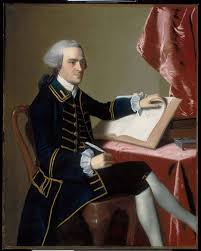
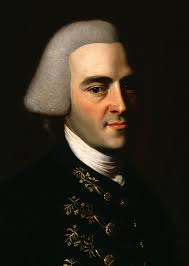
john hancock seated

John managed to get word to his aunt, Lydia Hancock, his fiancee, Dorothy Quincy, and his young clerk, John Howell, to leave Boston and refugee to Reverend Jonas Clarke’s house in Lexington. John was very familiar with the Clarke house. It was from that house that he had been spirited away, as a seven-year-old boy, by his uncle and aunt, Thomas and Lydia Hancock, to be raised in the world of Boston business.

samuel adams

Samuel’s wife, Betsy, left their house on Purchase Street in Boston and went to stay in the home of her father in Cambridge. Samuel’s nineteen-year-old daughter, Hannah, his child with his deceased wife, Elizabeth, joined Betsy in Cambridge.
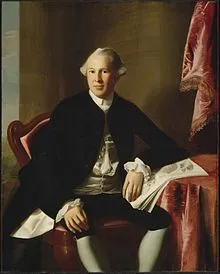
Warren-5638

During this time, the widowed Dr. Joseph Warren was making arrangements to refugee his children and their nanny, Mercy Scollay, out of Boston. It is unclear exactly what those arrangements were and whether their destination was Roxbury or Worcester. (His children and Mercy Scollay did eventually refugee to Worcester to the home of Joseph’s colleague Dr. Elijah Dix).

In the meantime, Joseph continued to tend to his patients in Boston, but his friends were concerned for his safety. The young handsome doctor was well-known and very recognizable.

Sources:

Philbrick, Nathaniel. Bunker Hill A City, A Siege, A Revolution New York: Penguin Books, 2013. Print.

Borneman, Walter R. American Spring: Lexington, Concord, and the Road to Revolution New York: Little, Brown and Company, 2014. Print.

Forman, Samuel A. Dr. Joseph Warren The Boston Tea Party, Bunker Hill, and the Birth of American Liberty Gretna, Pelican Publishing, Inc, 2012. Print.

Dr. Joseph Warren is an important character in my novel Angels & Patriots Book One. Buy it today on Amazon in paperback or Kindle eBook. Angels & Patriots Book One
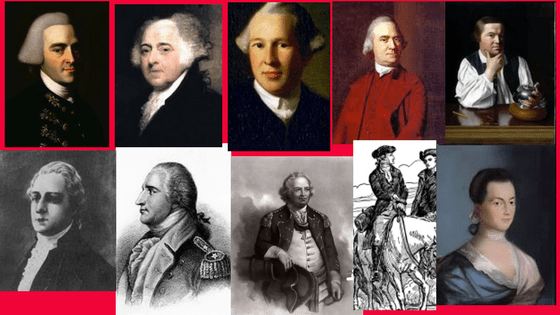
10 Interesting Facts About the Sons of Liberty and other American Patriots

John Hancock

John Hancock was raised by his uncle and aunt, Thomas and Lydia Hancock, after his father died when John was a boy of seven.

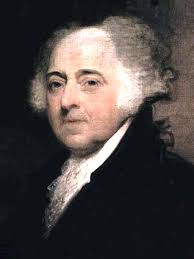
John Adams

John Adams was the defense lawyer for the British soldiers who were put on trial for the Boston Massacre. The soldiers were acquitted.

Dr. Joseph Warren

Dr. Joseph Warren became the situational leader of the patriotic cause. He dispatched Paul Revere and William Dawes to spread the alarm that the British were on the move the night of April 18, 1775.

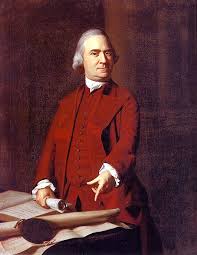
Samuel Adams

Samuel Adams was the leader of the early American rebellion. He was uninterested in money. He failed as a tax collector and neglected his father’s brewery.

Paul Revere

Paul Revere rode to spread the alarm and deliver news for the Massachusetts Provincial Congress throughout New England on many, many occasions other than the night of April 18, 1775.

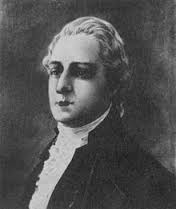
Dr. Benjamin Church

Dr. Benjamin Church, a trusted compatriot of the Sons of Liberty, was a spy for British General Thomas Gage.

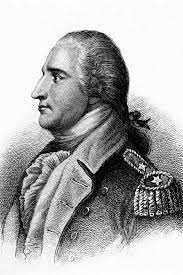
General Benedict Arnold

Benedict Arnold donated $500 to the education of Dr. Joseph Warren’s children after Warren died at the Battle of Bunker Hill.

Israel Putnam

Israel Putnam was the leader of the Connecticut branch of the Sons of Liberty.

No known picture of Dr. Samuel Prescott

Dr. Samuel Prescott was the man who carried the alarm to Concord that the British were on the move, after Paul Revere and William Dawes were detained by a British patrol in the early morning hours of April 19, 1775.

Abigail Adams

Abigail Adams urged her husband, John, to take women’s rights into consideration if and when the colonies gained independence. “If particular care and attention is not paid to the ladies, we are determined to foment [promote] a rebellion, and will not hold ourselves bound by any laws in which we have no voice or representation.”


Dr. Joseph Warren is an important character in my award-winning historical fantasy novel Angels & Patriots Book One. Sons of Liberty, Lexington and Concord, Bunker Hill Available on Amazon in paperback or Kindle eBook.

Angels and Patriots Book One

Angels & Patriots Book One


The Man Who Finished The Midnight Ride of Paul Revere and William Dawes

Paul Revere and William Dawes didn’t make it to Concord, Massachusetts on the night of April 19, 1775 to sound the alarm that the British regulars were out of Boston and on the march in the countryside. Patriot leader Dr. Joseph Warren sent the two Sons of Liberty to warn fugitive rebels, John Hancock and Samuel Adams, who were hiding in Lexington, Massachusetts, and then Revere and Dawes were to ride on to Concord where rebel munitions were stored. That ride was completed by twenty-three-year old Dr. Samuel Prescott. 

Dr. Samuel Prescott went on to serve as a doctor in the Continental army. He died at the age of 25 (or 26). Legend has it that he died in a prison in Nova Scotia. There are no known likenesses of him. A great deal of myth has been built around Prescott like other little known but important early American patriots. 

prescott

Imagine you are witness to the events that ended Revere’s and Dawes’ ride:

Samuel Adams joined John Hancock and Reverend Clarke in the living room while Paul Revere delivered Dr. Joseph Warren’s warning. William Dawes arrived as Paul was finishing. Paul and William could not linger in Lexington, and they left immediately to ride west toward Concord to spread the alarm.

On the road, Paul and William encountered Dr. Samuel Prescott, who was returning from an evening in Lexington with his fiancé Lydia Mulliken. The three men knocked on doors and spread the word through the countryside. Midway between Lexington and Concord, Paul scouted the road ahead for British patrols while William and Samuel stopped to warn a family who lived on a large farm.

The bright moonlight shadowed the woods on either side of the road, and Paul was surprised by two British officers who rode out from the shelter of the trees.

“We have been seen!” Paul shouted to William and Samuel.

Two more heavily armed regulars emerged from the shadows. The unarmed patriots’ only choice was to flee. Samuel Prescott urged his horse over a stone wall and escaped into the darkness of the woods.

William, who was mounted on the slowest horse, rode in the opposite direction until he found the shelter of an abandoned farmhouse.

Paul attempted to outrun the British, but six more regulars blocked his path. He was taken prisoner along with three other rebels who had been captured earlier in the morning. An officer ordered Paul to dismount, and then asked him where he had come from and when.

“I have ridden from Boston just hours ago,” Paul said with a surly attitude.

The officer raised an eyebrow in surprise that someone like this man had slipped out of Boston and had ridden this far. “What is your name?”

“Paul Revere,” Paul said boldly.

The officer nodded and said, “You are known.”

“Well you will not find what you are after whether that is men or arms,” Paul sneered. “I’ve warned the countryside all the way from Charlestown, and soon you will be facing five hundred men.”

Another officer rode at Paul at a gallop. The officer identified himself as Major Edward Mitchell. He then held a pistol to Paul’s head and said, “You will answer my questions or I will blow your brains out.”

After more detailed questioning, Major Mitchell ordered Paul to mount his horse. A regular took the reins, and Paul and the other captive rebels were led eastward. As they neared Lexington, the boom of a signal gun reverberated through the cold dawn air. Mitchell questioned Paul about the signal. Paul shrugged and repeated what he had already said twice before.

Soon after, the bell at the meetinghouse on Lexington Green began to ring. At this point, Major Mitchell and his regulars forced the rebels to dismount. One soldier drew his sword and cut the horses’ bridles and saddles off, and drove the horses away. Major Mitchell’s patrol kept Paul Revere’s horse.

Paul Revere and the other rebels were forced to walk back to Lexington.

In the meantime, Dr. Samuel Prescott had ridden to Concord and sounded the alarm to arms along the way.


Resources:

Philbrick, Nathaniel. Bunker Hill A City, A Siege, A Revolution New York: Penguin Books, 2013. Print.

Borneman, Walter R. American Spring: Lexington, Concord, and the Road to Revolution New York: Little, Brown and Company, 2014. Print.

Miller, Joel J. The Revolutionary Paul Revere. Nashville, Tennessee: Thomas Nelson, Inc 2010


Angels and Patriots Book One

Dr. Joseph Warren is an important character in my award-winning historical fantasy novel Angels & Patriots Book One. Sons of Liberty, Lexington and Concord, Bunker Hill Available on Amazon in paperback or Kindle eBook. Angels & Patriots Book One