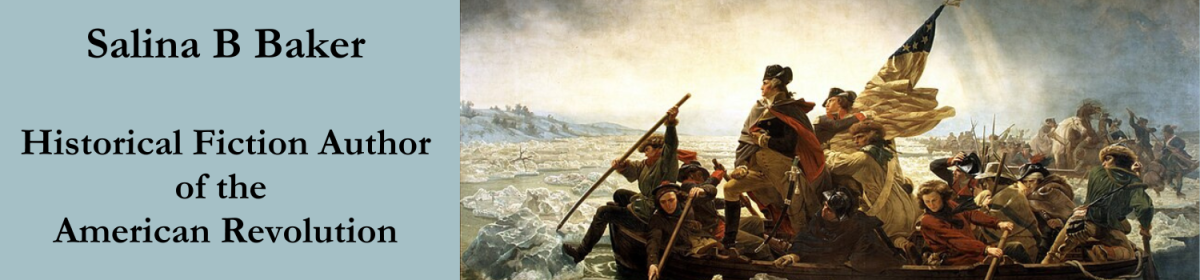
The Crossing: An American Revolution Christmas Night

1776, the first full year of the American Revolutionary War, began with General George Washington and the Continental Army breaking the ten month Siege of Boston and driving the British out. In April, suspecting that General William Howe, commander-in-chief of all British forces in America was headed for New York, Washington marched his somewhat undisciplined, fledgling army from Cambridge, Massachusetts to New York City. They occupied the largely loyalist city. In anticipation of an attack, the army set up batteries on the waterfront and a string of fortresses across the harbor at Brooklyn Heights on Long Island.

General George Washington

In July, an armada commanded by Admiral Lord Richard Howe arrived with 13,000 British and Hessians on board and dropped anchor off Staten Island. Born as illegitimate relations to King George III, the powerful Howe brothers let their troops recover from their long sea voyage before attacking the Continental position on Long Island late in August. After being badly outflanked, Washington’s army was able to escape to Manhattan under cover of fog at the oars of Colonel John Glover and his Marblehead Massachusetts mariners.

General William Howe

With the British in control of the East and Hudson Rivers, New York harbor and Long Island, Washington abandoned the city leaving behind a small force under General Israel Putnam and a regiment of artillery corps commanded by Henry Knox. Howe landed 10,000 troops on the eastern shore of New York Island and divided his army—some marched south to take the city (Putnam and Knox managed to escape). The rest of Howe’s army pursued the retreating Continental Army and defeated them at White Plains, New York.

Washington’s ragged, sick, and hungry army crossed the Hudson into New Jersey. Their last hope lay in the American forts that faced each other across the Hudson. Garrisoned with 2,500 troops, Fort Washington stood on a summit on the New York shore. Fort Lee, manned with 3,500 soldiers, rose on the palisades on the New Jersey shore. The forts fell to the British in mid-November, after which, General Howe set up a line of seven garrisons to hold the southern half of New Jersey. The smallest of these was at Trenton manned by fourteen hundred Hessians under Colonel Johann Rall.

Pursued by one of Howe’s best generals, the aggressive Lord Charles Cornwallis, the Continental Army retreated south through New Jersey headed for Trenton. The dispirited Patriots, many whose enlistments were to expire on December 1 and December 31 and had refused to re-sign, deserted by the hundreds reducing Washington’s army to a force of about 2,400 men.

General Nathanael Greene of Rhode Island reported to Washington, “Two brigades left us at Brunswick. It made no difference that the enemy is within two hours march and coming on.”
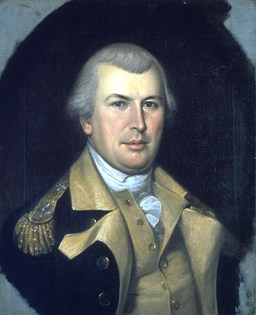
General Nathanael Greene

On December 1, despite being slowed by trees blocking the roads, destroyed bridges, and enemy sniper fire, Cornwallis’s exhausted army almost caught up with the Continental Army on the banks of the Raritan River at New Brunswick. He stopped in obedience to orders from General Howe to go no further.

When the Continental Army arrived near Trenton, they were faced with crossing the icy Delaware River into Pennsylvania. Washington dispatched Colonel John Glover, to bring over every small boat he could find. The army safely gathered on the Pennsylvania shore.

Washington realized that the Patriots needed a victory to instill new hope after the failed effort to keep the British from occupying New York. He knew he must strike a military blow to the enemy before his army melted away and he was determined to hit the Hessian garrison at Trenton. He and his general officers also understood that the element of surprise was the only way that the army stood a chance of defeating the highly trained Hessian mercenaries. They would attack on Christmas night.

On Christmas Day, the weather turned ominous. Glover was in charge of the boats: big, flat-bottomed, high-sided Durham boats normally used to transport pig iron on the Delaware from the Durham Iron Works near Philadelphia. Colonel Henry Knox (who would later become the army’s artillery general) organized and directed the crossing. A demanding part of the task would be transporting the eighteen field cannon and fifty horses.
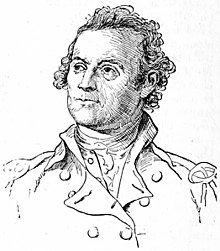
Colonel John Glover

General John Cadwalader and Washington’s adjutant, Colonel Joseph Reed, were to lead a force of Pennsylvania militia and Rhode Island troops and cross downriver at Bristol. General James Ewing was directed to take Pennsylvania militiamen, attack directly across the river at Trenton, and hold the wooden bridge over Assunpink Creek at the foot of Queen Street, which the enemy might use as an escape route.

Drums rolled in camp, and starting at two in the afternoon the army began moving out for the river, each man carrying sixty rounds of ammunition and food enough for three days. The password was “Victory.” The answer was “Or Death.”  It was nearly dark and raining when the troops reached McConkey’s Ferry where the boats waited. Glover’s men used oars and poles to get the big boats across.

At 11:00 p.m., a full-blown northeaster struck, slowing the crossing as sheets of ice formed that grew thicker as they bounced on the windblown waves in the Delaware River. The ice was hindering the sweep oars and scraping against the sides of the boats.

It was 3:00 a.m., three hours behind schedule, when the last of the troops, horses, and cannon were across. The march south from McConkey’s Ferry turned into a march of misery. The storm worsened with cold, driving rain, sleet, snow, and violent hail. The troops trudged on in the most profound silence. Many wearing worn-out shoes or cloth tied around their feet left a trail of blood. Knox’s artillery led the way. There was little light to see by. A few men carried lanterns, and torches were mounted on some of the cannon so the army wouldn’t be seen moving through the forested terrain. Men and horses kept slipping and skidding in the dark.

Washington rode out into the lines and said, “For God’s sake, keep with your officers.”

Victory or Death, Advance on Trenton by Don Troiani

The entire twenty-four hundred on the march kept together for five miles until they reached the crossroads at Birmingham where the army divided. General John Sullivan’s column, which included Glover’s brigade, kept to the right on the River Road. Generals Lord Alexander Stirling and Hugh Mercer, commanded by Nathanael Greene, veered off to the left with Washington along the Pennington Road. The distance to Trenton was four miles either way.

Sullivan sent a courier to tell Washington that the weather was wetting his men’s gunpowder.

“Tell General Sullivan to use the bayonet,” Washington responded. “I am resolved to take Trenton.”

Yet some of the plan stalled. General Ewing called off his attack on Trenton because of ice in the river. General Cadwalader’s and Joseph Reed’s diversionary landing to the south had been aborted due to ice.

The Patriot columns reached their position outside Trenton at about the same time: an hour after daylight. Most of the residents had fled the village. The Hessians were quartered in the abandoned houses and the stone barracks. Harassed by rebel patrols that kept coming over the Delaware, Colonel Johann Rall established outposts on Pennington Road outside of town. The Patriots attacked the outposts just after eight o’clock in the morning.

Hessian Major Jacob von Braam heard the sudden sound of a musket volley. He and his disoriented company ran out into the blinding snow and tried to get into formation. The Americans surged forward in a confusion of musket fire and smoke.

Major von Braam saw his men were still unable to get into formation. “Retreat!” he ordered.

The Hessians fell back into town, as they had been trained to do when retreat was the only choice. They shouted in warning, “Der Fiend! Heraus! Heraus!” (“The enemy! Turn out! Turn out!”) In town, Hessians rushed out of their houses and barracks into the streets. Drums beat and officers shouted orders.

Henry Knox’s artillery was positioned at the head of King and Queen Streets. General Mercer and his troops moved down a hill on the west side of town and swept into the village through alleys and house lots. The Hessians retreated into the side streets as generals Sullivan’s, Stirling’s, and Greene’s men came at them with fixed bayonets.
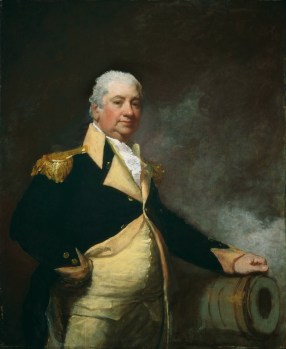
General Henry Knox

When the Hessians rolled out a field gun midway on King Street, American artillery Lieutenant James Monroe rushed forward, seized it, and turned it on them. James lit the touchhole. The cannon belched a tongue of fire and black smoke when the ball exploded from the muzzle, killing two Hessians. Colonel Rall, who was rousted out of bed, was on horseback and in command in the midst of the battle. He ordered a charge, “All who are my grenadiers, forward!” A musket ball hit Rall in the chest and he fell from his horse.

Some of Rall’s confused men retreated to the cover of an orchard. The Patriots steadily advanced on the Hessians. Knox shouted orders to move the artillery units toward the orchards. Mortally wounded, Rall’s men picked him up and carried him to safety where he would die later that day. The Hessians in the orchard, finding themselves surrounded, lay down their arms and surrendered. Within forty-five minutes, twenty-one Hessians were killed, ninety were wounded, and nine hundred were taken prisoner. Five hundred managed to escape across Assunpink Creek at the foot of Queen Street.

The Capture of the Hessians at Trenton, December 26, 1776 by John Trumbull, showing George Washington and Johann Rall

Four Americans were wounded. Only two Americans died on the march. Washington exclaimed to his officers, “This is a glorious day for our country!”

The Continental Army was faced with the arduous journey from Trenton back to the Delaware River through snow and ice with the Hessian prisoners. The troops were uplifted, however, because they had done something glorious at last.

From Baltimore, addressing Washington on behalf of the Continental Congress, John Hancock wrote, “It is all the more extraordinary given it had been achieved by men broken by fatigue and ill fortune.”

The British naturally did not see it that way. William Howe cancelled Lord Cornwallis’s furlough request and ordered him to return to Trenton. To General James Grant, overall commander of the New Jersey outposts, Howe wrote:

Trenton was an unlucky cursed affair quite beyond comprehension. I have dispatched General Cornwallis to New Jersey with an army of 8,000 men to smash the remnants of the filthy rebel army and retake Trenton.

The Americans crossed the Delaware River back into Pennsylvania. On December 30, Washington took a force of five thousand men back to Trenton and encamped at Assunpink Creek Bridge. General John Cadwalader had finally crossed the Delaware River at Bristol leaving Washington’s army divided and vulnerable.

Washington rode among his ranks, who had not been paid in months and whose enlistments were up, and issued a plea for them to stay. “My brave fellows, you have done all that I have asked you to do and more than could be reasonably expected. But your country is at stake, your wives, your houses, and all that you hold dear.”

At Assunpink Creek Bridge, Knox’s artillery crews trundled cannon in place to defend the bridge as Cornwallis’s army attacked. The two sides exchanged heavy cannon fire. The Americans volleyed furiously at Cornwallis’s advancing troops. The bridge over Assunpink Creek was soon drenched in blood and the creek began to run thick with it as the bodies of the dead splashed into the water. Surrounded by the fog of smoke and confusion, Cornwallis called for his troops to fall back three times.

General Lord Charles Cornwallis

When night fell, Charles Cornwallis declared, “We’ve got the old fox safe now. We’ll go over and bag him in the morning.”

But in the morning, to Cornwallis’s mortification, Washington and his army had stolen away in the dark. Nathanael Greene’s army veered off to the left and John Sullivan’s army veered off to the right of Washington’s main army. On January 3, Greene’s vanguard clashed with Cornwallis’s army outside of Princeton. The British were taken totally unaware. Although General Hugh Mercer was unmercifully bayoneted and died nine days later, the Americans prevailed at Princeton, taking three hundred and fifty prisoners. Cornwallis’s rear guard retreated rather than risk anymore of their numbers.

The Death of General Mercer at the Battle of Princeton, January 3, 1777 by John Trumbull.

The British viewed Trenton and Princeton as minor American victories, but with these victories, now known as “The Ten Crucial Days”, the Americans believed that they could win the war. A century later, British historian Sir George Otto Trevelyan wrote in a study of the American Revolution, when talking about the impact of the victories at Trenton and Princeton, that “It may be doubted whether so small a number of men ever employed so short a space of time with greater and more lasting effects upon the history of the world.”

As General Nathanael Greene wrote to Thomas Paine, his aide and author of the popular Patriot pamphlet Common Sense, “The two late actions at Trenton and Princeton have put a very different face upon affairs.”


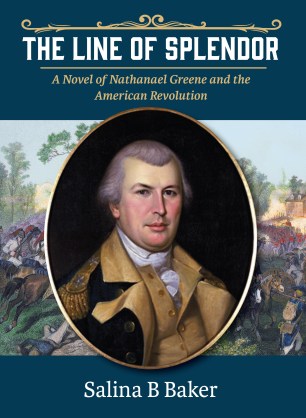
The Crossing of the Delaware is an event in my biographical novel about General Nathanael Greene titled “The Line of Splendor: A Novel of Nathanael Greene and the American Revolution” which is available on Amazon. Click the cover to get your copy!

Resources:

O’Shaughnessy, Andrew Jackson. The Men Who Lost American New Haven and London: Yale University Press, 2013. Print.

Puls, Mark. Henry Knox Visionary General of the American Revolution New York: Palgrave Macmillan, 2008. Print.

McCullough, David. 1776 New York: Simon & Schuster, 2005. Print.

Schecter, Barnet. The Battle For New York New York: Walker & Company, 2002. Print.

Thayer, Theodore. Nathanael Greene Strategist Of The American Revolution New York: Twayne Publishers, 1960. Print.

Featured Image: Washington Crossing the Delaware by Emanuel Leutze, The Metropolitan Museum of Art

Interview With The Archangel

Today, we are thrilled to introduce someone whom we have been trying to speak to for quite some time, Archangel Colm Bohannon. It is an unprecedented occasion to meet an archangel here on Earth and one who fought in the American Revolution. To soothe his impatience, we have provided rum and agreed to refrain from asking him about his youngest archangel brother, Lucifer.


Me: Hello, Mr. Bohannon. Thank you for joining us today.

Colm: I don’t understand the human purpose of apologies or gratitude, so get on with it.

Me: Please, oh, I guess you don’t understand the purpose of polite requests either. What is that silver and green light surrounding you?

Colm: The green light is the color of my angelic spirit. All angels have a spiritual color through which we see one another. The silver light is our halo.

Me: Why are you possessing a human vessel?

Colm: I will tell you that story when it is time.

Me: Alright, then tell us about your celestial family.

Colm: (Drinks rum). Must I?

Me:

Colm: (Heaves a sigh). My father, God, and my archangel brothers see me as an abomination, but if you insist. I am the fifth archangel of seven. My celestial name is Sariel. My four older brothers are Michael, Raphael, Gabriel, and Uriel. My two younger brothers are Ezekiel and Lucifer. However, I am a brother to all angels who our father created.

Me: Why did God create the archangels?

Colm: We were created to be the most powerful beings in the universe besides our father. We each had certain divinities that changed over time as our heavenly orientations changed. When God created the children of man, we were tasked with being preceptors and beholders of those things which mankind does not understand.

(Drinks more rum) I was once the archangel of Divine Visions. That was at a time when the children of man were unaware of their creator. It was my task to make them aware. I had no idea how to conjure divine visions. It had never been done before. This was thousands and thousands of years before what the children of man consider The Calling of Abraham. I had no guidance and no example and in my attempt, my power killed many of them before I realized what was happening.

Me: But there is more isn’t there?

Colm: (Flutters his wings) Later, I was considered the angel of death, because at one time, I escorted human souls to Heaven after they died. That was before Lucifer fell, and the archangels became God’s warriors against Hell’s demons. After Lucifer fell and God created reapers, my divinity changed. I escorted souls to their egress when the body died, summoned reapers, and told them where God wanted them to take souls instead of doing it myself. God assigned a brotherhood of eight angels to me so I could teach them the same. Then, I was entrusted to shepherd the Grigori angels, the Watchers Angels, but they learned human lust, acted on that lust, and I did nothing to stop them because I didn’t know by what means, short of destroying them.

Me: Who are the angels who belong to your brotherhood?

Colm: Their human vessels’ names are Fergus Driscoll, Seamus Cullen, Brandon O’Flynn, Ian Keogh, Liam Kavanagh, Michael Bohannon, and Patrick Cullen.

Me: Why does your father and older brothers see you as an abomination?

Colm: It is a long story that began millenniums ago. Three of my brotherhood, Ian, Michael, and Seamus learned lust from the Grigori angels and created what was forbidden— the Nephilim, the children of human women and angels. The rest of us tried to stop them. We were all found guilty and banished from Heaven.

Me: You were all willing to accept punishment?

Colm: Aye. We’re a brotherhood who love each other.

Me: Where did you go after you were banished?

Colm: In his anger over what we had done, God created demons from his wrath to kill us. He also summoned the Flood of Noah to kill the Nephilim living with their mothers on Earth.

Me: Oh my. Is that when you came here?

Colm: (Flashes his eyes) No. We raced through the universe in a desperate attempt to elude our executioners. I tried to protect my brotherhood because I was the only one of us with the power to destroy not only a demon, but the demons’ leader.

Me: Did I just see silver light flash in your eyes?

Colm: Aye. It’s my way of tempering you.

Me: Was I out of line with my questioning?

Colm: Not yet. It was just a warning. All the archangels were created with the ability just as we were endowed with the ability to destroy using our golden radiance that is a part of our spirit.

Me: Thank you for…uh…I have been dually warned. May I ask about your journey to Earth?

Colm: A company of eight Irish men died fighting the Normans in Wexford, Ireland on the night of May 1, 1169. They were defending their cog, the LE ‘Eithne. They drown when it sank. We took their human vessels to confuse the demons and give us time to rest.

Me: Therefore, you don’t possess a living human.

Colm: Angels can’t possess the living. Our spiritual power and immortality is too great for them to contain.

Me: Did the ruse work?

Colm: By 1314, the demons’ leader realized what we had done. He and his army of demonic spirits went to Scotland to the scene of the Battle of Bannockburn where the Scottish king, Robert the Bruce, clashed with the English king, Edward II. There were many human vessels to be had as the soldiers died on the battlefield. The demon leader possessed the body of an English knight, Sir Henry de Bohun, a man Robert the Bruce killed in the battle. Wearing their new vessels, Henry and his army continued their ruthless pursuit. By 1575, we were tiring again.

Me: I noticed that one of your angels has the same last name as you—Bohannon.

Colm: The company of dead Irish men were led by the man Colm Bohannon. Michael was Colm’s little brother. The same for Seamus Cullen. He also had a little brother among the dead, Patrick Cullen. The human link between us and them still remains. It is our palimpsests, shadows of memories that belonged to the souls of our human vessels showing through to the present. They can be frightening and impossible to control. Fergus and Ian, however, don’t possess a palimpsest.

Me: Where did you go to rest in 1575?

Colm: We took a ship from England to Virginia in America. We found sanctuary in a place over the Appalachian Mountains that was later called Burkes Garden. We were there for two hundred years before we began to suspect that the demons were in Boston, Massachusetts.

Me: May I see your wings?

Colm: (Rises slowly and unfurls his imperial silver wings that touch the floor, the ceiling, and sweep over my face and body. Silver crystals rain down from them like glittering hail and gather on the floor and against the walls.)

Me: (I feel my breath leave my body and restrain my urge to fall to my knees in reverence.)

Colm: (Furls his wings into a volute and they disappear.)

Me: (I’ve forgotten my next question.) Oh yes. How did you begin fighting for the Patriots in the American Revolution?

Colm: We suspected that the demon leader had possessed a general in the British army. We went to Boston to warn the Sons of Liberty—John Hancock, Samuel Adams, and Dr. Joseph Warren of the possibility. We felt it our duty to protect them if that was the case especially if war broke out between the colonies and Great Britain. Our suspicions were correct. The demon was possessing General Henry Hereford who arrived in Boston from London soon after we did in January 1775. War broke out four months later in Lexington and Concord, Massachusetts.

Me: Tell me about some of your human friends.

Colm: We call them the children of man, by the way as we are called the sons of God. Jeremiah Killam is our closest friend who we met in Burkes Garden when he was only five years old. Dr. Joseph Warren, a leading Son of Liberty, taught me what it meant to love a child of man unconditionally. What happened to him and my failure to protect him and stop it is my greatest shame. Of course, there is also Abe Rowlinson who was among the patriots firing on the British when they were retreating from Concord to Boston.

Me: I have been told you had General George Washington’s ear. Is this true?

Colm: I don’t know if I had his ear. He and I became very close and constantly conferred during the war.

Me: Did you or some of your angels hold rank in the Continental Army?

Colm: I refused rank, but Fergus Driscoll achieved the rank of major general. Brandon O’Flynn rose to a colonel in the artillery corps under General Henry Knox, and Ian Keogh was commissioned a lieutenant, also under Knox.

Me: Were the children of man afraid of you at first?

Colm: Yes and no. They had never seen angels on Earth. Many of them mistook me for God. Later, as the war wore on and they became used to our presence, we were considered the gift of Providence to the American cause for independence.

Me: Tell us more about the angels in your brotherhood and their role in their Heavenly duties and the war itself.

Colm: They are soothers and beholders. They fulfilled that divinity throughout the war. The rest of our time with the children of man, and the hardships we endured as angels unaccustomed to the noise of human society and emotions, is written. You will have to read the narrative in the series of books called Angels and Patriots. There you will find the words that describe our time among you and the lessons we learned from you.

Me: One last question. How did you elude the demons?

Colm: You will have to read the books, but I will tell you that demons were not the only hounds God unleashed upon us.

Me: Thank you for your time today. Perhaps one day you will learn the purpose of gratitude.

Colm: I don’t think so. However, there is one last thing to consider. Human emotions can change everything. Angelic emotions can destroy the world.


Rebels, Heroes, Patriots, and Legends. The multiple award winning Angels and Patriots saga is the mutual pursuit of liberty, the meaning of loyalty, and the virtue of the ultimate sacrifice during the American Revolution.

    • Angels and Patriots Book One: Sons of Liberty, Lexington and Concord, Bunker Hill
    • Angels and Patriots Book Two: The Cause of 1776
    • Angels and Patriots Book Three: The Year of the Hangman
    • Angels and Patriots Book Four: The Hand of Providence and The Brotherhood’s Sword

*Amazon US: Series Available in paperback, Kindle eBook or Kindle Unlimited. Angels & Patriots Book Series

*Amazon UK: Series Available in paperback, Kindle eBook or Kindle Unlimited. Angels & Patriots Book Series


ANGELS & PATRIOTS BOOK ONE 2018 AWARDS
  • Independent Press Award, Historical Fiction, Winner
  • Independent Press Award, Military Fiction, Distinguished Favorite
  • Shelf UnBound Best Indie Book, Notable
  • National Indie Excellence® Awards, Military Fiction, Finalist
  • American Fiction Awards, Fantasy and Military Fiction, Finalist
  • New York City Big Book Awards, Military Fiction, Winner
  • New York City Big Book Awards, Historical Fiction, Distinguished Favorite
ANGELS AND PATRIOTS BOOK TWO AWARDS
  • 2019 New York City Big Book Awards, Military Fiction, Winner
  • 2019 Shelf Unbound, Top 100 Notable Indie Book
  • 2020 Independent Press Award, Military Fiction, Winner
  • 2021 American Fiction Awards, Historical Fantasy, Finalist
ANGELS AND PATRIOTS BOOK THREE AWARDS
  • 2020 Shelf Unbound Top 100 Notable Indie
  • 2021 Independent Press Award, Military Fiction, Distinguished Favorite

The World Turned Upside Down: The Siege of Yorktown

Saratoga, New York, October 17, 1777. British General John Burgoyne capitulated to American General Horatio Gates after the armies clashed in two battles at Freeman’s Farm and Bemis Heights. The surrender was the tipping point of the American Revolutionary War, which led the French to sign an alliance with America in her fight for independence.

Three years later, the Comte de Rochambeau arrived in Newport, Rhode Island with a French army intent on supporting General George Washington’s Continental Army effort to defeat the British in a war that had endured many Patriot losses.

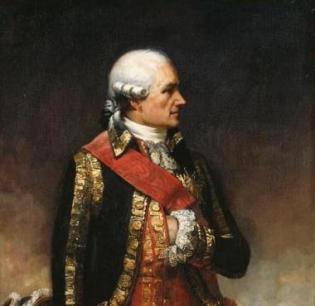
Comte de Rochambeau

When Rochambeau arrived on July 11, 1780, Washington’s sights were myopically focused on attacking New York in a move that might defeat General Sir Henry Clinton, commander of all British forces in America. Rochambeau and Washington met twice in the coming year. The last meeting was held in Wethersfield, Connecticut on May 20, 1781. Rochambeau argued that the Southern theater where British General Lord Charles Cornwallis was chasing American General Nathanael Greene through the Carolinas was a better choice; specifically Virginia and the Chesapeake Bay.

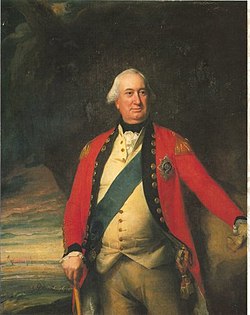
Lord Charles Cornwallis

On the same day as the conference, Cornwallis arrived at Petersburg, Virginia after suffering heavy casualties at the Battle of Guilford Court House at the hands of Nathanael Greene. Cornwallis had not received permission from Clinton to abandon the Carolinas, but he believed that Virginia would be easier to capture because General Lafayette, who Washington had sent to Virginia with 1200 light infantry to act against the corps of the enemy (specifically the traitor General Benedict Arnold which is another story) had moved north leaving the south and west of the state open.

Admiral de Grasse

Washington’s hope hinged on the arrival of French Admiral de Grasse’s fleet in New York harbor to block up any British fleet which might be in the harbor and as a sufficient means of conveyance transport for Continental and French troops. Although he agreed to rendezvous with Washington’s army in White Plains, New York to attack Clinton, Rochambeau had a secret agenda. He wrote to de Grasse:

I must not conceal from you, Monsieur that the Americans are at the end of their resources, that Washington will not have half of the troops he is reckoned to have. It is therefore of the greatest  consequence that you will take on board as many troops as possible; that 4,000 or 5,000 men will not be too many, whether you aid us to destroy the works at Portsmouth, Virginia or to force Sandy Hook in seizing New York. There, Monsieur, are the actual and sad pictures of the affairs of this country.

By July 7, the allied forces were gathered at White Plains. Together they totaled some 5,000 troops. But on August 1, 1781, Washington received a letter from Lafayette that caused him to reconsider his desire to attack New York.

Cornwallis is taking up a strong position at Yorktown and Gloucester, sealing himself off if the British fleet should not be on hand to rescue him. Yorktown is surrounded by a river and a morass. Gloucester is a neck of land projecting into the river and opposite Yorktown.

That decision was made for him when Washington received a dispatch on Tuesday August 14 that de Grasse declined to sail to New York because he did not want to risk his ships navigating the difficult waters of the harbor and the Hudson River. Instead, he proposed to sail up the Chesapeake with twenty-nine ships and 3,000 troops. Admiral de Barras anchored in Newport, Rhode Island would rendezvous with de Grasse.

The allied armies marched south to Virginia. The logistical details of moving two armies plus hundreds of camp followers along with munitions and equipment was slow when speed was of the utmost importance before the French fleet decided to sail out of the Chesapeake.

When the news arrived at British headquarters in Manhattan that de Barras had left Newport, the British fleet embarked under the command of Admiral Thomas Graves. On September 5, the fleets encountered one another near the mouth of the Chesapeake Bay near Yorktown. A battle ensued, that wound down at sunset, with the British fleet drifting eastward and away from the bay. The next day, Admiral Graves determined that his fleet had suffered too much damage to engage the French again, and sailed back to New York.

Battle of the Chesapeake Bay

The snare had been sprung trapping Cornwallis’ army in Yorktown, Virginia, situated between the James and York Rivers and the Chesapeake Bay. The little town was on a high stony bluff that ran parallel to the York River. It occupied a strategic location controlling upstream portions of the river and its tributaries and their access to the Chesapeake Bay.

When the allied armies arrived in mid-September, they set up below the town, pinning Cornwallis against the river. Washington set up camp in forested land about a mile from the enemy’s left. Rochambeau’s tents were pitched five hundred yards to the north. Washington’s principle officers, including his second in command, General Benjamin Lincoln, as well as General Lafayette, General Baron von Steuben, and artillerist General Henry Knox were camped along the perimeter of the encampment.

Cornwallis and his staff were quartered in the governor of Virginia’s house: General Thomas Nelson. Cornwallis received a letter from Sir Clinton that assured him, “I shall endeavor to reinforce your command by all means within the compass of my power.”

Cornwallis had never contemplated the possibility of a siege. Yet here it was, the reality of it staring at him like so many horrible eyes from Hell. He declared to his officers, “Nothing but the hope of relief will induce me to attempt this defense.” Still the British quietly abandoned their advanced posts and sneaked back to the defensive lines around Yorktown.

“Their movement is not only unmilitary,” Pennsylvania General Anthony Wayne proclaimed, “but an indication of confused precipitation and I do not understand why Cornwallis has done it.”

By the night of October 5, the allies began laying out a trench called a parallel. A steady rain masked the sounds of the sappers and miners (the men digging and clearing the trench) making their way across a broad, undulant field plowed into deep furrows by the enemy’s cannonballs. Sharpshooters protected the men digging the trenches in case of an enemy sally as Cornwallis sent infantrymen to clear the trench, but the sharpshooters repulsed them.

With the British cleared from the trench, a tradition associated with a siege was the Opening of the Trenches, a ceremony in which the troops of the day marched to their appointed places with drums beating and banners flying before planting their flags in the rampart ahead of them. Colonel Alexander Hamilton, an aide to George Washington, had threatened earlier to resign from the army if he wasn’t given a field command. Washington pacified him and Hamilton led some of his new infantry unit in the ceremony. Washington had the honor of igniting the bore hole of one of General Knox’s heavy siege guns and ceremoniously discharging the first shot from the American battery.

Washington firing the first gun.

At daybreak, the Continentals commenced an uninterrupted stream of fire that produced a relentless, unnerving, and deafening roar. The French Grand Battery opened and their 18- and 24- pound siege cannon were pounding Yorktown. Residents fled to the waterfront and hid in hastily built shelters on the sand cliffs. Dozens were killed and wounded—many with arms or legs severed—while their houses were destroyed. Cannonballs plunged into the York River and sent up streams of cascading water. British boats went up in flames under the bombardment. The Nelson house where Cornwallis was quartered was partially destroyed forcing the general and his staff to find shelter in a grotto.

On the night of October 11, the allied armies’ sappers and miners began work on the second parallel, just three hundred yards from the British fortifications of redoubts 9 and 10 near the York River. Rochambeau came to inspect the trenches proclaiming “We shall see if the pear is ripe.”

Washington held a secret war council on the night of October 13. It was determined that the allied forces would take redoubts 9 and 10 the following night. General Lafayette would command the charge against redoubt 10 on the right with a second of his choosing— Colonel de Gimat. The French under General Baron De Viomenil would assault redoubt 9 on the left.  Lafayette’s choice of second infuriated Alexander Hamilton. He went to Washington to complain that he had seniority over Gimat and that he should be second. Washington pacified Hamilton. Colonel John Laurens, another young aide to Washington, would also lead a battalion.

The bayonet assault would be conducted with the sappers and miners leading the way to cut through the abatis (sharpened tree trunks) arming the enemy redoubts. The sappers and miners were told:

You will advance beyond the trenches and lay down on the ground to await the signal to advance which will be three shells fired from the battery near your position. Your watch word is ‘Rochambeau’. This signal will also deploy the French waiting to assault redoubt 9.

 They determined Rochambeau a good watch word because if it was said fast, it sounded like “rush on boys.” The sappers and miners crept into position. Then, three shells with their fiery trails mounted the air in quick succession and lit the sky over Yorktown. “Up! Up!” was reiterated through the detachment of waiting men. They sprinted across a quarter mile landscape pocked and rutted from exploding shells toward the redoubt with British musket fire raking them as they ran, but the men cried “the fort’s our own” and “rush on boys!” They reached the redoubt. Snapping off the edges of the abatis, they cleared a passage for the infantry. The miners, who were told not to enter the fort, surged past their officers declaring, “We will go!”

Behind the sappers, Lafayette, Alexander Hamilton, John Laurens and their infantry battalions leaped out of the trenches and ran toward redoubt 10. To their left, the French regiments under Comte Deux-Ponts were hacking at the abatis surrounding redoubt 9 while Hessian sentries shouted “Who’s there?” and opened fire. Hand to hand combat commenced, but in ten minutes it was over and the Americans and French took possession of the redoubts.

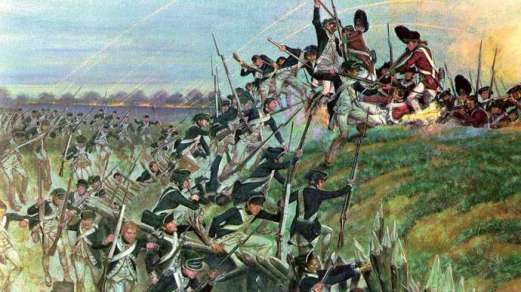
Storming of Redoubt 10

Cornwallis wrote to Clinton:

My situation now becomes very critical. We dare not show a gun to their old batteries, and I expect that their new ones will open tomorrow morning. Experience has shown that our fresh earthen works do not resist their powerful artillery, so that we shall soon be exposed to an assault in ruined works, in a bad position, and with weakened numbers. The safety of the place is, therefore, so precarious that I cannot recommend that the fleet and army should run the great risk in endeavoring to save us.

Then the British tried to retreat to Gloucester across the York River on the night of October 16 only to be deterred by a terrible thunderstorm. The following morning, a British drummer beating a parley appeared on the enemy’s parapet.  A British officer stood beside him with a white handkerchief in his hand. Cornwallis had surrendered.

Colonel John Laurens

Now, the terms of the surrender were to be negotiated. Colonel John Laurens was one of the commissioners. He was by General Benjamin Lincoln’s side when the garrison at Charleston manned with 5000 troops fell on May 12, 1780. Lincoln surrendered to General Sir Henry Clinton and Clinton had denied Lincoln’s army the honors of war.

When an army fought bravely and well before surrendering, the vanquished soldiers were accorded the honors of war, which meant that they marched from their works with flags flying, drums beating, and their band playing a tune of the conqueror.

The humiliation was reciprocated as part of the terms. When the British commissioners protested that Cornwallis wasn’t present at Charleston, Laurens stated, “It is not the individual that is here considered. It is the nation. This remains an article, or I refuse to be a commissioner.”  The terms of the surrender were accepted by both parties.

At noon on Friday, October 19, 1781, a glorious, warm autumn day, sunny and bright with the leaves on the trees just beginning to turn, a portion of the trenches and fortifications surrounding Yorktown were leveled so that the British and Hessians could march out of their works onto Hampton Roads where the allied armies were lined up two ranks deep in a line that stretched for more than a mile with the French on the left and the Americans on the right.

At two o’clock, the mournful distant sound of fifes and drums were heard coming from Yorktown. The waiting armies silenced. The British army which had been reduced from 8,000 to 5,000, with 550 killed or wounded, 2,000 sick and 200 deserters, marched out of Yorktown led not by Cornwallis but by his second in command, General Charles O’Hara, to the slow beat of the drum, their twenty-two regimental flags ignominiously furled and stored in their cases.

O’Hara gave apologies for Cornwallis’ absence and then tried to surrender his sword to Rochambeau. Rochambeau indicated Washington. Washington indicated his second in command, General Benjamin Lincoln. Lincoln accepted the sword and his humiliation had been repaid.

General Benjamin Lincoln

The American Revolutionary War lasted two more years until the Treaty of Paris was signed on September 3, 1783. The surrender also had an effect on Great Britain’s other global endeavors such as the Siege of Gibraltar. And now America would face her biggest challenge of all—how to govern herself.

The Siege of Yorktown is part of my four book historical fantasy series on the American Revolution—Angels and Patriots. I used a lot of references including biographies so I could see the siege from the different points of view from those who were there.

To name a few, some of Connecticut Private Joseph Plumb Martin’s points of view as a sapper were delightful. There was the amusing story of Colonel Alexander Hamilton and General Henry Knox working in their captured redoubt and arguing over whether or not it was manly to jump behind a blind when the British fired shells into the redoubt. I suppose a shout out should go to the French. Viva la France!

This is my July 3 contribution to the Historical Writers Forum Blog Hop about American History June 28 – July 4, 2021! Catch up on the other great blogs in this series. https://www.facebook.com/Historical-Writers-Forum-Blog-Hop-Page-313883642875335

Resources:

Chernow, Ron. Alexander Hamilton New York: Penguin Books, 2004. Print.

Ketchum, Richard. Victory At Yorktown New York: Henry Hold and Company, LLC, 2004. Print.

Lockhart, Paul. The Drillmaster of Valley Forge New York: Harper Collins, 2008. Print.

Martin, Joseph Plumb, Memoir of a Revolutionary Soldier, The Narrative of Joseph Plumb Martin New York, Dover Publications, 2006, Print. Originally published 1830.

Mattern, David B. Benjamin Lincoln and the American Revolution Columbia, South Carolina: University of South Carolina Press, 1998. Print.

Philbrick, Nathaniel. In The Hurricane’s Eye New York: Penguin Books, 2018. Print.

Puls, Mark. Henry Knox Visionary General of the American Revolution New York: Palgrave Macmillan, 2008. Print.

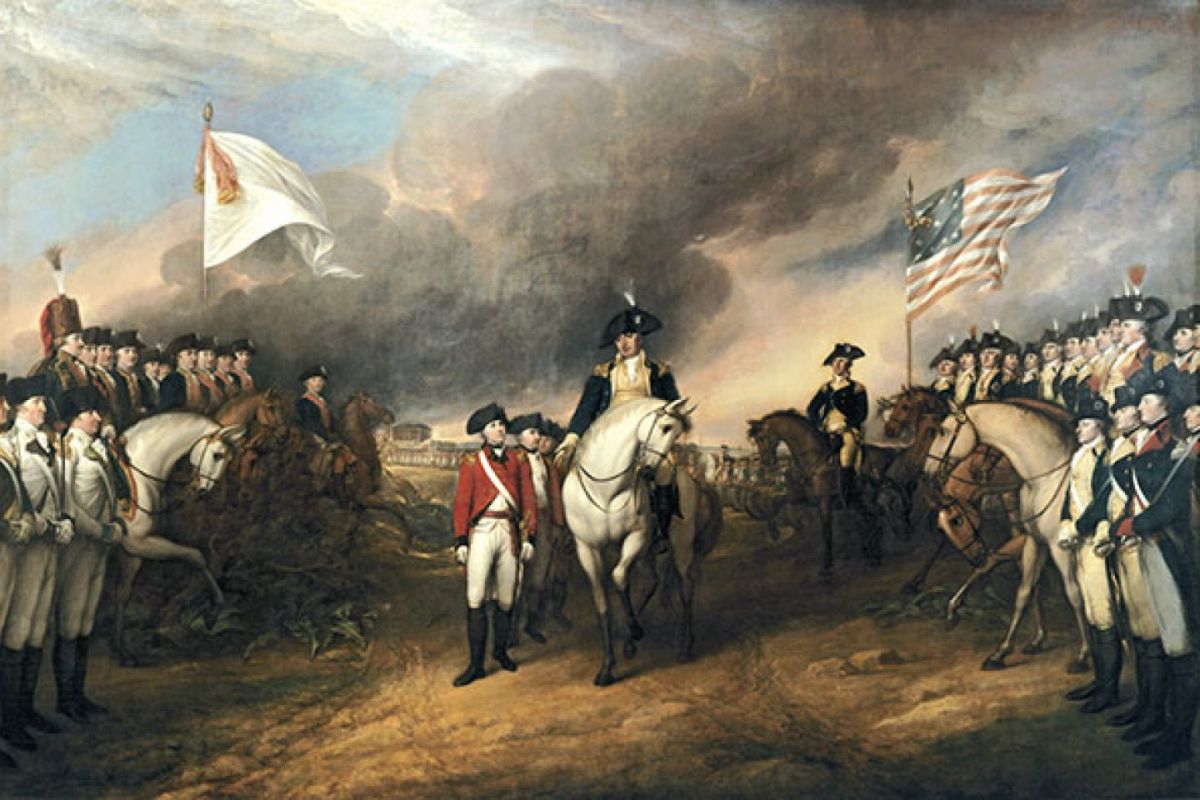
Featured Image: The painting Surrender of Lord Cornwallis by John Trumbull is on display in the Rotunda of the US Capitol. General Benjamin Lincoln is in the center on the horse.

General Charles Lee: Patriot or Poltroon? (A Military Scandal of the American Revolution)

October 28, 1776. General George Washington’s Continental Army lost the battle at White Plains, New York. The army had spent the past nine months battling British General William Howe and losing every engagement including New York City. Now, the Continentals were forced to retreat again, to North Castle Heights north of White Plains.

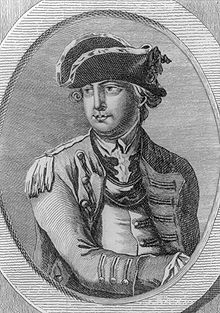
General Charles Lee

Washington moved his army across the Hudson River to New Jersey and left his second-in-command, General Charles Lee in North Castle Heights with a brigade. A month later, two American forts on the shores of the Hudson fell to the British. With British General Charles Cornwallis following his troops, Washington requested Lee cross the Hudson and join forces with him. Lee declined the request.

On November 28, after informing the Continental Congress that he would remain to “annoy, distract, and consequently weaken [the enemy] in a desultory war”, Lee responded to Washington’s repeated requests. Then, he made a mistake. On December 12, with his bodyguards, servant, and pack of little dogs, Lee left his encampment and stopped at a tavern three miles away at Basking Ridge, New Jersey. The following morning a party of British dragoons, galloped toward the tavern. They shot out all the windows and forced Lee to surrender. Lee’s capture spread like wildfire.

A Hessian captain wrote: We have captured General Lee, the only rebel general whom we had cause to fear.

Charles Lee was born in Cheshire, England in 1731 or 1732 into a genteel family and received an excellent education. He came to North America and fought for the British army in the French and Indian War. When the war was over, he returned home and became a soldier of fortune. He moved to North America in 1773. The Patriots hailed him as a military expert. Because he was better educated and had more military experience than other officers, Lee hoped he would be named commander in chief of the Continental Army. Instead, Congress chose George Washington. Lee was selected as a major general and resigned his commission with the British army.

Lee had a dark side. He was slovenly, used foul language, sarcasm, and insults, and criticized his superiors. On the other hand, he was a composed, brilliant and courageous leader in battle.

Engraved caricature of Charles Lee with his dog, Spada

After his arrest at Basking Ridge, Lee was held in captivity in New York City. In February 1777, feeling that Congress had abandoned him and that the Americans had no chance to win the war, he submitted a secret military plan to General William Howe, commander of all British forces in America. There is no evidence that Howe read the plan. Lee also offered to mediate the return of America to the British Crown by requesting that Congress send a delegation to meet him. These acts could have been interpreted as treason.

Charles signed a parole in April 1778 preventing him from reentering American military service until a formal prisoner exchange was finalized. He rode to York, Pennsylvania, where Congress sat, to promote a new military plan. He objected to the Continental Army’s training to face British regular soldiers on the field of battle, which Lee called the “European Plan.” He claimed “only a plan of defense, harassing and impeding can alone succeed.”

When he arrived at Valley Forge, Pennsylvania, Washington enthusiastically greeted him. But Lee was critical of Baron von Steuben, a Prussian officer who had arrived in America to train the troops. Furthermore, Lee was unfamiliar with many officers and out of touch with the much improved Continental Army.

On June 18, the Continental Army left Valley Forge, to follow the British army evacuating Philadelphia. General Sir William Howe had resigned and returned to England. General Sir Henry Clinton was given command of all British forces in America. His army marched across New Jersey toward New York with a twelve mile long baggage train.

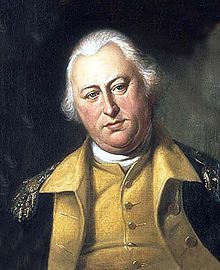
George Washington

Washington sent detachments to harass Clinton’s rearguard including Generals William Maxwell, Charles Scott, and Colonel Daniel Morgan. These men formed the vanguard of the Continental Army under the young Marquis de Lafayette. Washington offered the command to Lee, but Lee thought the small size of the detachment was beneath his experience. When the detachment grew to 3,700 with the addition of General Anthony Wayne’s men, Lee changed his mind.

By June 26, Clinton’s army was halted at Monmouth Court House. At a June 27 council of war, Washington failed to give Lee clear orders. The commander in chief ordered an attack without specifying a general engagement, but said the rest of the army would come up in supporting distance of Lee. Lafayette asked Lee if he had a plan of attack. Lee replied he had none and thought it would be “better for the service to act according to circumstances.”

Lee’s troops marched on the morning of June 28 in increasingly intense heat through a landscape dotted with farms, orchards and crossed with fields and morasses. Lee received conflicting intelligence about Clinton’s movements: the army was retreating; they were threatening Lee’s flanks;  the main body of the British army that constituted Clinton’s first division was still at Monmouth. In actuality, the baggage train and Clinton’s division had marched off to the east and left General Lord Charles Cornwallis’ rear guard near Monmouth.

Lee’s attack on the British rearguard.

At 10:00 a.m., Lee’s forces crossed the Middle Morass and began to skirmish with the enemy’s rear guard. Suddenly, Clinton’s first division reversed course and turned to attack the Patriots. Clinton ordered Cornwallis to turn Lee’s right flank. At the sight of this, American Generals Charles Scott and William Maxwell and some artillery pulled back without Lee’s orders.

As Washington came up with the main army, he was informed there was “some confusion” in Lee’s ranks. A fifer walking the road was asked whether he served in the Continental Army. He responded yes and said that the Continental troops that had been advancing were now retreating. The first columns of retreating troops straggled past. When they were asked the reason for the retreat, none had an answer. An aide to Maxwell said Washington “was exceedingly alarmed, finding the advance corps falling back upon the main body, without the least notice given to him.”

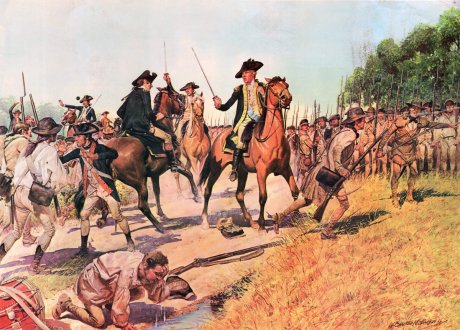
Washington fumed with anger. He spotted Lee and the two rode to meet one another. Washington demanded, “I desire to know, sir, what is the reason for this disorder and confusion?”

“Washington Rebuking Lee at Monmouth” by John Ward Dunmore 1908

Lee stammered, “Sir? Sir?” expecting “congratulation and applause” for avoiding a crushing defeat. He said that he had never supported the attack on Clinton’s rear guard in the first place.

Washington eventually calmed down and returned Lee to the battle. At dusk, hostilities ceased. Clinton’s army moved away early the next morning. The most confusing battle of the American Revolution was a draw.

Lee was furious over Washington’s treatment of him. In the post-battle discussions, Washington was praised although it can be argued that his performance at Monmouth was lacking (that is another discussion for another time). Lee believed he was not being credited for his decision to retreat, which in his view saved his detachment from annihilation. He sent Washington a strong letter of complaint, with threats and insults knowing it would likely be made public. He insulted and blamed others calling them “wicked persons” and “dirty earwigs.” Washington found his language “highly improper” and declared Lee would have his forum. In a second letter, Lee demanded a court-martial so he could clear his name. Washington obliged.

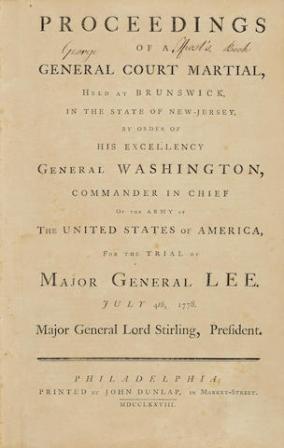
The court-martial began on July 4, 1778 in New Brunswick, New Jersey presided over by General Lord Alexander Stirling. The charges pending were:

First, for disobedience of orders in not attacking the enemy on the 28th of June, agreeable to repeated instructions.

Second, for misbehavior before the enemy on the same day, by making an unnecessary, disorderly and shameful retreat.  

Third, for disrespect to the commander in chief in two letters dated the 1st of July and the 28th of June.

Lee served as his own defense council. He called thirteen witnesses. The prosecution, Judge Advocate General Colonel John Laurance called twenty-eight. The witnesses included Washington’s aide, Colonel Alexander Hamilton, Lee’s aide, Captain John Mercer, generals Scott, Maxwell, Wayne, Lafayette, and Knox. At the court-martial, Lee offered as his defense: he had been unreasonably provoked.

The court found Lee guilty on all counts except a shameful retreat. He was sentenced to one year suspension from the Continental Army. The verdict was passed to the Continental Congress for a final decision. Although Lee had supporters in Congress such as Dr. Benjamin Rush and Richard Henry Lee, the verdict was upheld. After Lee’s sentence expired, the Congress permanently dismissed him from the Continental Army.

Charles Lee died destitute on the evening of October 2, 1782 at the Sign of the Conestoga Wagon tavern in Philadelphia accompanied by his two little dogs and his faithful Italian servant, Giuseppe Minghini.

American Revolution enthusiasts usually rank General Charles Lee’s conduct near the top of the list with the despised, traitorous General Benedict Arnold. However, Lee has his apologists just as Arnold  does. Had Charles Lee been unjustly and unfairly treated? Historians and Revolutionary War lovers have and will continue to argue the question.

How do I feel about General Charles Lee? He is a character in my historical fantasy series of the American Revolution, Angels and Patriots, just as Benedict Arnold is. I see neither man as a pure villain, but both men let their vanity lead them to bad decisions, something many, many people have done since the dawn of man.


Resources:

Engraved caricature of Lee from vol. 3 of The Diaries of George Washington (Charlottesville, VA: University Press of Virginia, 1978. p.299).

McCullough, David. 1776 New York: Simon & Schuster, 2005. Print.

Lender, Mark Edward and Stone, Garry Wheeler. Fatal Sunday University of Oklahoma Press, 2016. Print.

McBurney, Christian. George Washington’s Nemesis: The Outrageous Treason and Unfair Court-Martial of Major General Charles Lee in the Revolutionary War Savas Beatie, 2020. Print

Hear About Here And The Men Who Were There

Please join me on the website, HEAR about HERE, where you can hear stories about people, places and events that happened near you using the GPS on your phone. Their mission is to tell you all about it three minutes at time. So HEAR more about these treasures with them and their Tale Collections from their contributors.

I am one of their contributors, so listen to my tales of true stories!

Henry Knox and His Noble Train of Artillery

The Knox Expedition

In December 1775, twenty-five-year old Boston bookseller Henry Knox, led an expedition from Cambridge, Massachusetts to Fort Ticonderoga in upstate New York to retrieve 50 tons of artillery and bring it back to General George Washington. Hear the story of Knox’s noble train  of artillery and this amazing journey.

Joseph Warren’s 1775 Boston Massacre Oration at Old South Meeting House

The pulpit today at Old South Meeting House

The patriots commemorated the anniversaries of the Boston Massacre, a bloody conflict that took place near the State House on March 5, 1770, between the citizens of Boston and British soldiers in which five civilians died. Hear the story of the circumstances surrounding Dr. Joseph Warren’s 1775 oration on the event.

Dr. Joseph Warren and Battle of Bunker Hill

Statue of Joseph Warren at Bunker Hill

The Battle of Bunker Hill was fought on the Charlestown peninsula north of Boston on June 17, 1775. The peninsula was the original objective of both the colonial and British troops. Hear the story of Dr. Joseph Warren’s part in that pyrrhic battle.

Joseph Warren Funeral at King’s Chapel and Aftermath of Battle of Bunker Hill

King’s Chapel in Boston

After the Siege of Boston ended in March 1776 and the British withdrew, Dr. Joseph Warren’s remains were recovered from the Charlestown peninsula where he was hastily buried after the Battle of Bunker Hill. Hear the story of his honorable obsequies.

New Year’s Day raising of the Union flag on Prospect Hill

General George Washington proclaimed January 1, 1776 was the first day of “a new army, which in every point of view is entirely continental.” Hear the story of the celebration of that event.

Billopp House

The Billop House on Staten Island was the site of a peace conference between British Admiral Lord Richard Howe, Benjamin Franklin, and John Adams during the Revolutionary War in September 1776. Hear the story of what transpired.
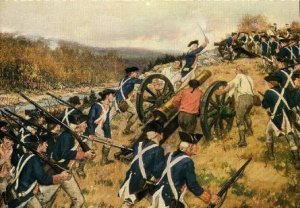
Battle of White Plains

The Battle of White Plains in New York was fought between General George Washington’s Continental Army and General William Howe’s British and Hessian armies on October 28, 1776. Hear the story of this important battle.